Martyrs
This is the most historically varied category in the Augustine & Co. saint library, because it is the one category with no ceiling and no single century it belongs to. A man carrying a child across a river in a story nobody can date. A virgin whose bones were found in a catacomb with a name but almost nothing else. A Franciscan friar who volunteered to starve in another man's place, in a prison camp with a death certificate. What unites them is not evidence. It's the fact that each one, however documented, was asked to give up everything for the faith, and did.

The Final Witness
Martyrs
A martyr's story only has one ending, but the Church has never told it the same way twice. Some martyrdoms survive as trial transcripts and eyewitness letters. Others survive only as legend, handed down for so many centuries that no one can say for certain where the history ends and the devotion begins. Both kinds are martyrs. Both are kept here.
Martyrs rank fourth in the taxonomy's precedence order: a saint who died for the faith is filed here even if they also founded an order, evangelized a region, or held royal rank, because the manner of death outweighs everything that came before it. It is also, deliberately, an open-ended category — the Church has never stopped producing martyrs, and this library has no reason to expect that to change.
Meet the Saints
MARTYRS

These are the men and women who gave up everything for the faith, whether their final moments were recorded in Roman court transcripts or preserved solely through centuries of devotion. Explore the witnesses whose lives—and deaths—stand as an enduring testament to Christ.
-
The best-known name in this category and, historically, the least certain. What survives of Christopher is almost entirely legend — a man of enormous size who carried travelers across a dangerous river, and who one night carried a child who grew impossibly heavy, revealing himself as Christ bearing the weight of the world. The Church continues to honor him as a martyr of the early persecutions, while being clear that the details cannot be historically confirmed.
Feast day: July 25
Era: Traditionally 3rd century AD; historicity of the biographical details is unconfirmed
Known for: The river-crossing legend; patronage of travelers
Patronage: Travelers, motorists, bachelors
Read the full profile to discover how a nameless giant carrying a child became one of the most enduring figures in Christian memory.
-
A saint venerated with remarkable intensity for someone about whom almost nothing can be verified. Devotion to Philomena exploded in the nineteenth century after the discovery of a young woman's remains in a Roman catacomb, inscribed with a name and symbols read as signs of martyrdom — but the physical evidence cannot independently confirm the biography that grew up around it. The Church removed her feast from the universal calendar in 1961 for exactly this reason, while permitting continued local devotion.
Feast day: August 11 (local and traditional observance; not on the universal calendar)
Era: Traditionally 3rd–4th century AD; historical identity unconfirmed
Known for: Widespread 19th- and 20th-century popular devotion despite a thin historical record
Patronage: Infants, youth, and popularly invoked for desperate causes
Explore Philomena’s complete story to see how an anonymous tomb sparked one of the fiercest devotions in modern Catholic history.
-
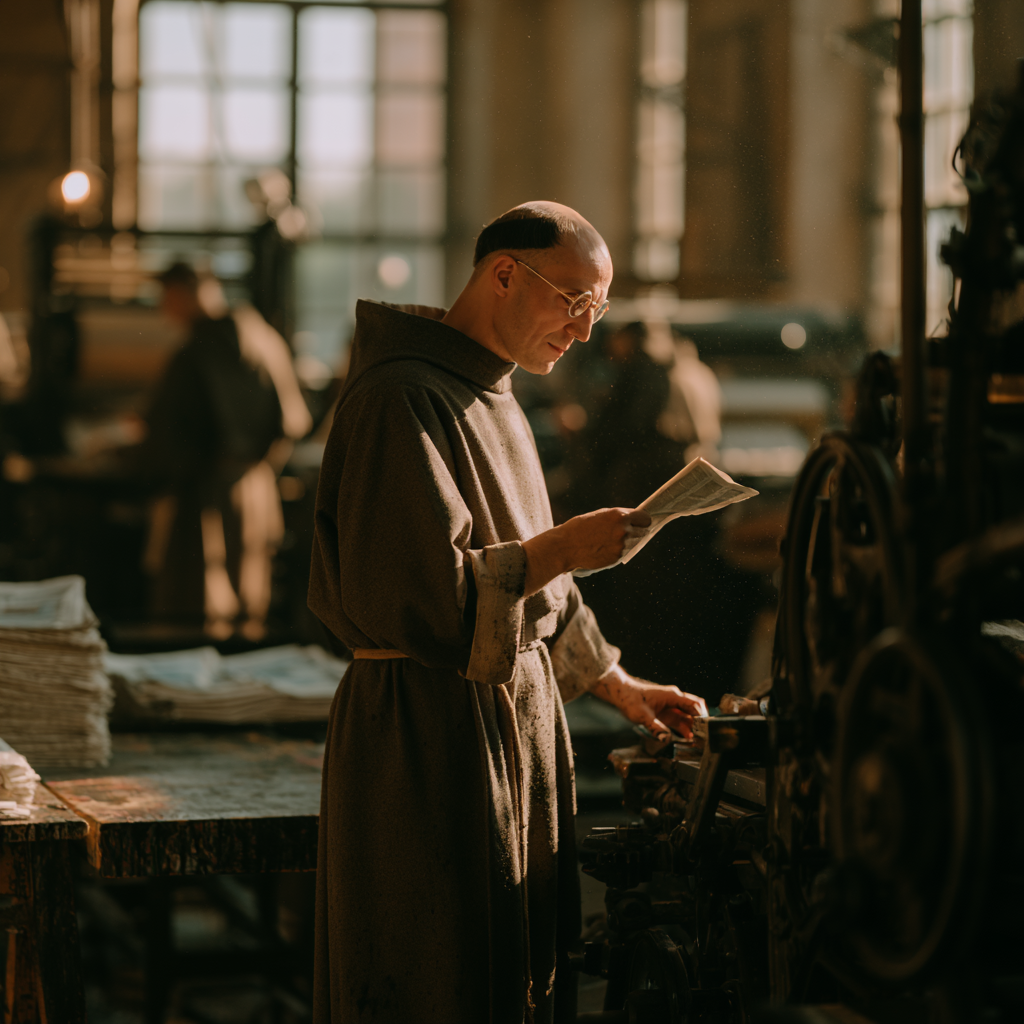
The opposite end of the historical spectrum: a death with a date, a camp, and a barracks number. In July 1941, at Auschwitz, Kolbe volunteered to take the place of a stranger condemned to the starvation bunker as punishment for an escaped prisoner. He died there weeks later, and the man he saved lived to attend his canonization decades afterward.
Feast day: August 14
Era: 1894 – 1941 AD
Known for: Volunteering to die in place of a fellow prisoner at Auschwitz; canonized as a martyr of charity
Patronage: Drug addicts, families, journalists, political prisoners
Read the full profile to discover how a friar with a printing press and a prison number became one of the 20th century’s most profound witnesses to love.
-