Saint Christopher: The Life, Legend, and Story of the Giant Who Carried Christ
Feast Day: July 25 (an optional memorial in the current Roman Calendar)
Name Meaning: Greek Christophoros, “Christ-bearer” — a name tradition holds he received only after the story below
Traditional Dates: Venerated as a martyr traditionally placed in the mid-third century, often associated with the reign of the Roman emperor Decius — though reliable historical evidence for his life is extremely thin
Historical Status: His feast was moved from the Church's universal, obligatory calendar to an optional local commemoration in 1969, owing to the legendary nature of his biography. He was not “decanonized” and remains a venerated saint.
Patronage: Travelers; motorists; against sudden death and storms; transportation workers
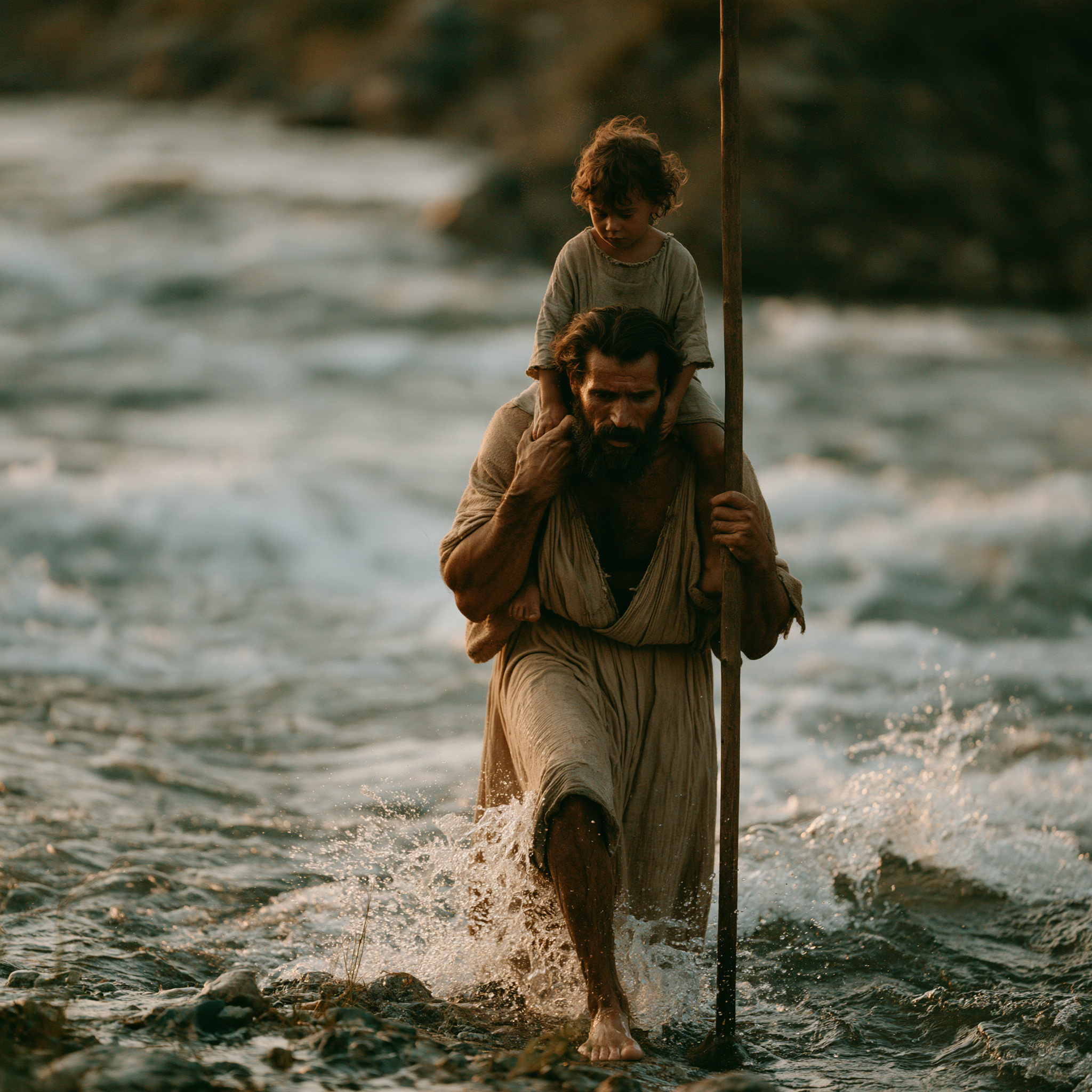
Emblem: Almost always depicted as a giant carrying the Christ Child across a river on his shoulders, leaning on a staff
The most famous thing about Saint Christopher may be a story that never happened to a man historians cannot fully confirm existed — and Catholics have loved him anyway for over a thousand years.
That is not a reason to dismiss him. It is a reason to look more closely at what the story is actually doing. Christopher's legend spread across the Christian world for centuries not because anyone could prove it happened exactly as told, but because it kept saying something people needed to hear: that even a man with no learning, no eloquence, and no obvious spiritual gifts could serve Christ directly, with nothing more than the strength he already had.
At a Glance: Key Facts About Saint Christopher
Centered on a story that history cannot fully verify, Saint Christopher’s legacy has endured for over a thousand years because of the simple truth at its heart. Before exploring how an outcast found his true calling at the water’s edge, here is a quiet framework of the facts and tradition handed down through the ages. Here is Saint Christopher at a glance.
-
A legendary early Christian martyr, venerated since at least the fifth century in the Eastern Church and centuries longer in popular devotion
-
The patron saint of travelers, remembered above all for a story of carrying the Christ Child across a river
-
Tradition places his life somewhere in the eastern Roman Empire, most often Asia Minor or the region of Canaan
-
Traditionally the third century, though the earliest surviving written accounts date from centuries later
-
Because his legend offers one of Christian tradition's clearest pictures of ordinary strength placed directly in the service of Christ
Reprobus Seeks the Greatest King: The Search for the Ultimate Ruler
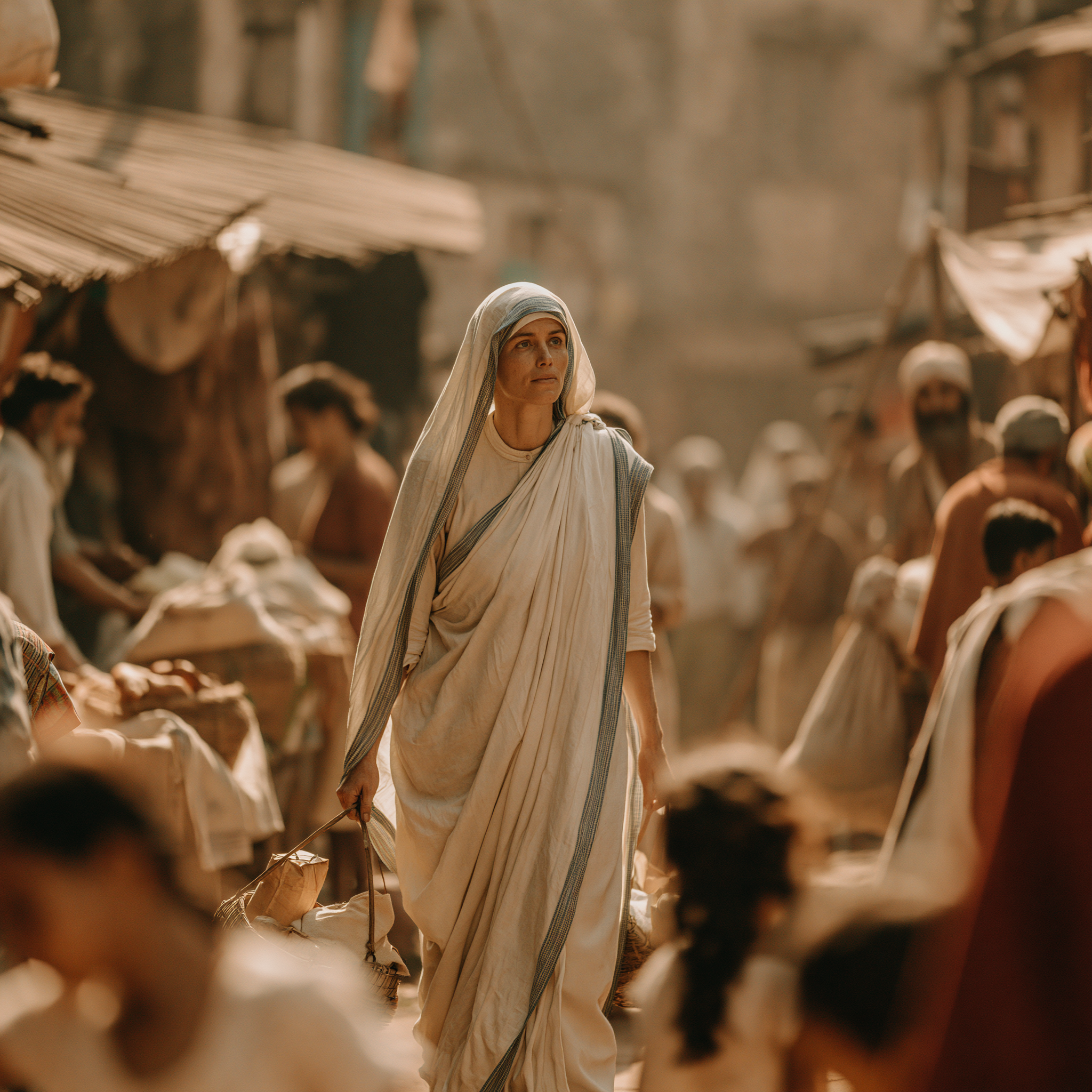
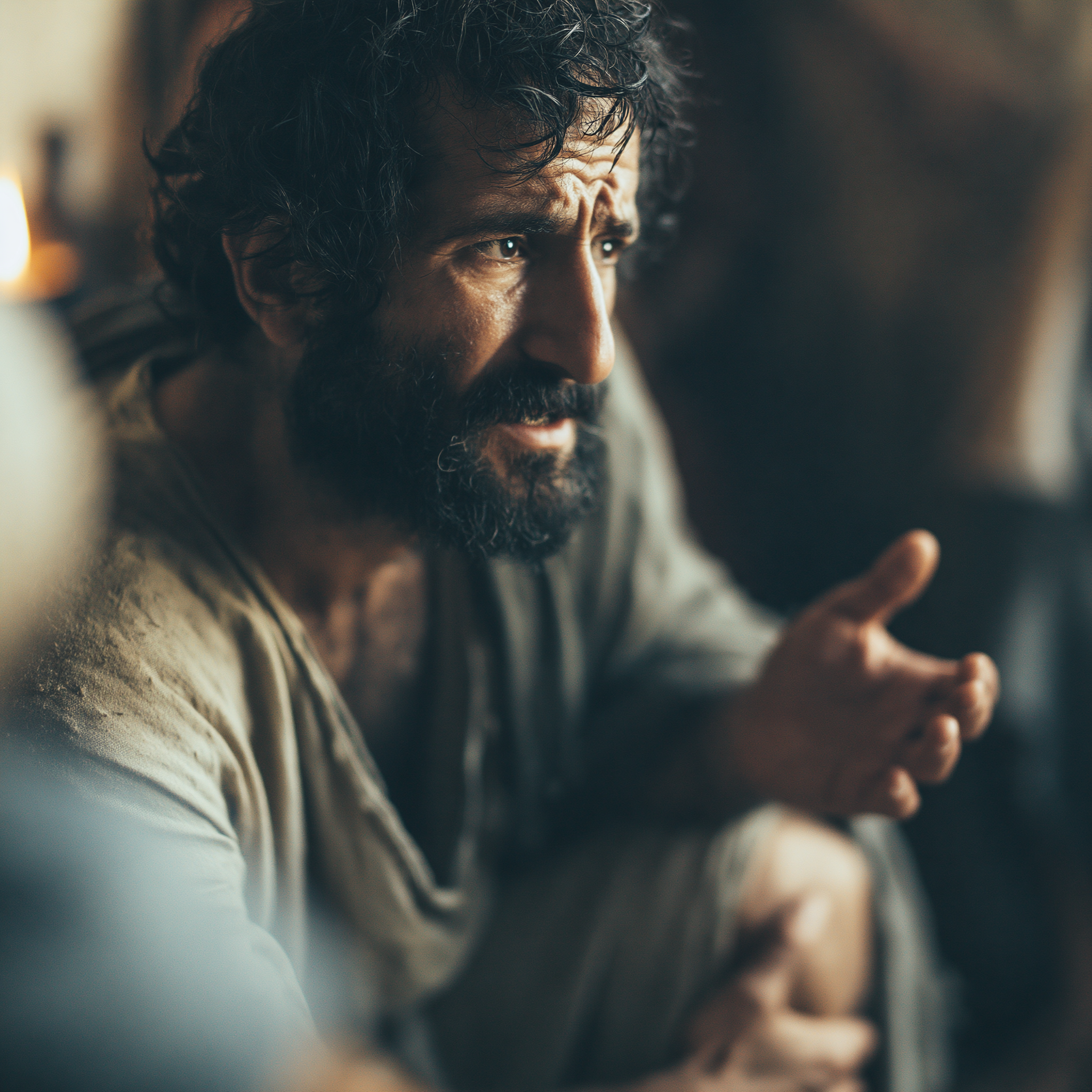
The traditional story begins before Christopher had that name at all. He is introduced as a man of enormous size and strength, sometimes described as a giant, called Reprobus — a name meaning something close to outcast or rejected. Determined to serve only the greatest king in the world, he offers his service first to a powerful earthly ruler.
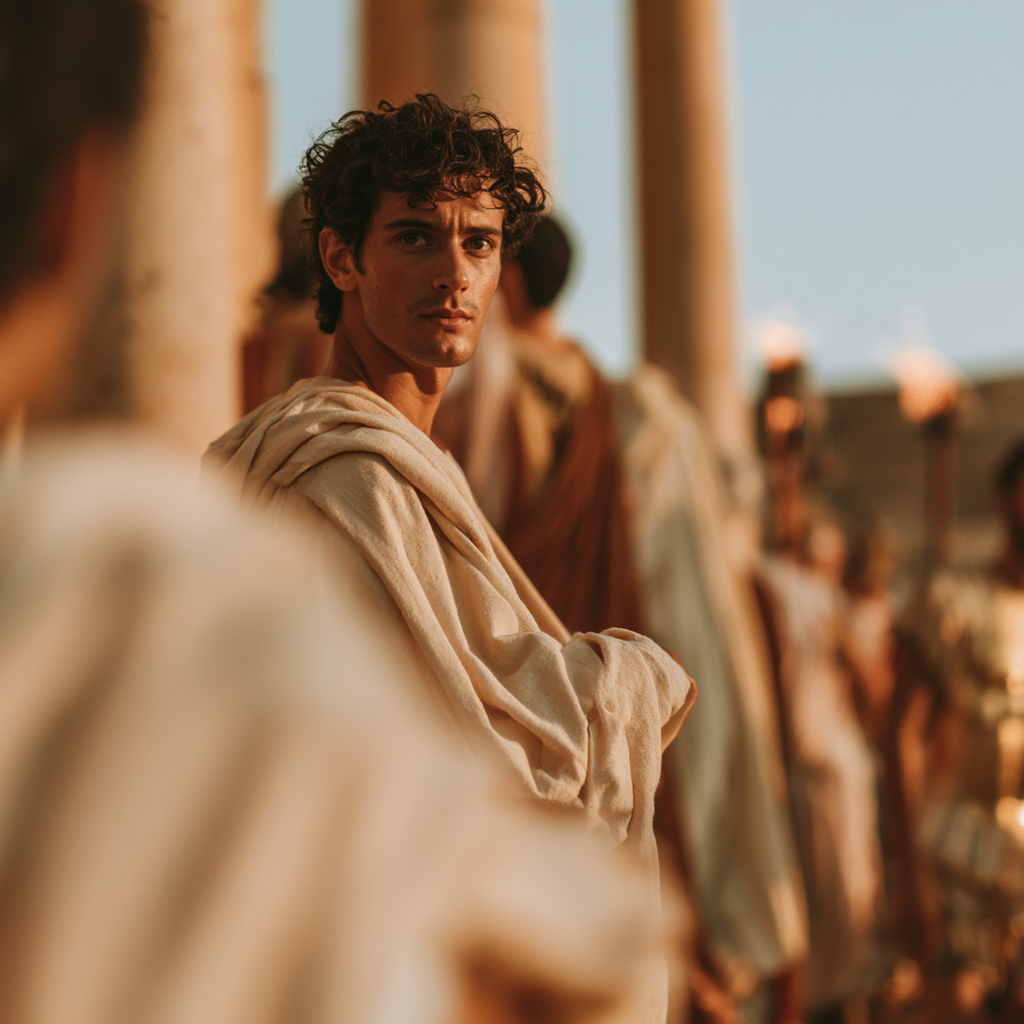
He does not stay long. He discovers that even this king fears the devil, flinching at the mention of him, and Reprobus reasons that a king who fears someone else is not truly the greatest master available. So he leaves to find and serve the devil instead — only to discover, watching his new master swerve out of the way of a roadside cross, that the devil himself fears the name of Christ. Reprobus draws the obvious conclusion: if the devil fears Christ, then Christ must be the greatest king of all, and it is Christ he sets out to find and serve.
The Ferryman of Souls: Serving Christ at the Dangerous River Crossing
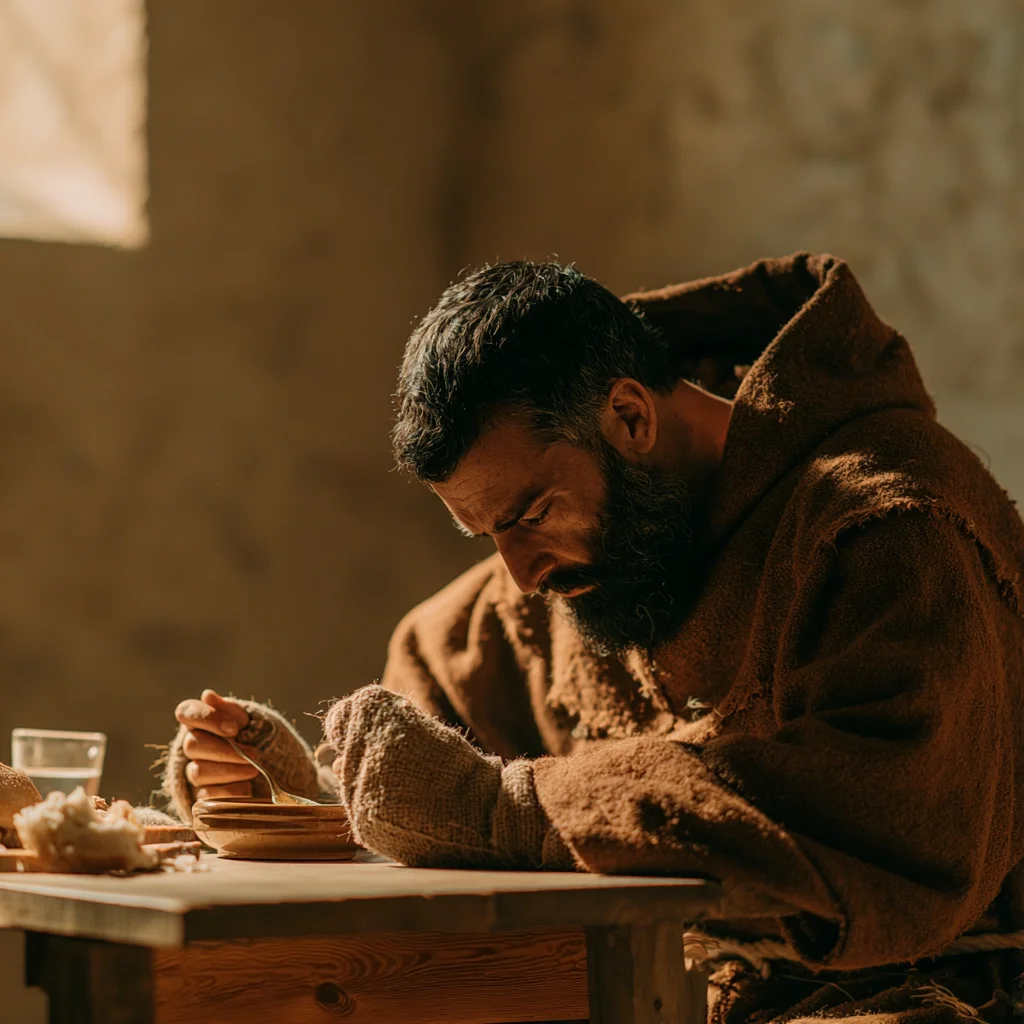
A hermit instructs Reprobus in the faith, but quickly realizes that fasting and long prayer are not going to be this particular convert's path — his body and his temperament are built for labor, not stillness. The hermit gives him a different assignment: use his enormous strength at a dangerous river crossing nearby, carrying travelers safely across on his shoulders, and serve Christ that way instead.
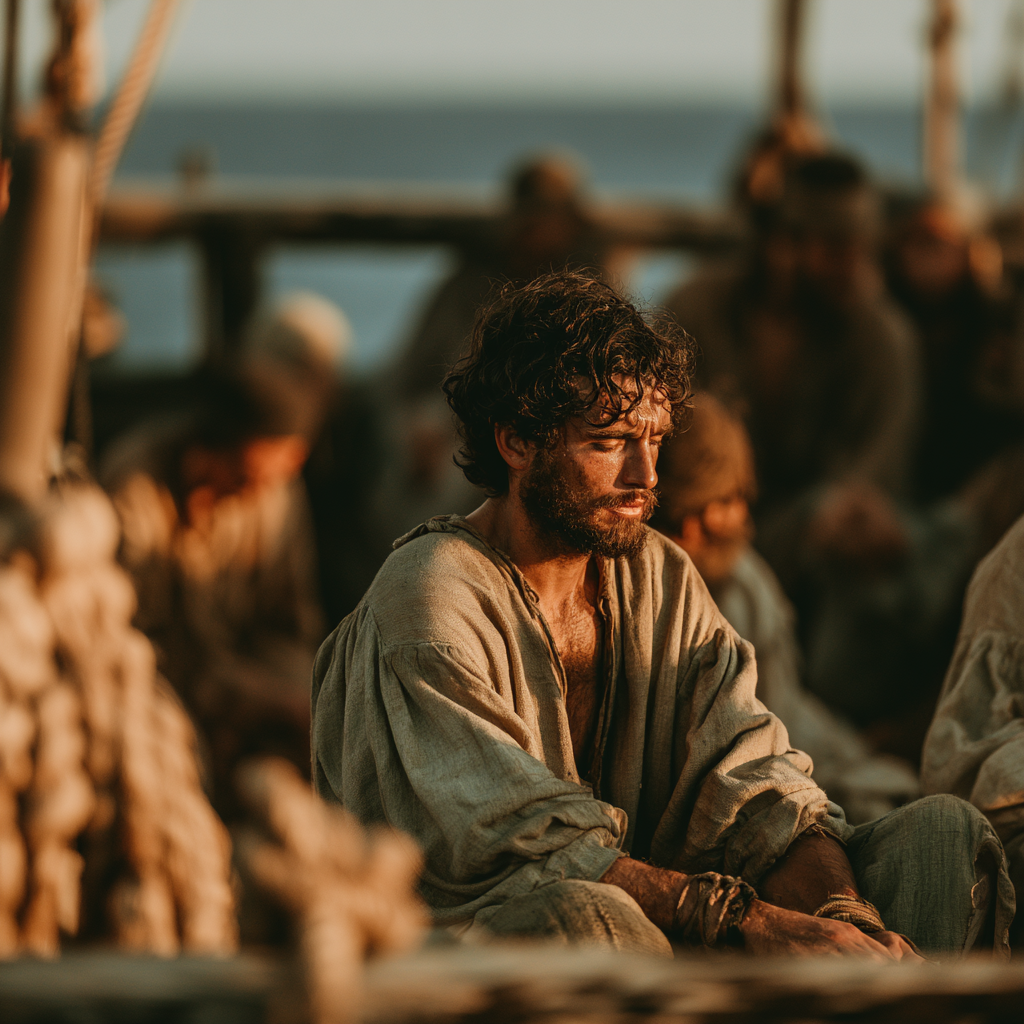
Reprobus takes up the post at the riverbank, ferrying travelers back and forth for what tradition describes as years, leaning on a great staff to steady himself against the current. It is unglamorous, physical, repetitive work — exactly the kind of service that rarely gets remembered in any story, were it not for the one crossing that changed everything.
The Child Who Grew Heavy as the World: Carrying the Christ Child
One night, a small child asks Reprobus to carry him across the river. Reprobus lifts the child onto his shoulders without concern — he has carried grown men across this water for years — and starts across. Partway through the crossing, the child begins to grow unbearably heavy, heavier with every step, until Reprobus is straining under a weight that feels, he later says, like carrying the whole world on his back.
He makes it to the far shore, exhausted, and asks the child who he is and why he weighed so much. The child answers that Reprobus has indeed just carried the weight of the whole world — and its Creator, whom the world's weight belongs to — because he is speaking to Christ Himself. As a sign, the child tells Reprobus to plant his walking staff in the ground; by morning, tradition holds, it had rooted, blossomed, and borne fruit. Reprobus is given a new name to match what he has just done: Christopher, the Christ-bearer.
Martyred for the Name He Now Carried: Preaching and Martyrdom Under Decius
Later tradition sends Christopher on to preach and convert many to the faith, eventually drawing the hostile attention of Roman authorities during a period of persecution, most often associated with the emperor Decius. Accounts describe repeated failed attempts to kill him — arrows that would not strike him, fire he would not burn in — before he was finally put to death, commonly by beheading, for refusing to renounce Christianity.
As with the river crossing, none of this should be read as verified history. It follows a pattern common to many early martyr legends, where the failed execution attempts function less as documented fact than as a way of expressing, dramatically, that the martyr's faith could not be broken by ordinary means.
The Catholic Perspective: Saint Christopher, Calendar Changes, and Real Truth
To look at Saint Christopher through the eyes of Catholic tradition is to discover how a story can hold profound truth even when history cannot supply every detail. The Church honors him not because his life was neatly documented in ancient ledgers, but because his legend captures something indispensable about the Christian journey—that real holiness often begins in unglamorous, practical work done for the good of others.
-
In 1969, the reform of the Church's General Roman Calendar following the Second Vatican Council moved Christopher's feast from the universal, obligatory calendar to an optional local commemoration, citing the lack of reliable historical evidence for his life. This decision is frequently misreported, even today, as the Church having removed Christopher from the ranks of the saints entirely. That is not accurate. He was never decanonized — there was, in fact, no formal canonization process to reverse, since his veneration predates the Church's modern canonization procedures by many centuries. He remains a saint. His feast simply became optional rather than universally required.
-
Christopher's legend has survived for over a millennium not despite its uncertain historical footing but in some sense because of what it offers regardless of that footing: a vivid, memorable picture of Christ hidden inside the most ordinary act of service, discovered only in the difficulty of carrying it out. The Church has always made room for this kind of devotional story — not equivalent to Scripture or to verified biography, but carrying its own kind of formative truth, the way a parable can teach something real without being a police report.
-
Christopher's association with travel grew directly from the river-crossing legend and has proven remarkably durable, extending naturally in the twentieth century from foot travelers to motorists. Saint Christopher medals remain among the most widely recognized and worn Catholic sacramentals in the world, carried in cars and pockets by people setting out on a journey and hoping, in the oldest sense of his story, for safe passage.
Reprobus makes it to the far shore, exhausted, having just carried — without knowing it — the weight of the whole world.
Why Saint Christopher Still Matters: Ordinary Strength in Divine Service
Christopher offers something genuinely different from most of the saints on this site: not a documented life examined closely, but a story that has done real spiritual work for over a thousand years regardless of how much of it can be verified. That distinction matters, and it is worth being honest about it rather than smoothing it over.
What the story keeps offering, generation after generation, is a picture of sanctity available to someone with no particular gifts beyond ordinary strength and a willingness to use it in service — someone who found Christ not in a moment of dramatic insight but in the exhausting middle of a river crossing, discovering only afterward what he had actually been carrying. For anyone who has ever felt too ordinary, too unlearned, or too plainly physical for a spiritual life, Christopher's legend has been saying the same thing for centuries: carry what is in front of you, faithfully, and see who it turns out to be.