Saint Philomena: The Story, Controversy, and Devotion Behind the Unconfirmed Martyr
Feast Day: August 11, observed locally where continuing permission exists; removed from the universal Roman calendar in 1961
Historical Status: No ancient written record of a martyr named Philomena exists. Her cultus began entirely from the 1802 discovery of unidentified remains in the Catacomb of Priscilla, Rome
Discovery: Remains and three inscribed tiles, reassembled to read approximately “Pax Tecum Filumena,” discovered in 1802; transferred to Mugnano del Cardinale, Italy, in 1805
1961 Removal: The Vatican removed her name from the Roman Martyrology and suppressed her universal liturgical cultus, citing the absence of historical evidence connecting the remains to any documented individual
Canonization: Never formally canonized through the Church's standard process; her veneration developed through local and papal approval of an existing popular devotion
Notable Devotees: Saint John Vianney, the Curé of Ars, and Venerable Pauline Jaricot were both closely associated with devotion to her
Continuing Veneration: Local devotion continues today at the Sanctuary of Mugnano del Cardinale and among private devotees, under continuing local ecclesiastical permission
In 1802, workers exploring the Catacomb of Priscilla in Rome uncovered a sealed burial niche containing human remains and three clay tiles bearing fragments of an inscription. Reassembled, the tiles appeared to read: Pax Tecum Filumena — peace be with you, Filumena.
No one knew who Filumena had been. No document, no early Christian text, no liturgical tradition predating that discovery mentioned her at all. What followed over the next several decades was one of the most unusual devotional stories in the modern Catholic Church: an entire cultus, a widely circulated legend of martyrdom, reports of significant miracles, and devotion from at least one canonized saint, all built on a name recovered from broken tiles and a set of bones whose original owner has never been historically confirmed.
Saint Philomena at a Glance: Feast Day, History, and Facts
Few figures in Catholic history evoke as much intrigue as Saint Philomena, a martyr whose story began not in ancient manuscripts, but in a nineteenth-century catacomb. From the enigmatic inscription on three clay tiles to widespread devotion championed by saints, here is a quick overview of her history, feast day, and enduring legacy.
-
An unidentified individual whose remains, discovered in Rome in 1802, became associated with the name Philomena and a popular cultus of martyrdom
-
A devotion built almost entirely on a nineteenth-century archaeological discovery and later reported private revelations, rather than documented ancient history
-
The Catacomb of Priscilla, Rome, where the remains were found; Mugnano del Cardinale, Italy, where they were transferred and where devotion remains centered today
-
The relics are believed to date to the early centuries of Christianity, though no verified date or identity has ever been established; the cultus itself began in 1802
-
Because her story illustrates, more clearly than almost any other case in the Church's history, the real distinction between devoted popular piety and documented historical fact
The 1802 Catacomb Discovery: Bones and Broken Tiles
The tiles found with the remains also bore symbols later interpreted by some as instruments of martyrdom — an anchor, arrows, a palm branch, a scourge, a lily — though scholars have long debated whether these symbols were correctly read, and even whether the tiles were originally associated with these particular remains in their discovered order at all. Unlike the great majority of the Church's saints, there is no vita, no early written account, and no liturgical veneration of anyone named Philomena predating this single archaeological find.
From Rome to Mugnano: The Rapid Rise of a New Devotion
In 1805, a local priest named Don Francesco de Lucia arranged for the remains to be transferred to the town of Mugnano del Cardinale, near Naples. Popular devotion grew rapidly and, by most accounts, quite unexpectedly — driven not by any newly discovered ancient document, but by reports of favors and healings that pilgrims began attributing to the relics almost immediately after their arrival.
The Legend of Philomena: Private Revelations and the Roman Martyr
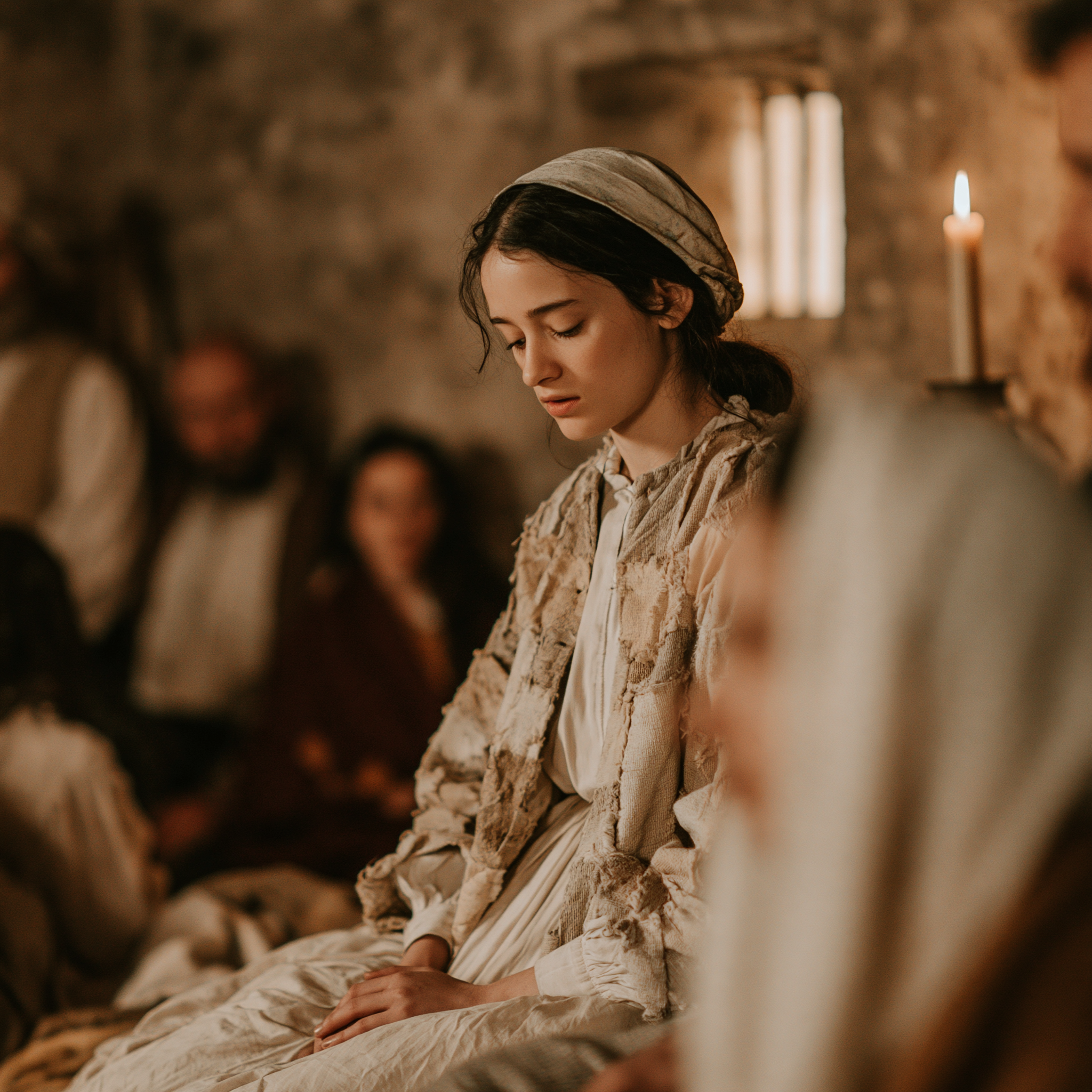
A detailed narrative of Philomena's life began circulating in the years afterward, reportedly revealed through private visions received by a nun and others in the early nineteenth century — not recovered from any ancient source. According to this account, she was a young Greek princess who had consecrated her virginity to Christ; when the Roman emperor Diocletian sought to marry her, and she refused, she was subjected to a series of tortures, including a drowning attempt from which angels reportedly saved her, before finally being killed with arrows and beheaded at around thirteen years old.
This narrative should be understood clearly for what it is: a devotional story assembled in the nineteenth century from reported private revelation, with no ancient documentary support whatsoever. It is not verified biography, and presenting it as established historical fact would misrepresent what is actually known — which is, essentially, nothing certain about the person behind the name on the tiles.
Miracles and Devotees: St. John Vianney and Pauline Jaricot
What sustained the cultus, more than the contested legend, were specific and well-documented connections to real, verifiable figures. Venerable Pauline Jaricot, a French laywoman known for founding significant Catholic missionary and prayer movements, reported a dramatic healing in 1835 that she attributed to Philomena's intercession, and the publicity surrounding it helped spread devotion across France. Separately, Saint John Vianney, the Curé of Ars, held a strong personal devotion to Philomena throughout his life, attributed miracles to her intercession, and referred to her affectionately as his dear little saint — a connection to one of the Church's most universally respected parish priests that lent the devotion real credibility among the faithful, regardless of the uncertainty surrounding its historical foundation.
Why Was Saint Philomena Removed from the Catholic Calendar in 1961?
In 1961, as part of a broader review of the Church's liturgical calendar, the Vatican removed Philomena's name from the Roman Martyrology and withdrew her universal liturgical cultus, citing the complete absence of historical evidence connecting the relics to any documented individual named Philomena. It is worth being precise about what this decision did and did not do: it did not declare that no such martyr ever existed, nor did it prohibit devotion outright. It withdrew the Church's formal universal liturgical recognition on the grounds that such recognition requires a documented historical basis that the case simply did not have. Local devotion at Mugnano del Cardinale and elsewhere continued, and continues today, under local ecclesiastical permission.
Faith vs. Historical Evidence: The Catholic Church’s Stance
The tension at the heart of Saint Philomena’s story is not between belief and doubt, but between genuine piety and historical integrity. In navigating devotion born of archaeological discovery rather than confirmed record, the Catholic Church drew a careful boundary—one that distinguishes formal liturgical veneration from the private faith of millions.
-
Philomena's case draws an unusually clear line between two things the Church normally holds together: the pastoral value of a devotion that has genuinely helped believers pray, and the historical evidence required to support universal liturgical veneration. The 1961 decision reflects the Church's own insistence on keeping those two things distinct rather than allowing popular enthusiasm to substitute for documented history.
-
Philomena was never canonized through the Church's ordinary process; her veneration developed through a different, older mechanism of local and papal approval of an existing popular cultus, common in earlier centuries before the modern canonization process was fully formalized. This distinguishes her from every other saint on this site and is worth stating plainly rather than glossing over.
-
Devotion to Philomena remains active in specific places, particularly Mugnano del Cardinale, and among private devotees who continue to find the intercessory tradition meaningful, regardless of the underlying historical uncertainty. The Church has not suppressed this local devotion; it has simply declined to extend it universal liturgical status.
It is worth being precise about what the 1961 decision did and did not do: it did not declare that no such martyr ever existed, nor did it prohibit devotion outright.
The Legacy of Saint Philomena: Popular Piety and Ongoing Veneration
Philomena's story is less a biography than a case study in how devotion sometimes moves faster and further than documented evidence can follow — a name on a broken tile, a legend assembled from reported visions rather than ancient record, and a cultus that grew large enough to draw the devotion of a canonized saint before the Church itself stepped back to examine, carefully and honestly, exactly what could and could not actually be confirmed.
Her continuing local veneration, held alongside the Church's own formal acknowledgment of the uncertainty surrounding her, offers something genuinely instructive: proof that the Church is willing to correct its own popular enthusiasm when the historical record does not support it, even after decades of widespread devotion, while still leaving room for the sincere piety of those who continue to find meaning in her intercession.