Why Does John Begin with 'In the Beginning'? Genesis Parallel & Logos Theology
Every Gospel has to begin somewhere.
Matthew begins with Abraham, tracing the genealogy that proves Jesus is the heir to David’s throne and the fulfillment of Israel’s promise. Mark begins at the Jordan River, with a voice crying in the wilderness and a man being baptized. Luke begins with a historian’s careful note about sources, then moves to the announcement of a birth to an elderly priest named Zechariah.
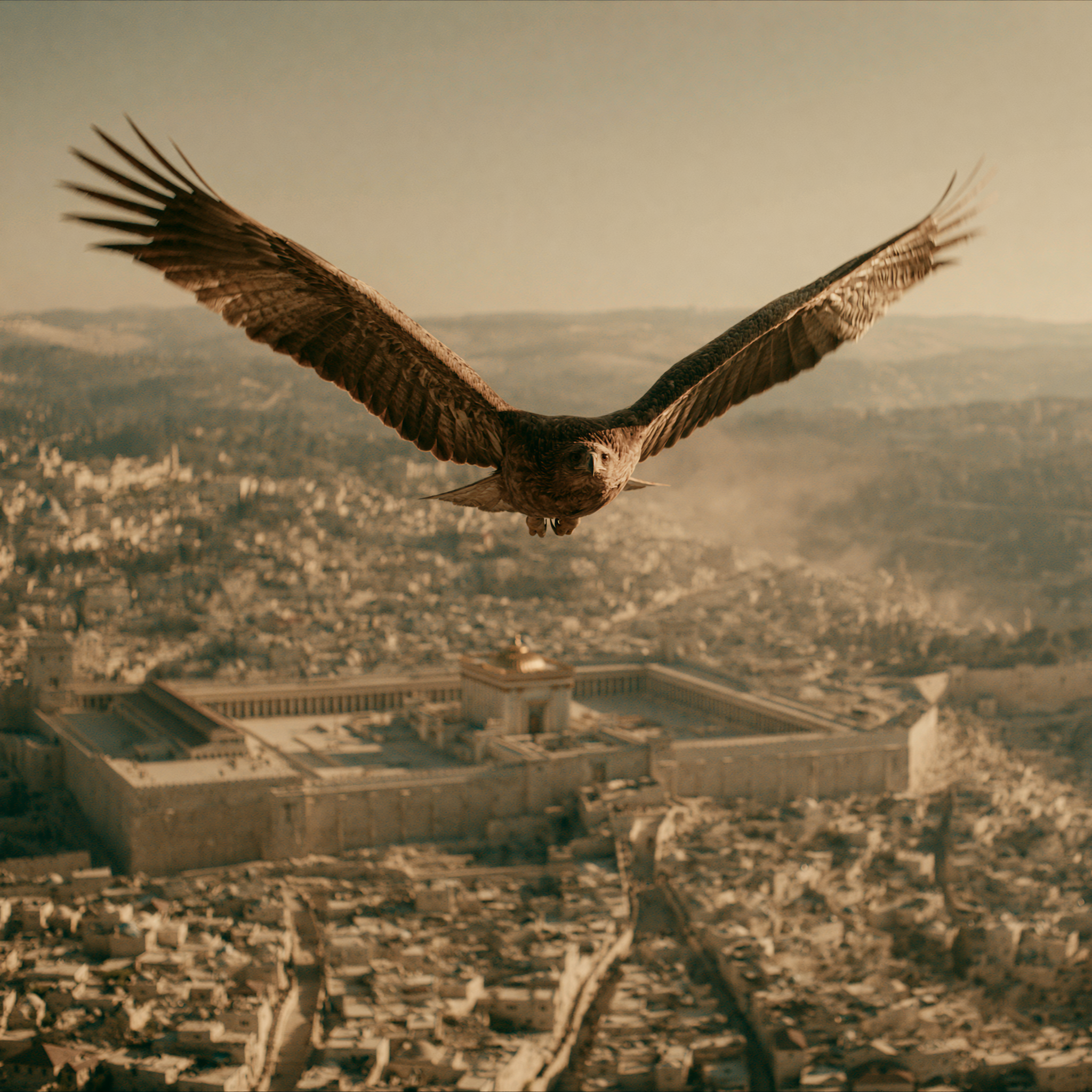
John begins before any of that. Before Abraham. Before the Jordan. Before the angel’s announcement. Before the first day of creation. He begins at the place where beginning itself began.
In the beginning was the Word.
Why? Why not start with the birth of Jesus, or the call of the first disciples, or the first sign at Cana? Why does John reach past the entire history of Israel, past the creation of the world, past time itself, to open his Gospel at a point before which there is nothing?
The answer tells you everything about what kind of book John is writing and what he believes about the one his book is about.
The Short Answer: John 1:1 and the Echo of Genesis
The opening words of John’s Gospel in Greek are en arche — in the beginning. They are identical to the opening words of Genesis in the Greek translation of the Old Testament used by first-century Jewish readers. This is not a coincidence. John is announcing from his first breath that he is writing a new Genesis — a new account of how the world came to be and how God moved within it.
Genesis begins: In the beginning, God created the heavens and the earth. John begins: in the beginning was the Word. The parallel is exact and deliberate. Where Genesis opens with God creating through speech — God said, and it was so — John opens by identifying that speech, that creative word of God, as a personal being who was present before the beginning, who was with God, and who was God.
The Logos — the Word — is not a creature God made to help with creation. The Logos is the one through whom all things were made. And the Logos has become flesh. The creator has entered His creation. The story John is about to tell is not a continuation of history. It is a new creation.
The Deeper Answer: 4 Reasons John Opens Before Creation
The opening words of the Fourth Gospel do not merely begin a story—they echo an entire cosmos into being. By opening with en archē ("in the beginning"), John intentionally aligns his first breath with the Greek translation of Genesis 1:1. This was no stylistic coincidence; it was a cosmic declaration. Before presenting what Jesus did in Galilee or Jerusalem, John insists on establishing who Jesus was before time itself began.
Discover how John 1:1 establishes this deliberate Genesis parallel:
-
The other Gospels begin with what Jesus does and let the reader gradually discover who He is. John reverses this. He tells you who Jesus is in the first two verses — eternal, divine, the creative Word of God — and then spends the rest of the Gospel showing you what that means in practice. Every sign, every conversation, every I AM statement is read through the lens the Prologue has provided. You already know what you are looking at. Now watch what He does with that knowledge.
-
John is writing for both Jewish and Greek readers, and the opening verses address each directly. For a Jewish reader, in the beginning echoes Genesis and places Jesus within the story of Israel’s God and His relationship with creation. For a Greek reader, the Logos was already a significant philosophical concept — the rational principle that ordered the universe, the mind behind the cosmos. John is saying to both audiences: the thing you have been reaching toward is now here, in person. The God of Israel and the Logos of Greek philosophy are the same one, and He has become flesh.
-
If you begin a Gospel with the birth of a baby in Bethlehem, the Incarnation feels manageable. Miraculous, yes. Extraordinary, yes. But comprehensible within a certain frame of reference — a human birth, a divine sign, a remarkable child.
-
John states his purpose at the end of the Gospel: these things are written so that you may believe that Jesus is the Christ, the Son of God. The question the Gospel is asking is the question of identity — who is this person? And John’s answer begins in the first sentence. He is the Word. He was with God. He was God. He became flesh and dwelt among us.
Everything in the Gospel is an elaboration of what the Prologue states. The signs demonstrate His power over creation — the power of the one through whom all things were made. The I AM statements claim the divine name — the name that belongs to the one who was in the beginning with God. The Passion and resurrection are the hour of His glorification — the return of the Word to the Father He was with before the world began. John begins where he does because the answer to the central question of the Gospel requires eternity to contain it.
The Catholic Tradition: The Logos, Church Fathers, & Nicene Creed
The opening of John’s Gospel has been one of the most theologically generative texts in the history of the Church.
The early apologists — Justin Martyr, Athenagoras, Clement of Alexandria — used the concept of the Logos to engage with Greek philosophy and show that the God Christians worshipped was not a provincial deity but the rational ground of all existence. Justin argued that every human being who has ever lived according to reason has participated in the Logos — that the seeds of the Word are scattered throughout human thought and culture, and that the Incarnation is the full flowering of what those seeds were pointing toward.
The Council of Nicaea in AD 325, which produced the Nicene Creed, was convened primarily to defend the truth of John 1:1: that the Word is truly God, not a lesser being, not a creature. The Arian controversy — the claim that the Son was the first and greatest of God’s creatures but not God Himself — was settled by insisting on the plain meaning of John’s first sentence. The Word was God. Not like God. Not nearly God. God.
The Prologue is proclaimed at Christmas Mass — the feast of the Incarnation — in many Catholic communities, because there is no better text for the day on which the Church celebrates the Word becoming flesh. The cosmic sweep of the opening verses and the sudden, arresting intimacy of verse fourteen — and the Word became flesh and made His dwelling among us — make the Prologue the perfect proclamation for the day the Church celebrates the mystery that John begins before creation to describe.
Why the Eternal Word Matters for the Reader Today
John begins before the beginning because He wants you to understand the scale of what happened when the Word became flesh.
If Jesus is a good teacher, His birth in Bethlehem is a remarkable event. If Jesus is a prophet, His ministry in Galilee is spiritually significant. But if Jesus is the eternal Word of God — the one through whom all things were made, who was with God before the world existed, who is God — then what happened in Bethlehem is the most extraordinary event in the history of the universe. The creator is entering His creation. Eternity stepping into time. The Word that spoke the world into being became part of the world He spoke.
John begins where He does so that by the time you reach the manger — which He does not describe, but which the Prologue makes you feel — you understand what is lying in it.
“In the beginning was the Word, and the Word was with God, and the Word was God.”
Three phrases. Three claims. The Word exists from the beginning. The Word is personally distinct from God. The Word is God.
Everything John’s Gospel says after this is the unpacking of these three phrases. Read the Prologue and you have the argument in seed form. Read the rest of the Gospel and watch it flower.