Mary Magdalene in the Gospel of John: The First Witness & Apostle to the Apostles
She is there at the end when almost everyone else has gone.
Three of the four Gospels name her among the women who stood near the cross while the disciples scattered. John places her close — not watching from a distance but standing near enough to hear Jesus speak from the cross, near enough to be seen. She is there for the death. She is there for the burial. And on the first day of the week, before the sun has fully risen, she is the first one back.
What John gives us of Mary Magdalene is spare and precise. He does not tell us her backstory. He does not describe her appearance. He does not give us her inner life in any detail, except for the one that matters most: she loved Jesus, and she would not leave.
That fidelity — quiet, persistent, willing to stand in the dark outside a sealed tomb and weep — is exactly why she is the one who hears her name spoken first on Easter morning. Why she becomes, in the words of the Church, the Apostle to the Apostles.
John’s portrait of Mary Magdalene is one of the most carefully drawn in the entire Gospel. She appears only twice, at the cross and at the tomb, but those two appearances carry the full weight of what the Gospel has been building toward.
Key Facts: Who Was Mary Magdalene in Biblical History?
-
Mary Magdalene, a devoted follower of Jesus from the town of Magdala in Galilee
-
One of the women who followed Jesus throughout his ministry; the first witness to the resurrection
-
Present at the crucifixion at Golgotha and at the tomb in the garden on the morning of the resurrection
-
At the cross on the afternoon of Good Friday; at the tomb on the morning of the first day of the week
-
Mary Magdalene matters because Jesus chooses her as the first witness to His resurrection and sends her to announce the news to the other disciples
Her Identity and Presence in John’s Gospel Narrative
John introduces Mary Magdalene without ceremony. He does not tell us who she is, only that she is there. She appears by name at the crucifixion, listed among the women standing near the cross alongside the mother of Jesus and the mother of the sons of Zebedee. No explanation. No backstory. She is simply present, which tells us something important: her presence at this moment requires no explanation. She has been following Jesus long enough for her place beside the cross to be understood.
Her name connects her to Magdala, a prosperous fishing town on the western shore of the Sea of Galilee. Beyond that geographical anchor, John tells us nothing of her origins. What he shows us instead is her character through her actions, and her actions are defined by a single quality: she stays.
She stays at the cross. She stays to see where the body is laid. She returns to the tomb before dawn on the first day of the week, alone in the dark. When Peter and the beloved disciple run off, she stays. When the angels speak to her, she answers and turns away. When she mistakes the risen Christ for the gardener, she does not leave — she asks where the body has been taken, because even in grief, even in confusion, even having been told by angels that something extraordinary has happened, she will not go until she has found him.
This quality — persistent, faithful presence in the dark — is what John’s Gospel rewards with the most extraordinary gift it has to give. The first word of the resurrection is her name, spoken by the one she came to find.
Major Biblical Scenes: From the Foot of the Cross to the Empty Tomb
To read John’s account of Mary Magdalene is to watch a devotion tested in the crucible of absolute loss. She is not a distant observer of the drama of salvation; her story unfolds across two starkly contrasting landscapes that bridge the gap between death and new life. By following her steps from the public horror of the cross to the quiet, weeping stillness of a garden tomb, we see how a love that refused to leave the dark became the very first to witness the dawn.
-
John 19:25–27
The male disciples, with the exception of the beloved disciple, are not mentioned at the crucifixion in John’s Gospel. What John records instead is a small group of women who have not fled. Mary Magdalene is named first among them.
She is standing near the cross — not watching from a distance as the Synoptic accounts sometimes suggest, but close enough to be present for the words Jesus speaks from it. She hears him entrust his mother to the beloved disciple. She watches him die. She is there when the soldier drives the lance into his side and blood and water pour out.
John’s eyewitness detail in this section of the Gospel is insistent and precise. He who saw this has testified, and his testimony is true. He is telling you the truth, so that you also may believe. The women at the cross are part of that testimony. They see what happens. They do not look away.
Mary Magdalene’s presence at the crucifixion is not incidental. It means she is a witness in the legal and theological sense — someone who can testify to what she saw. And what she saw was the death of Jesus. This matters enormously for what follows, because the resurrection is only good news to someone who knows the death was real.
-
John 20:1–18
It is the first day of the week, and it is still dark when Mary Magdalene comes to the tomb.
John gives us this detail — still dark — and it is not merely atmospheric. Darkness has been doing theological work throughout this Gospel since the Prologue told us that the light shines in the darkness and the darkness has not overcome it. Mary comes to the tomb in the dark. She will leave it in the light.
She sees that the stone has been moved. She does not look inside. She runs immediately to Simon Peter and the beloved disciple and says: “They have taken the Lord from the tomb, and we don’t know where they put him.” The we suggests she has not come alone, though John’s focus will narrow entirely to her in the scene that follows.
Peter and the beloved disciple run to the tomb. They look inside. They see the burial cloths lying there, the face cloth rolled up separately. The beloved disciple sees and believes. Then they go home.
But Mary stays.
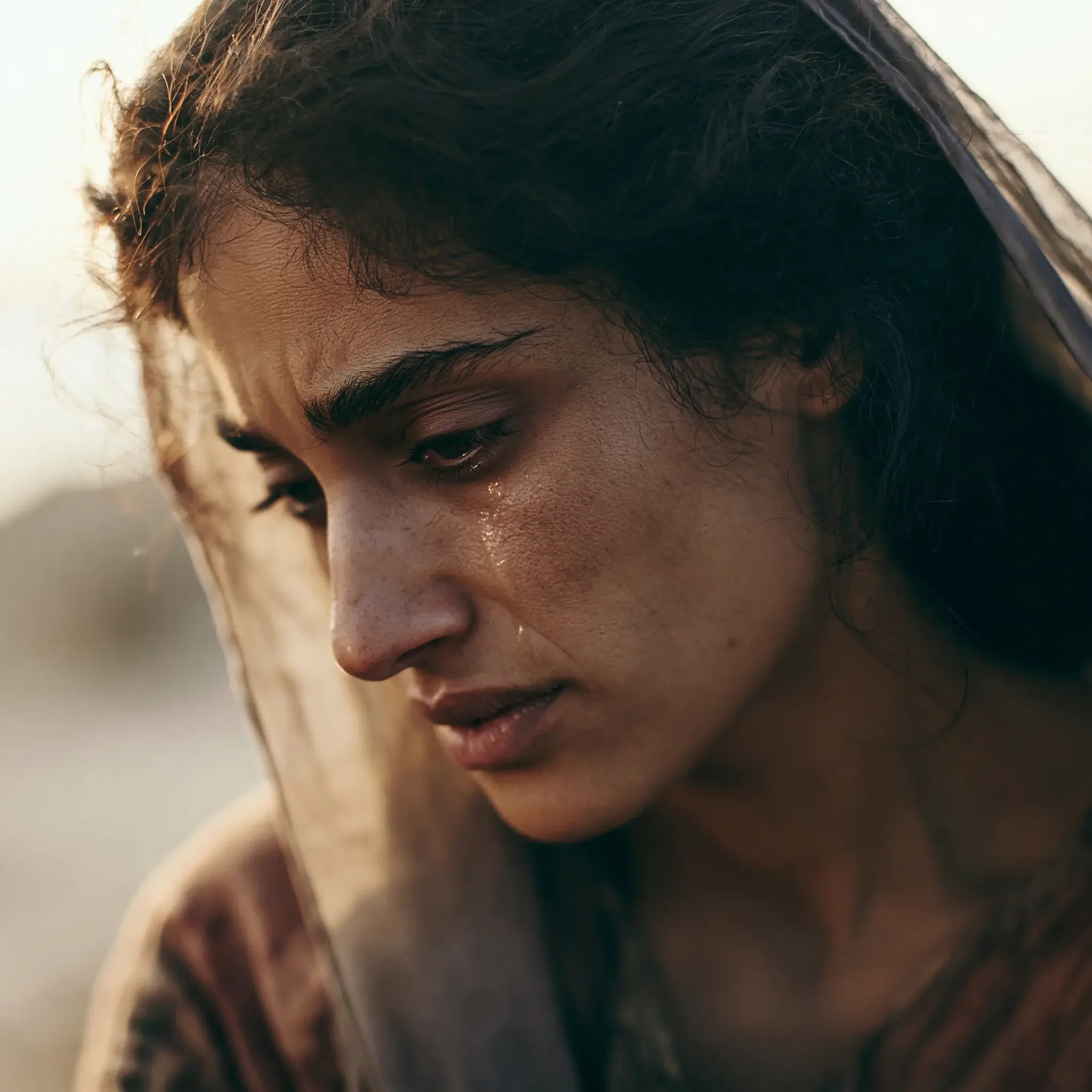
She is standing outside the tomb weeping. She bends down to look inside and sees two angels in white, one at the head and one at the feet of where the body had been. “Why are you weeping?” they ask.
She says: “They have taken my Lord, and I don’t know where they put him.”
She turns around. There is a man standing there. She does not know it is Jesus. The detail is startling given how close to him she has been — close enough to stand at the foot of his cross. But grief can blind a person. Or perhaps something else is happening, some veiling of recognition that the resurrection narratives in all four Gospels suggest is part of how the risen Christ appears. She thinks He is the gardener.
“Why are you weeping?” He asks. “Who are you looking for?”
“Sir,” she says, “if you carried him away, tell me where you put him and I will take him.”
She is going to take the body of a crucified man from wherever it has been moved and carry it herself if she has to. She will not leave without him.
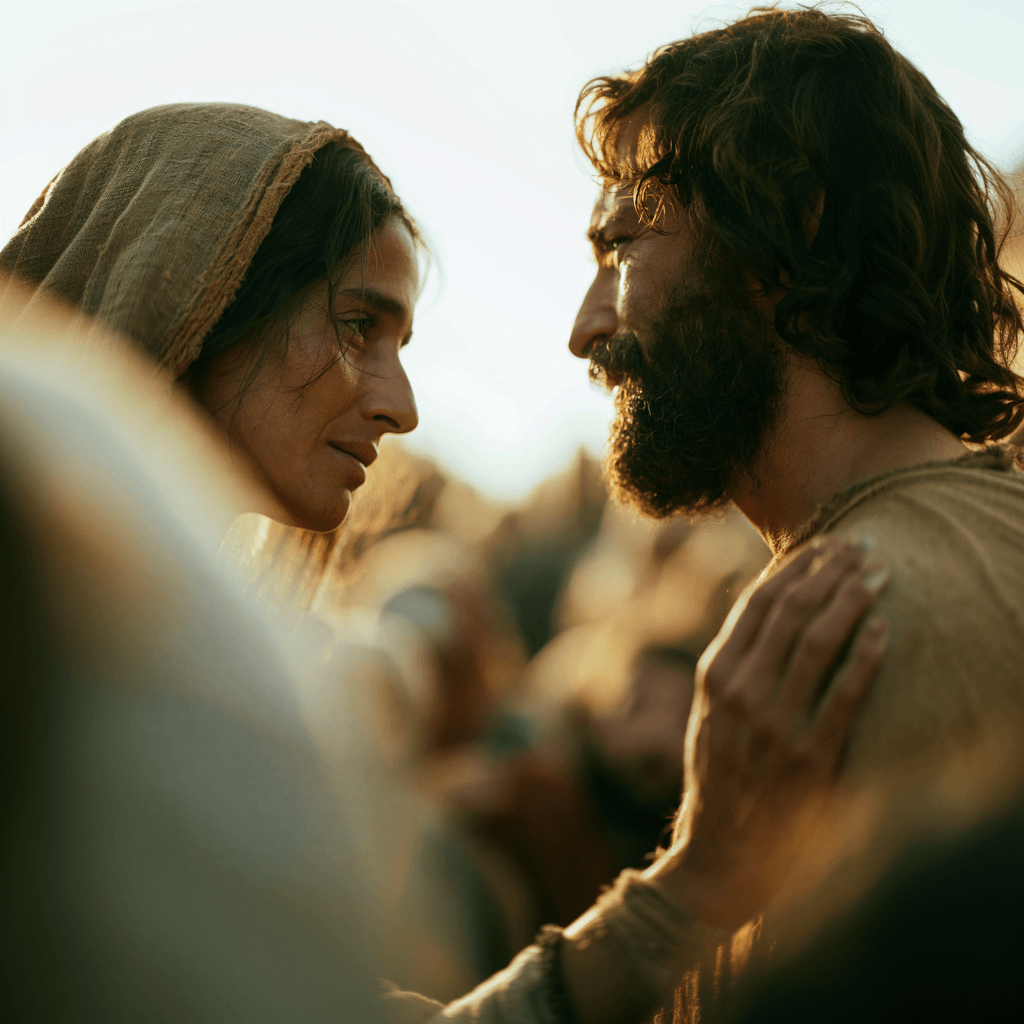
He says her name.
“Mary.”
One word. Her name, spoken in His voice. And she knows.
She turns and says: Rabbouni. The Aramaic word for Teacher, but with a weight of intimacy that the simple English translation does not quite carry. This is not a student addressing a lecturer. This is the word of someone who has been found.
“Do not hold on to me,” Jesus says, “for I have not yet ascended to the Father. Go to my brothers and tell them: I am going to my Father and your Father, to my God and your God.”
She goes. And what she says when she finds them is the announcement the entire Gospel has been moving toward:
“I have seen the Lord.”
Five words. The first proclamation of the resurrection. Spoken by a woman who came to the tomb in the dark, who stayed when everyone else left, who was weeping outside a sealed tomb and asking a man she thought was a gardener where the body had been taken.
This is who Jesus chooses to be the first witness. Not Peter, who was the first to go inside the tomb. Not the beloved disciple, who was the first to believe. Mary Magdalene, who would not leave.
Theological Themes: What John Emphasizes About Mary Magdalene
-
If John’s Gospel has a theme that runs beneath all its other themes, it is the theme of remaining. Jesus uses the word again and again in the vine-and-branches discourse: "Remain in me, as I remain in you." A branch cannot bear fruit unless it remains on the vine.
Mary Magdalene embodies this before she has heard the teaching. She remains. At the cross, at the tomb, in the dark, in grief, in confusion. She is the living illustration of what it looks like to remain even when everything seems to have ended.
-
John records that she weeps twice — once when she goes to tell Peter and the beloved disciple that the tomb is empty, and again when she stands outside it alone. The angels ask her why. Jesus asks her why. Her answer is the same both times: “They have taken my Lord, and I don’t know where they put him.”
The grief is not abstract. It is the grief of someone who has lost a person they love. John does not sentimentalize it or explain it. He simply records it as the condition in which the resurrection announces itself. She is not in a state of calm spiritual readiness when she hears her name. She is weeping.
This is one of John’s great gifts to the reader. The first Easter morning is not a scene of triumphant certainty. It is a scene of grief interrupted by a name.
-
The early Church gave Mary Magdalene the title Apostle to the Apostles. St. Thomas Aquinas used it in the thirteenth century. It captures something John’s Gospel makes explicit: she is sent. Jesus does not simply reveal Himself to her and let her absorb the experience privately. He gives her a mission. Go to my brothers. Tell them.
She is not a passive recipient of the resurrection. She is its first messenger. The word apostle means one who is sent, and Mary Magdalene is sent by the risen Christ Himeself with the most important message in human history. That she delivers it to a group of men who will go on to lead the early Church is not incidental to John’s narrative. It is one of its quiet, deliberate details.
Liturgical Legacy: The Catholic Tradition and Feast of Mary Magdalene
The Church’s liturgical calendar celebrates the feast of Mary Magdalene on July 22. In 2016, Pope Francis elevated her feast from a memorial to a feast day — the same liturgical rank as the feasts of the apostles — and issued a decree explicitly connecting this elevation to her role as the Apostle to the Apostles.
The decree noted that it was fitting to reflect more deeply on the dignity of this woman who loved Christ so much and who was so greatly loved and chosen by Christ. The language of the decree echoes John’s Gospel precisely: it is her love, her choosing to remain, and Christ’s choosing of her that define her significance.
In the Roman Rite, the Gospel reading for her feast day is the garden scene from John 20 — the very passage we have been exploring. The Church reads her story in the words John wrote, and finds in those words the same thing John found: a woman who would not leave, and a risen Lord who spoke her name.
She is also a patron saint of penitents, contemplatives, and — fittingly — of people who seek what is lost. There is no better description of what she is doing in the garden on Easter morning: seeking what she believes has been taken from her, refusing to stop until she finds it.
Why Her Story Matters: The Culmination of Faith in John's Gospel
John’s Gospel is full of moments where Jesus chooses the unexpected person. A Samaritan woman at a well becomes the first evangelist in Samaria. A man born blind becomes a witness while the Pharisees remain in darkness. A dead man walks out of a tomb, and the authorities decide the solution is to kill Jesus.
Mary Magdalene is the culmination of this pattern. The resurrection — the event the entire Gospel has been building toward since its opening word — is announced first not to Peter, not to the beloved disciple, not to the inner circle of the twelve. It is announced to a woman standing alone outside a tomb in the dark, weeping.
Jesus says her name.
She recognizes him.
She goes and tells.
That is the whole of it. That is the shape of faith in John’s Gospel: hearing your name called in the dark, turning toward the voice, and going to tell someone else what you have seen.
Mary Magdalene does all three. She does them before anyone else. And two thousand years later, the Church still reads her story on her feast day and calls her by the title the tradition has given her:
Apostle to the Apostles.