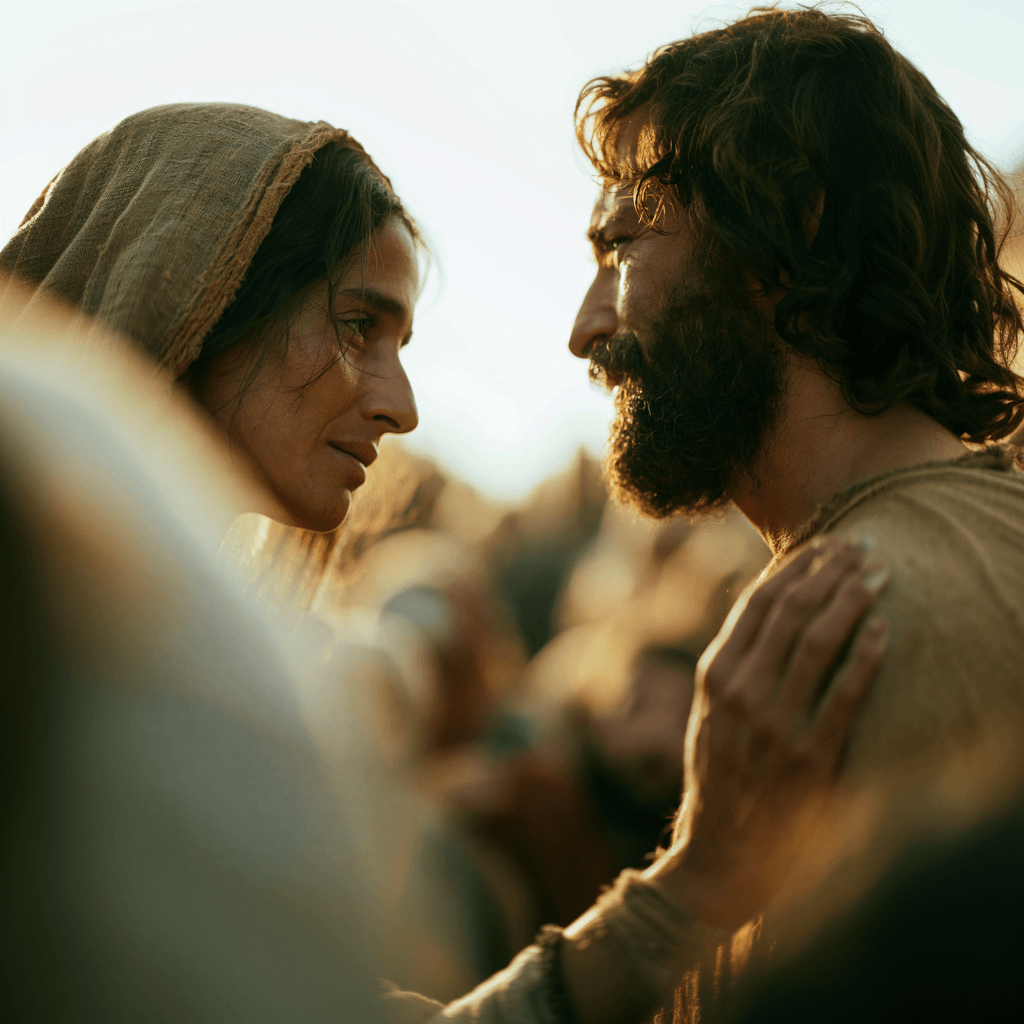
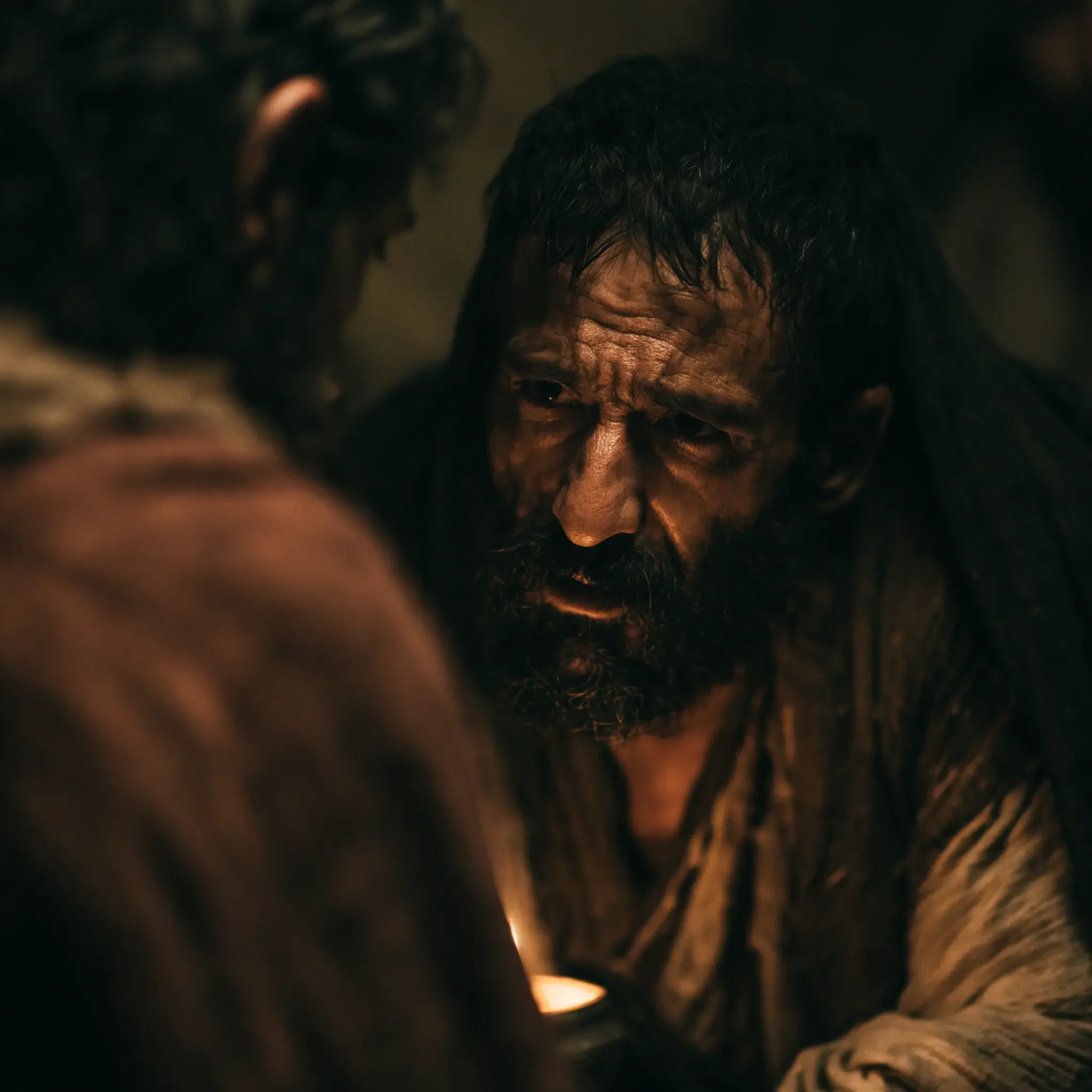
Thomas the Apostle in the Gospel of John: Honest Doubt and the Highest Confession
History has not been kind to Thomas.
Two thousand years of Christian tradition have handed him a single adjective — doubting — and attached it to his name so permanently that most people who have never read a word of the Gospel of John could tell you that Thomas doubted. It has become his identity, his epitaph, the thing he is for.
John’s Gospel tells a more complicated and more interesting story.
Thomas appears four times in this Gospel, and only once does he refuse to believe something he has not seen. In the other three appearances, he is brave, direct, theologically serious, and — in his final moment — the author of the most complete confession of faith in the entire New Testament.
My Lord and my God.
Not my Lord and my teacher. Not my Lord and my prophet. My Lord and my God. The man whom the tradition calls the doubter gives us the clearest, most unambiguous declaration of Jesus' divinity in any of the four Gospels. He gets there via a road that includes honest questions, a week's absence, and a condition he set and then had to live with. But he gets there.
That is Thomas’s story in John’s Gospel. Not the story of a man who failed to believe, but the story of a man who refused to pretend, who waited for the evidence he needed, and who — when the evidence arrived in a locked room on the eighth day — said the truest thing anyone says in this Gospel.
John did not call him the doubter. History did. John called him the Twin.
Thomas the Apostle: At a Glance (Summary & Quick Facts)
-
Thomas, called Didymus, meaning the Twin in both Aramaic and Greek; one of the twelve apostles
-
A disciple characterized in John’s Gospel by directness, courage, and an insistence on honest engagement with difficult realities; the author of the highest Christological confession in the Gospels
-
Appears in discussions about returning to Judea, in the Upper Room during the Farewell Discourse, absent from the first appearance of the risen Christ, and present for the second
-
Chapters 11, 14, 20, and 21
-
His journey from honest doubt to the confession my Lord and my God makes him one of the most psychologically real figures in the Gospel — and the occasion for Jesus’ final beatitude: blessed are those who have not seen and have believed
Who Was Thomas in the Gospel of John? The Twin Who Refused to Pretend
John introduces Thomas with a care that the other Gospels do not. He is called Didymus — the Twin. John mentions this three times, which suggests it is a meaningful identifier in his community. Who Thomas’s twin was, the Gospel does not say. Some early traditions suggested a twin brother or sister; others, more speculatively, proposed theological meanings. What the name signals in John’s Gospel is simply that Thomas is known, placed, identified within his community by a specific and personal detail.
He is one of the twelve named in the list of disciples shared by all four Gospels. But where the other Gospels give Thomas almost nothing to say or do, John makes him a speaking character with a distinct personality across four separate scenes. He asks the questions other disciples are perhaps thinking but not saying. He states plainly what he will and will not accept. He is, in short, the disciple who refuses to perform faith he does not have.
That quality — the refusal to perform — is what the tradition has punished him for. But it is also what makes his eventual confession so powerful. When Thomas says my Lord and my God, there is no question that he means it. He has earned the right to say it by being honest about everything that stood between him and that confession.
Thomas in the Four Scenes of John’s Gospel
Rather than defining Thomas by a single moment of skepticism, John carefully develops his character across four distinct appearances. Through these scenes, we see a disciple who refuses to deal in platitudes or perform a faith he does not yet possess. From his brave, if fatalistic, loyalty on the road to Bethany to his demand for tangible proof in a locked room, John uses these four encounters to trace the journey of a man whose uncompromising honesty paved the way for the Gospel's greatest confession.
-
John 11:1–16
The first time Thomas speaks in John’s Gospel, he says something that should permanently complicate the doubter reputation.
Jesus has just announced that He is going back to Judea, where the religious authorities have recently tried to stone Him. The disciples are alarmed: Rabbi, the Jews were just trying to stone you, and you want to go back there?
Jesus explains that Lazarus has died and He is going to raise him. And then Thomas, called Didymus, says to his fellow disciples:
“Let us also go to die with him.”
This is not a man who struggles to commit. This is a man willing to walk back into a place where his teacher has just been threatened with death because his teacher is going there. He does not understand what is about to happen. He thinks they are all walking into danger with no guarantee of coming out. And he says: let’s go.
The tradition has named Thomas the doubter. His first words in John’s Gospel are a declaration of willingness to die.
-
John 14:1–7
The second appearance is in the Upper Room, in the middle of the Farewell Discourse.
Jesus has just told the disciples He is going away to prepare a place for them, and that they know the way to where He is going.
Thomas says: “Master, we do not know where you are going. How can we know the way?”
It is, again, the honest question. The other disciples apparently let the statement pass. Thomas does not. He will not nod along to something he does not understand. If he does not know where Jesus is going, he is going to say so, even in a room full of people who may be pretending otherwise.
And this honest, slightly awkward question is the occasion for one of the most important statements in the entire Gospel:
“I am the way and the truth and the life. No one comes to the Father except through me.”
Thomas asks where, and Jesus answers with whom. Not a location but a person. Not a road but a relationship. The sixth I AM statement in John’s Gospel is spoken in response to Thomas’s refusal to pretend he knows something he does not.
Without Thomas’s honest question, we would not get this answer.
-
John 20:19–29
This is the scene that gave Thomas his reputation. And it deserves to be read carefully, because it is more nuanced than the tradition has usually allowed.
It is the evening of the first day of the week. The disciples are locked in a room, afraid. Jesus appears among them, shows them His hands and His side, gives them peace, breathes on them, commissions them.
Thomas is not there.
John does not tell us why. He simply was not there. When the others tell him what happened, he says:
“Unless I see the mark of the nails in his hands and put my finger into the nail marks and put my hand into his side, I will not believe.”
This has been read as obstinate unbelief. But consider what is actually being said. Thomas is not refusing to believe in the resurrection as a principle. He is refusing to accept his friends' testimony about a specific, unprecedented, world-altering event without direct evidence. He is applying the same standard of evidence to the resurrection that he would apply to anything else.
He is also, it should be noted, doing exactly what Jesus will do when He appears to the other disciples: showing them His hands and His side. The disciples believe when they see the wounds. Thomas is asking for the same thing the others were given. He is not asking for more than his friends received. He is asking for the same.
Eight days later, Jesus comes again. The doors are locked. He stands among them and says peace be with you. Then He turns to Thomas directly.
Put your finger here and see my hands. Reach out your hand and put it into my side. Do not be unbelieving, but believe.
John does not tell us whether Thomas actually touches the wounds. The text moves immediately from Jesus’ invitation to Thomas’s response, without confirming the touch. What we know is what Thomas says:
“My Lord and my God.”
Five words in English. The highest Christological confession in any of the four Gospels. Not my Lord and my teacher, not my Lord and my master, not my Lord and my Messiah. My Lord and my God.
The man who would not believe without touching the wounds looks at the risen Jesus and says God.
Jesus responds: “Have you come to believe because you have seen me? Blessed are those who have not seen and have believed.”
It is the last beatitude of Jesus in John’s Gospel. And it is addressed to the reader. Thomas has seen and believed. But John is writing for people who will never see — who will read this account and be asked to believe on the basis of testimony rather than touch. The blessing at the end of Thomas’s story is for them. For us.
-
John 21:1—2
Thomas’s final appearance in John’s Gospel is a single verse: “Simon Peter, Thomas called Didymus, Nathanael from Cana in Galilee, the sons of Zebedee, and two others of his disciples were together.”
He is there on the beach when Jesus appears at dawn. He is there for the breakfast, the fire, the fish. He is there when Peter is restored with three questions around a charcoal fire.
John does not give Thomas anything to say in this scene. He simply names him, places him on the beach, and includes him in the company of those who know it is the Lord.
The man who said, "Unless I see," is standing on a beach at dawn, watching the risen Christ make breakfast. He has seen. He has believed. He is there.
What the Gospel of John Teaches Us Through Thomas
Through the character of Thomas, John offers a profound exploration of belief, evidence, and certainty. Rather than framing his hesitation as a failure, the Gospel uses Thomas to demonstrate how courageous, honest questioning often paves the way to the deepest faith. By tracing his journey from brave loyalty to a final, lasting beatitude for future readers, John emphasizes that our struggles with unseen truths are not obstacles to grace, but invitations to a more authentic confession.
-
John’s Gospel gives Thomas the most explicit confession of Jesus' divinity in the entire New Testament. And it gives it to the disciple who refused to believe without evidence. This is not an accident. John is making a deliberate point about the relationship between honest engagement with doubt and the depth of faith that can follow it.
Thomas does not arrive at my Lord and my God by suppressing his questions. He arrives there by asking them, by stating his conditions, by waiting a week in the absence of the evidence he needed. When the evidence comes — when Jesus stands in the room and offers His wounds — Thomas’s response is immediate and total. He does not hedge. He does not qualify. He says the most complete thing anyone says about Jesus in the four Gospels.
The lesson John draws from Thomas is not that doubt is acceptable as a permanent condition. It is that honest doubt, held openly and brought to Jesus rather than walked away from, that can be the road to the deepest possible faith.
-
Blessed are those who have not seen and have believed.
This beatitude is unique to John’s Gospel, and it is addressed, through Thomas, to every person who will ever read this account. Thomas’s story is the pivot point on which John’s Gospel turns toward its reader. You were not there. You cannot touch the wounds. You are being asked to believe on the basis of testimony — the testimony of the beloved disciple, who saw and has written it down, who tells you his testimony is true, so that you also may believe.
Thomas’s doubt and Thomas’s confession together create the space for this blessing. Without his absence, without his condition, without his eight days of waiting, there is no occasion for Jesus to speak the beatitude that covers everyone who reads this Gospel from that moment forward.
-
“Let us also go to die with him.”
This line deserves to be remembered alongside “My Lord and my God.”
Thomas is not a man who lacks courage or commitment. He is a man who will walk into danger without flinching and who will not pretend to believe something he has not experienced. These two qualities — bravery and honesty — are not in tension. They are expressions of the same character.
He is willing to die with Jesus in Judea. He is not willing to accept the resurrection on secondhand testimony. Both responses come from the same person, the same integrity, the same refusal to say what he does not mean.
The Catholic Tradition: Saint Thomas, the Mass, and the Patronage of Builders
The Church celebrates the feast of St. Thomas the Apostle on July 3. He is the patron saint of India, where a strong tradition holds that he traveled after the resurrection and established the first Christian communities on the subcontinent. The Thomas Christians of Kerala — one of the oldest Christian communities in the world — trace their origins to him.
He is also the patron saint of architects, builders, and those who work with their hands — an association that connects to the apocryphal Acts of Thomas, in which he is sent to build a palace for an Indian king and instead builds something more lasting. Whether or not the historical details hold, the patronage fits the character John draws: a man who needs to see the structure before he will trust it, who will not sign off on something he has not examined.
His confession — my Lord and my God — has become one of the most important texts in the Church’s Christological tradition. The Council of Nicaea in AD 325 was defending precisely what Thomas declares: that Jesus is not merely Lord in the sense of master or teacher or even Messiah, but God. The Nicene Creed is, in a sense, the unpacking of Thomas’s five words.
In the Roman Rite, the acclamation "My Lord and my God" is sometimes prayed quietly by the faithful at the elevation of the Host and Chalice during Mass—a moment of personal adoration before the Eucharist that echoes Thomas’s recognition of the risen Christ. The wounds that Thomas wanted to touch become present in a different mode at every Mass: the body broken, the blood poured out, offered to be received.
Thomas wanted to touch the wounds. The Church offers the faithful a way to do so.
Why the Story of St. Thomas Matters for Modern Faith
Thomas matters because most people who have ever tried to believe know something of what he experienced in that week between the two appearances.
The others have seen. You have not. They are telling you something happened that changes everything, and you want to believe them — you want it to be true — but you were not there. You did not see. And the evidence you would need to settle the question is not available to you in the way it was available to them.
That is the condition of everyone who reads this Gospel. John knows this. It is why he wrote it down. It is why the beloved disciple’s testimony is recorded as true, so that you also may believe.
Thomas’s week of waiting is the week every honest believer spends at some point. And his confession is the destination John is writing toward — not just for Thomas, but for the reader. The Gospel ends almost immediately after Thomas speaks. John states his purpose: these things are written so that you may believe that Jesus is the Christ, the Son of God, and that by believing you may have life in his name.
Thomas gets there first. The rest of us are invited to follow.
“My Lord and my God.”
Five words. The whole of it.
The doubter said it. The Gospel was written so that we might say it too.