"I AM the Bread of Life" in John 6: The Discourse, Manna, and the Real Presence
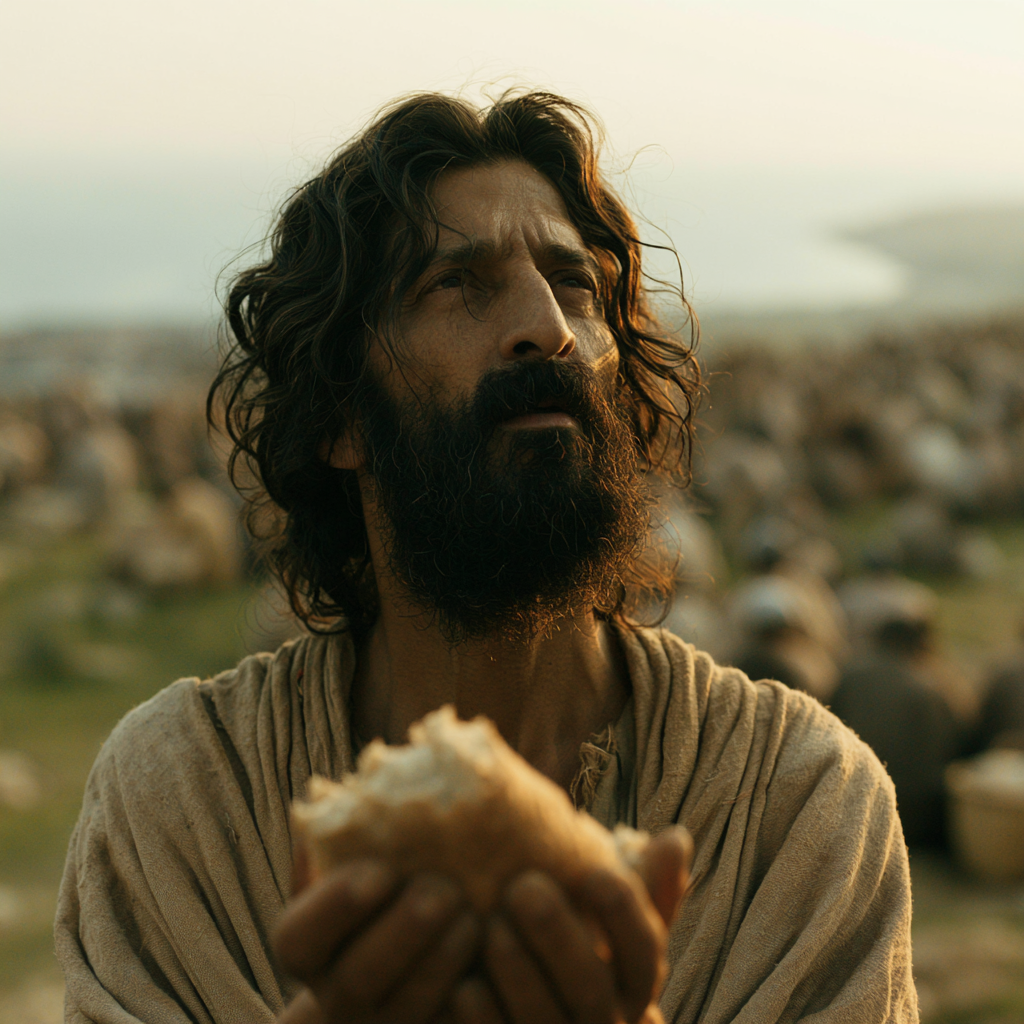
The morning after He fed five thousand people on a hillside, they came looking for Him again.
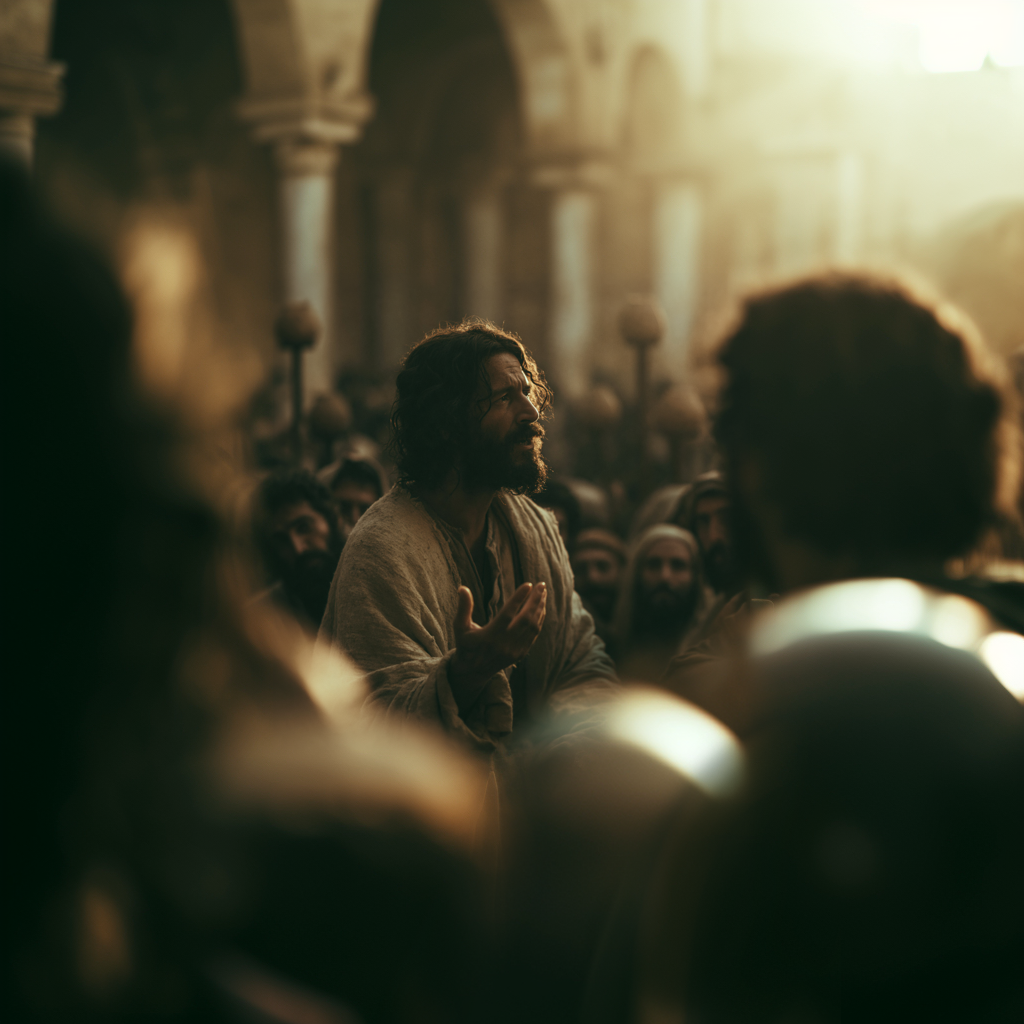
They had crossed the lake to find Him. They were not subtle about why. “Rabbi, when did you get here?”
But Jesus knew what the question really was. He said it plainly: “You are looking for me not because you saw signs but because you ate the loaves and were filled.”
They wanted more bread.
He offered them something else entirely.
“I am the bread of life; whoever comes to me will never hunger, and whoever believes in me will never thirst.”
It is the first of the seven great I AM statements in John’s Gospel, and it arrives in the aftermath of the most famous feeding in the history of the world. The crowd has just experienced a miracle that echoed Moses and the manna in the desert. They have eaten until they were full from five loaves and two fish, with twelve baskets left over. And the morning after, Jesus tells them: that was not the point. That was a sign. This is what it was pointing toward.
The Setting: The Miracle at the Sea of Galilee and the Morning After
The feeding of the five thousand happens on a hillside near the Sea of Galilee. John tells us it is near Passover — the feast that commemorates the exodus from Egypt, the crossing of the sea, the forty years of manna in the wilderness. The timing is not incidental. John is placing this event in a specific theological context before the first word of the discourse is spoken.
After the feeding, the crowd wants to make Jesus king by force. He withdraws. The disciples cross the lake without Him, in the dark, in a storm, and He comes to them walking on the water. “I AM,” He says to them in the darkness. “Do not be afraid.”
By morning, the crowd had followed Him across the lake. And the conversation that follows is the longest single teaching discourse in John’s Gospel — more than sixty verses of exchange and escalation, beginning with bread and ending with flesh and blood.
The crowd opens by invoking Moses: “Our ancestors ate manna in the desert. What sign can you do so that we may see and believe in you?”
It is a remarkable request. They have just watched him feed five thousand people from five loaves. They are asking for a sign the morning after a sign. But Jesus does not answer the question they are asking. He answers the question beneath it.
“It was not Moses who gave the bread from heaven,” He says. “My Father gives you the true bread from heaven. For the bread of God is that which comes down from heaven and gives life to the world.”
They say: “Sir, give us this bread always.”
And He says: “I am the bread of life.”
Meaning and Biblical Context: What Does 'Bread of Life' Mean in John 6?
To understand what Jesus is claiming, you need to hear it as His audience did.
Bread was not a side dish in the ancient world. It was the meal. It was sustenance itself, the thing that stood between a person and starvation. When Jesus says, "I am the bread of life," He is not reaching for a pleasant metaphor for spiritual nourishment. He is claiming to be the thing itself — the substance on which human life ultimately depends.
The I AM beneath the claim carries its own weight. In John’s Gospel, ego eimi — I AM — echoes the divine name given to Moses at the burning bush: I AM WHO I AM. When Jesus says I am the bread of life, He is not merely describing a function. He is identifying Himself with the God who fed Israel in the wilderness, now present in person, now offering something the manna could never give.
The manna sustained the body for a day. The people ate it and were hungry again the next morning. They ate it every day for forty years, and then they died. Jesus says: “I am the bread that came down from heaven, not like what your ancestors ate. They ate and still died. Whoever eats this bread will live forever.”
It is a stark contrast, and He means every word of it. Physical bread, however miraculous, addresses physical hunger. The bread of life addresses the hunger that physical bread cannot touch — the hunger for meaning, for belonging, for the God who made us and in whom alone we find our rest.
And then, in the middle of the discourse, the claim escalates beyond what most of the crowd is prepared to hear:
“My flesh is true food, and my blood is true drink. Whoever eats my flesh and drinks my blood remains in me and I in him.”
This is no longer a metaphor. The crowd knows it. The Greek word Jesus uses here is not the ordinary word for eat. It is a word that means to gnaw or chew — visceral, physical, impossible to spiritualize away. Whoever eats my flesh. Many of His disciples, John tells us, said: “This saying is hard. Who can accept it?”
And Jesus does not soften it. He lets them go.
Liturgical Legacy: The Catholic Theology of the Eucharist and Real Presence
The Church has read John 6 as the foundation of Eucharistic theology since the earliest centuries, and it has never retreated from that reading.
When Jesus says, "My flesh is true food, and my blood is true drink," the Catholic Church takes Him at His word — has always taken Him at His word. Not as a symbol. Not as a spiritual metaphor for the nourishment of faith. As the real, substantial, personal presence of Jesus Christ in the bread and wine of the Mass.
The doctrine of the Real Presence — that the Eucharist is truly the body and blood of Jesus, not merely a memorial of it — is grounded here in John 6 more than anywhere else in Scripture. When the disciples walk away because the teaching is too hard, Jesus does not call them back and explain that He was speaking figuratively. He turns to the Twelve and asks: “Do you also want to leave?”
He would rather lose his followers than soften what he said.
St. Ignatius of Antioch, writing around AD 110 — within living memory of the apostles — called the Eucharist the flesh of our Savior Jesus Christ, who suffered for our sins. St. Justin Martyr, writing to the Roman emperor around AD 155, explained that the Eucharist is not common bread and common drink, but the flesh and blood of the incarnate Jesus. The Church’s Eucharistic faith did not develop centuries later. It was there from the beginning, rooted in this discourse.
Every Mass begins with the Word of God and moves toward the table. The structure is Johannine: the bread of the word, and then the bread of life. The liturgy of the Eucharist is the community’s corporate response to the invitation Jesus extends in the synagogue at Capernaum: take and eat. This is my body.
And before the distribution of Communion, at every Mass in the Roman Rite, the priest elevates the host and says words that echo John the Baptist’s cry on the banks of the Jordan: Behold the Lamb of God, who takes away the sins of the world. Blessed are those called to the supper of the Lamb.
The crowd on the shore of the Sea of Galilee asked for this bread always. The Church has been receiving it ever since.
The Cost of Discipleship: "Do You Also Want to Leave?"
Many of His disciples walked away. They had followed Him for weeks or months. They had seen the signs. They had eaten the bread on the hillside and had twelve baskets left over. And when He told them what the bread was really pointing to, they left.
John records this departure without softening it. This is hard. Who can accept it? And then they walked away.
Jesus turns to the Twelve and asks the question that every reader of this passage eventually has to answer:
“Do you also want to leave?”
Peter answers for them: “Master, to whom shall we go? You have the words of eternal life. We have come to believe and are convinced that you are the Holy One of God.”
It is not a triumphant declaration. It is the answer of people who have looked at the alternatives and found them wanting. Where else would we go? This is the bread of life. We are hungry. You are the only one who has what we need.
The question Jesus asks the Twelve is the question John’s Gospel asks its reader at every difficult turn: “Do you also want to leave?”
The teaching is hard. The claim is total. The bread of life is not a comfortable metaphor. It is a demand — to believe that the one speaking is who He says He is, and to eat the bread He offers.
The crowd wanted more of the miracle bread. Jesus offered Himself instead.
Some left. Some stayed. The ones who stayed are still at the table.