"I AM the True Vine" in John 15: Meaning, the Last Supper, and Meno
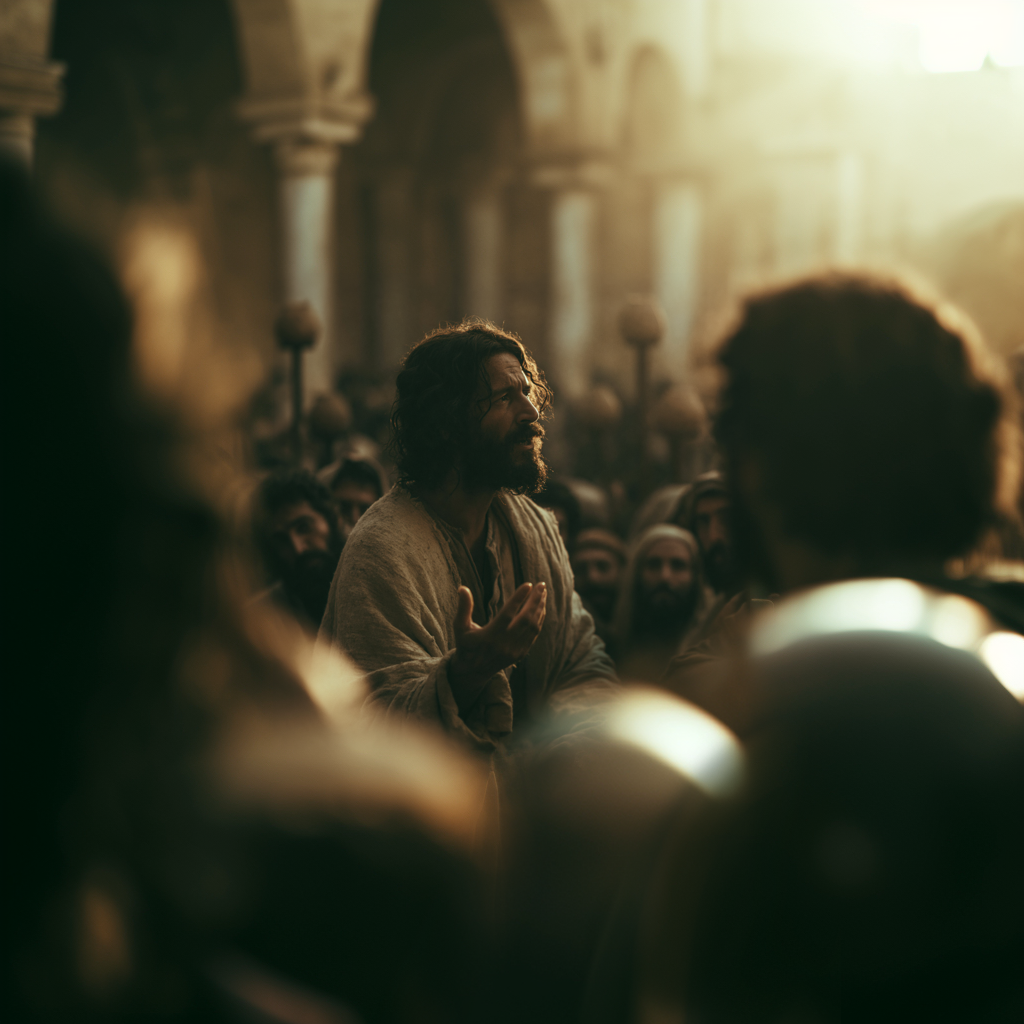
They are still in the upper room, or perhaps they have left it already and are walking through the darkened streets of Jerusalem toward the garden. John does not tell us precisely. What he tells us is that Jesus is still speaking — that the farewell discourse is not finished, that there is one more thing that needs to be said before the garden and the arrest and the cross.
He has told them He is the way. He has told them the Father will send the Holy Spirit. He has told them the world will hate them because it hated Him first. And now, perhaps with the terraced vineyards of the Kidron Valley visible in the moonlight, perhaps with the great golden vine that hung above the entrance to the Temple still in their minds from earlier in the week, He speaks the last and most intimate of the seven I AM statements.
“I am the true vine, and my Father is the vine grower.”
It is the most relational of all the I AM statements. The bread feeds you. The light illuminates you. The gate protects you. The shepherd leads you. The resurrection raises you. The way brings you to the Father. The vine does something different from all of these. The vine does not merely provide something for the branches. The vine is the source of everything the branches are. Apart from the vine, a branch is not merely hungry or lost or in the dark. It is nothing. It cannot exist as what it is meant to be without the vine it grows from.
The Night Before the Cross: The Farewell Discourse & John 15
The setting of John 15 is the most urgent in the entire Gospel. Judas has gone. The hour has come. Jesus has told the disciples that He is going where they cannot follow, and that they should not let their hearts be troubled. He has washed their feet and given them the new commandment. He is running out of time.
Into this urgency, He speaks an image of patience and organic growth. A vine. A vine grower. Branches. Pruning. Fruit. These are not images of crisis management or dramatic intervention. They are images of a long, slow, tended relationship — the kind that produces fruit over seasons rather than moments.
The contrast with Israel’s vine is deliberate and unmissable for anyone who knows the Old Testament. The vine was one of Israel’s most potent images of itself as God’s people. The prophets used it repeatedly — Isaiah’s song of the vineyard, in which God plants a vine with great care, and it produces wild grapes; Jeremiah’s lament over a degenerate vine; Ezekiel’s parable of the vine that is fit only for burning. Israel was the vine. Israel had been tended, pruned, and watered by God. And Israel had repeatedly failed to produce the fruit God was looking for.
Jesus says: I am the true vine. Not a new vine. The true one. The vine that Israel was always meant to be and never quite managed. The vine that will actually produce the fruit. And His disciples — not Israel by ethnic descent but by relationship and belief — are the branches.
The Greek Context of Meno: What It Means to Remain & Abide in Christ
The word that runs through this passage like a pulse is the Greek word meno — remain, abide, stay. Jesus uses it ten times in eleven verses. Remain in me as I remain in you. If you remain in me and my words remain in you. Remain in my love. I have told you this so that my joy may be in you and your joy may be complete.
It is the most repeated word in the most intimate passage of the Farewell Discourse, and it reframes everything that has come before it in the Gospel. From the beginning, John’s Gospel has been about believing. The word "believe" appears over 90 times. But here, at the end, Jesus does not say believe in me and produce much fruit. He says, “Remain in me.”
Belief gets you into the relationship. The remaining is what the relationship looks like over time.
A branch does not occasionally connect to the vine when it needs nutrients. A branch is organically, continuously, and structurally part of the vine. Its entire existence as a branch — its ability to grow, to flower, to produce fruit — depends not on periodic connection but on permanent union. Sever the branch from the vine, and it does not become less fruitful. It becomes dead wood. It withers. It is gathered and thrown into the fire.
Jesus is not being threatening. He is describing the reality of what a branch is. A branch apart from the vine is not a branch that is struggling. It is a branch that has ceased to be what branches are for.
The fruit the vine produces is not specified in detail, though love is clearly central — remain in my love, love one another as I have loved you. The fruit is the life of the branch lived in union with the vine: love, joy, obedience born of relationship rather than fear, the kind of prayer that is answered because it is aligned with the desires of the one being prayed to. You did not choose me, Jesus says. I chose you and appointed you to go and bear fruit that will remain.
Fruit that will remain. The same word again. Meno. The fruit of the vine does not fade or wither. It remains.
Liturgical Legacy: Eucharistic Theology, Patristic Writings, and the Mass
The vine and the Eucharist have been connected in the Catholic tradition since the earliest decades of the Church.
The Didache — an early Christian document dating possibly to the late first century, one of the oldest non-scriptural Christian texts in existence — contains a prayer over the cup at the Eucharist that begins: We give you thanks, our Father, for the holy vine of David your servant, which you made known to us through Jesus your servant. The cup of the Eucharist is the fruit of the true vine. The wine that becomes the blood of Christ in the Mass is the product of the vine that Jesus claims to be.
Every Mass enacts the vine and branches discourse. The faithful come to the table as branches gathering around the vine. They receive the fruit of the vine in the Eucharist. And in receiving it, they remain — they maintain the organic union with Christ that the discourse describes. The Eucharist is not merely a memorial of what Jesus did. It is the ongoing means by which the branches stay connected to the vine.
St. Augustine, whose name this site bears, preached on this passage with characteristic depth. He asked what it means that the Father is the vine grower who prunes the branches that bear fruit so that they bear more fruit. He understood pruning not as punishment but as the Father’s patient work of formation — removing what is unnecessary, shaping what is there, directing the growth of the branch toward greater fruitfulness. Suffering, difficulty, the slow work of conversion — these are not signs that the branch has been abandoned. There are signs that the vine grower is at work.
The contemplative tradition in the Church has drawn deeply from this passage. To remain in Christ — to abide, to stay, to resist the impulse to generate activity and effort and instead to rest in the source of all fruitfulness — is the heart of contemplative prayer. The branch does not strain to produce fruit. It stays connected to the vine, and the vine does the producing.
St. Thérèse of Lisieux, the Little Flower, understood her entire spiritual life through this lens. She did not pursue greatness. She pursued union — the small, daily, unheroic remaining in the love of Christ that she was convinced would produce more fruit than any dramatic spiritual achievement. Her little way is the way of the branch that trusts the vine.
The Choice of Faith: Surrendering Self-Sufficiency in the Seven I AM Statements
The seven I AM statements of John’s Gospel form a complete portrait. Jesus is the sustenance that ends hunger, the light that ends darkness, the gate that provides safety and freedom, the shepherd who lays down his life, the resurrection that ends death, the way that leads to the Father, and the vine from which all fruitfulness flows.
The last of the seven is the most intimate precisely because it does not merely describe what Jesus provides. It describes what Jesus and his followers are to each other — a union so organic that separation is not merely inconvenient but impossible without destroying what the branch is for.
Remain in me.
It is the simplest instruction in the Gospel. And it is the hardest. Not because it demands great effort but because it demands the surrender of self-sufficiency. The branch that tries to bear fruit on its own — through its own effort, its own goodness, its own carefully maintained religious practice — is the branch that has missed the point entirely. Apart from me, Jesus says, you can do nothing.
Nothing. Not less. Not a reduced harvest. Nothing.
The Farewell Discourse is almost over. The garden is ahead. The cross is ahead. And on the other side of all of it, the vine will still be growing, still producing fruit, still offering the branches the only thing they need:
“Remain in me, as I remain in you.”
He remains in us. The vine does not abandon the branch.
The question the seventh I AM statement leaves is the question all seven have been building toward, the question the whole Gospel has been asking since its opening word:
Will you remain?