"I AM the Gate" in John 10: The Metaphor, the Sheepfold, and Eternal Life
The image Jesus reaches for in John 10 is not a grand one.
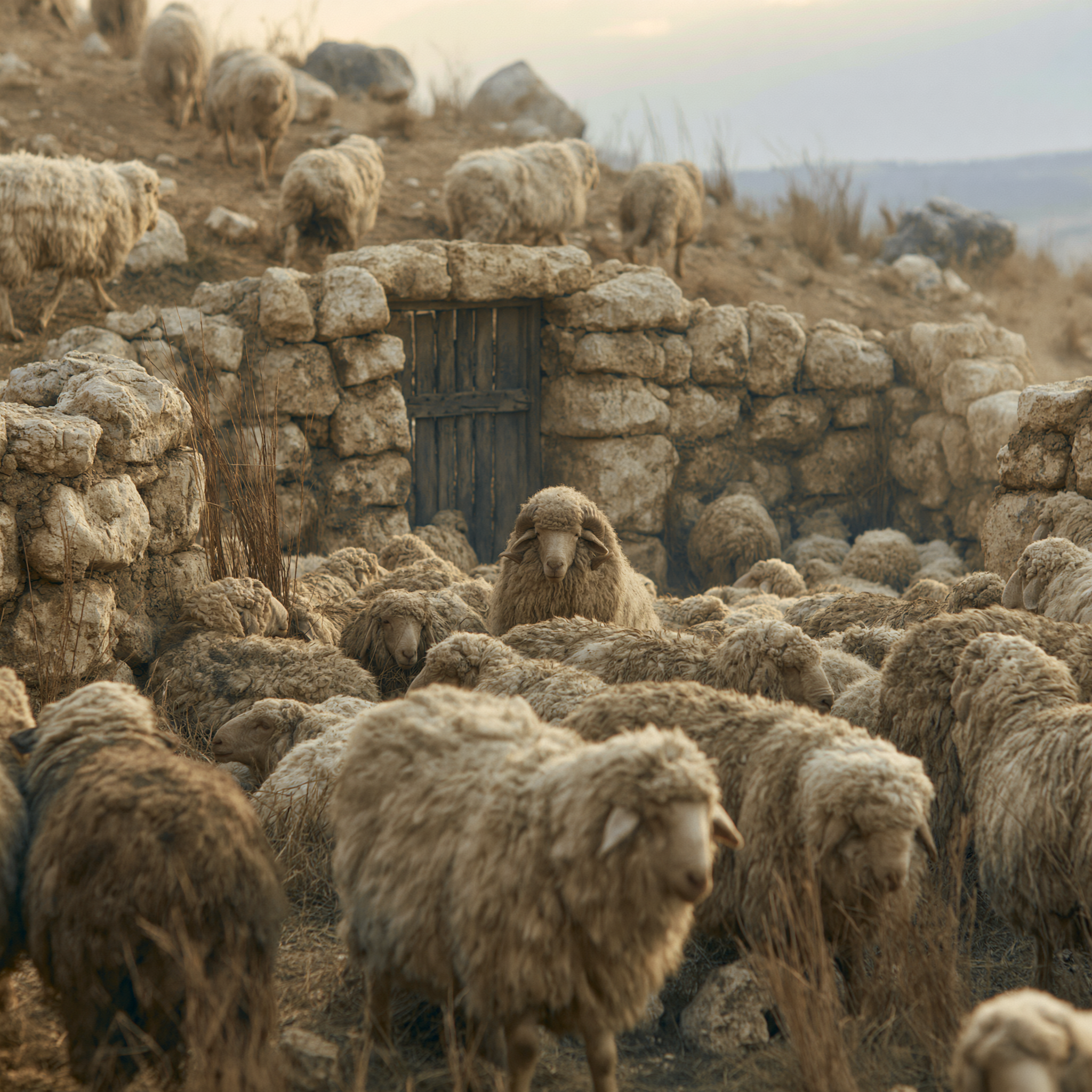
Not a king on a throne. Not a judge on a bench. Not a teacher on a hillside with thousands gathered below. A gate. The wooden or stone opening through which a flock of sheep passes each morning when the shepherd leads them out to pasture and each evening when he brings them home.
It is a deliberately ordinary image. And in its ordinariness, it makes one of the most absolute claims in the Gospel.
“I am the gate. Whoever enters through me will be saved, and will come in and go out and find pasture.”
Not a gate. The gate. The only way in. The boundary between the exposed world and the safety of the sheepfold. The threshold every sheep must cross to be counted among those who belong.
The Biblical Setting: The Blind Man of John 9 and the Pharisees
John 10 does not begin with a new scene. It continues directly from chapter nine, which ends with a confrontation between Jesus and the Pharisees, who have just expelled the man born blind from the synagogue for testifying that Jesus healed him.
Jesus found the man afterward and revealed Himself as the Son of Man. The man worships Him. And then Jesus says something that sets the stage for everything in chapter ten: for judgment I came into this world, so that those who do not see might see, and those who do see might become blind.
The Pharisees hear this and ask: “Surely we are not blind?”
And Jesus says: “If you were blind, you would have no sin. But now you are saying we see, so your sin remains.”
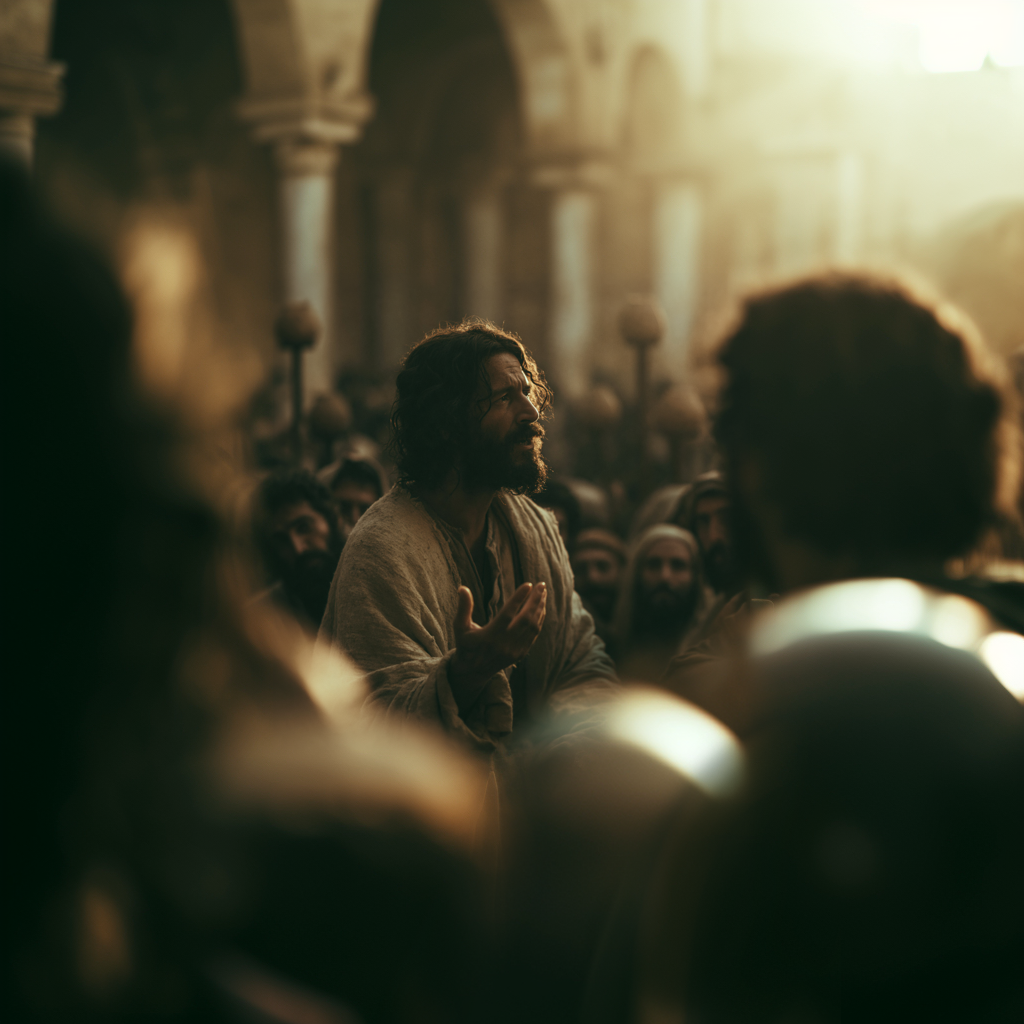
Chapter ten opens immediately after this exchange. Jesus is still speaking to the same audience — the Pharisees who have just expelled a man from the synagogue for seeing clearly, who have declared themselves sighted while remaining blind. And He tells them a parable about sheep, shepherds, and gates.
The one who does not enter the sheepfold through the gate but climbs over the wall is a thief and a robber. The one who enters through the gate is the shepherd. The gatekeeper opens the gate for Him, and the sheep hear His voice. He calls His own sheep by name and leads them out. A stranger they will not follow because they do not recognize a stranger’s voice.
The Pharisees do not understand what he is telling them. So Jesus says it plainly:
I am the gate for the sheep.
All who came before me are thieves and robbers, but the sheep did not listen to them. I am the gate. Whoever enters through me will be saved, and will come in and go out and find pasture.
Meaning and Exegesis: Understanding the Gate Metaphor in John’s Gospel
The gate in the ancient sheepfold served two purposes. It kept the flock in and the predators out. At night, when the sheep were folded together for safety, the gate was the boundary between the dangerous open country and the protected enclosure. During the day, when the shepherd led the flock out to pasture, the gate was the threshold between the sheepfold’s confinement and the freedom of the open field.
In and out. Safety and freedom. Both through the same gate.
Jesus captures both in a single sentence: whoever enters through me will be saved, and will come in and go out and find pasture. The gate does not simply provide protection from the outside. It also enables movement — the freedom to go out, to find pasture, to live fully. The sheep who enter through the gate are not imprisoned. They are free.
The contrast Jesus draws is between the gate and the wall-climber. The thief does not enter through the gate because the gate is the legitimate, recognized, sanctioned way in. To climb over the wall is to bypass the shepherd’s authority, to take what is not offered, to enter by means that circumvent rather than engage the relationship. The thief comes only to steal and slaughter and destroy, Jesus says. I came so that they might have life and have it more abundantly.
Life more abundantly. It is a phrase that belongs to this passage and is sometimes lifted from it and used as a general promise of prosperity. But in context it means something specific: the life of the sheep who enter through the proper gate, who follow the shepherd’s voice, who come in and go out freely and find pasture. Not merely survival. Not merely protection. Abundance. The full life that the sheepfold exists to make possible.
The exclusivity of the claim is worth sitting with. Jesus does not say I am the best available gate among several options. Instead, He says, “I am the gate.”
There is one. It is him. To enter the sheepfold of God’s protection and provision, there is one threshold to cross, one relationship to enter, one voice to recognize and follow.
This is not a comfortable claim in a culture that prefers its religion plural and its gates multiple. John’s Gospel does not offer a softer version. The gate is the gate.
Liturgical Legacy: Baptism, the Sacraments, and the Threshold of Faith
The image of the gate has shaped Catholic theology in ways that are easy to overlook precisely because they are so embedded in the ordinary life of the faith.
The sacraments of initiation — Baptism, Confirmation, and Eucharist — are the Church’s understanding of what it means to enter through the gate. Baptism is the threshold, the crossing from outside to inside, the moment a person passes from the exposed country into the sheepfold of God’s people. The Catechism of the Catholic Church calls Baptism the gate that gives access to the other sacraments (CCC 1213). The language is deliberate. There is a gate. Baptism is how you enter.
Every Catholic church building carries this theology in its architecture. The threshold of the church — the narthex, the vestibule, the doors through which the faithful pass — is not merely functional. It is the architectural expression of the boundary between the world outside and the sacred space within. Holy water fonts at the entrance recall the waters of Baptism. To enter the church is to re-enter the sheepfold, to cross the threshold of initiation again.
The image of the gate also shapes the Church’s understanding of Christ as the mediator — the one through whom all relationship with God passes. There is one God, one mediator between God and the human race, Christ Jesus, Himself human, who gave Himself as a ransom for all. The gate and the mediator are the same claim in different images: one way in, one relationship that makes all other relationships possible.
When a priest pronounces absolution in the Sacrament of Reconciliation, he acts in the person of Christ — in persona Christi — opening the gate again for the sheep who have strayed. The sacrament is not a transaction. It is a return through the gate, a re-entry into the sheepfold by the one who has wandered into the open country and been found.
The Choice of Faith: The Sheepfold, the Voice, and Modern Believers
The parable of the gate is addressed to people who have spent their lives in religion. The Pharisees are not outsiders to the faith of Israel. They are its most dedicated practitioners, its most careful scholars, its most visible representatives. They know the law. They observe the law. They have organized their entire lives around the God of Abraham, Isaac, and Jacob.
And Jesus tells them they have been climbing over the wall.
Not through the gate. Over the wall. Entering a relationship with God by means of their own effort, their own scholarship, their own meticulous observance — bypassing the one thing that would make entry legitimate: recognizing the shepherd’s voice and following it through the gate he provides.
The challenge the gate poses is not primarily to people outside the faith. It is for people inside it. To everyone who has organized their religious life around their own effort rather than the shepherd’s voice. To everyone who knows the language and performs the rituals and has never quite stopped to ask whether they have actually passed through the gate or simply climbed a wall that looks similar from the outside.
“I am the gate. Whoever enters through me will be saved, and will come in and go out and find pasture.”
The gate is open. The question is not whether it exists. The question is how you have been entering.