"I AM the Resurrection and the Life" in John 11: Meaning, Lazarus, and Martha's Faith
Lazarus has been dead for four days.
The tomb is sealed. The mourners have come from Jerusalem. The grief in the house at Bethany is no longer the raw, disoriented grief of the first hours — it is the settled, heavy grief of people who have begun to accept that the person they loved is not coming back. Four days. The body is gone. The future has been rearranged around an absence.
Into this, Jesus arrives.
He is two miles from Jerusalem, where the authorities are already plotting to kill him. He had waited two days after hearing that Lazarus was sick before setting out, and his disciples were afraid to go back to Judea at all. He arrives late, in a village full of mourners, to two sisters who both say the same thing when they reach him:
“Lord, if you had been here, my brother would not have died.”
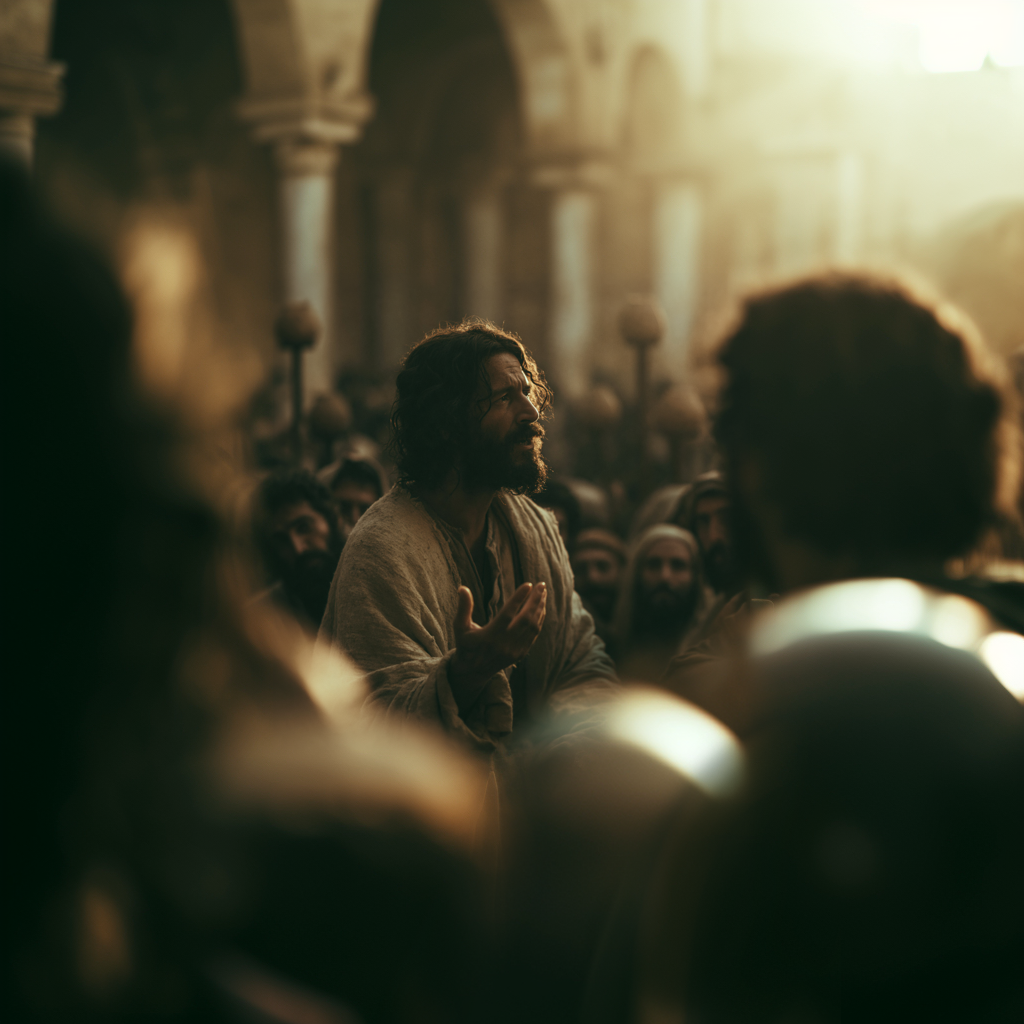
And on the road outside Bethany, to Martha, still standing and still in her grief, He says the fifth I AM statement of his Gospel. He does not say it after the miracle. He says it before it. In the middle of death. While the tomb is still sealed.
“I am the resurrection and the life; whoever believes in me, even if he dies, will live, and everyone who lives and believes in me will never die. Do you believe this?”
The Road Outside Bethany: The Setting of the Raising of Lazarus
The raising of Lazarus is the seventh and final sign in John’s Gospel — the climax of the Book of Signs, the miracle that breaks everything open and sets the Passion in motion. When the chief priests hear what Jesus has done, they call a council. This man is performing many signs. If we leave Him alone, everyone will believe in Him. From that day forward, John writes, they planned to kill Him.
The sign costs Jesus his life. He knows this before He performs it. And He goes to Bethany anyway.
Martha meets Him on the road. She is not passive in her grief — she goes out to meet Him, she presses Him, she says, “Even now, I know that God will give you whatever you ask.”
She believes something is possible without knowing what it is. And Jesus meets her directness with His own.
“Your brother will rise.”
She says: “I know he will rise in the resurrection on the last day.”
It is the correct theological answer. Martha is not wrong. The resurrection of the dead at the end of time is a central belief of the Jewish faith, particularly among the Pharisees, and it will become a central belief of the Christian faith. She knows the doctrine. She has it right.
And Jesus says: “That is not what I mean.”
Not in those words. But in seven words that reframe the entire question of what the resurrection is and when it happens and who, exactly, is the source of it.
I am the resurrection and the life.
Not: I will bring about the resurrection. Not: I have power over death. I am the resurrection. The thing itself. The source from which resurrection flows. The life that death cannot extinguish because it is not derived from anything that death can reach.
“I AM the Resurrection”: What Christ’s Present-Tense Claim Means
Martha’s theology is eschatological — she is thinking about the end of time, the final resurrection, the last day. Jesus is not contradicting her. He is telling her that the power she attributes to the last day is standing before her right now.
The resurrection is not primarily an event on a future timeline. It is a person. And because it is a person, it is available now, in the present, to anyone who believes. Whoever believes in me, even if he dies, will live. The death of the body is not the end of the story for the person who is in a relationship with the one who is resurrected.
And then the second claim, even more startling: everyone who lives and believes in me will never die.
Never die. Not won’t die eventually; not won’t stay dead. Will never die. The life that Jesus gives is not the resumption of biological existence after a gap. It is a quality of life, a relationship with the source of life itself, that death cannot sever. The person who lives in Christ has already passed from death to life — as Jesus says elsewhere in John’s Gospel, whoever hears my word and believes in the one who sent me has eternal life and will not come to condemnation, but has passed from death to life. The tense is present. It has already happened.
Then comes the question that is the real center of the passage.
“Do you believe this?”
Not: Do you understand this? Not: Can you explain this? Do you believe it? Martha has just demonstrated that she has the correct theology. Now, Jesus is asking whether the theology has become personal. Whether she believes in the doctrine of resurrection but Him, the one standing in front of her, claiming to be its source.
She says: “Yes, Lord. I have come to believe that you are the Christ, the Son of God, the one who is coming into the world.”
It is the fullest confession of faith in John’s Gospel before Thomas’s " My Lord and my God after the resurrection. Martha says it on a road, in her grief, before her brother has walked out of the tomb. She believes before she sees.
And then Jesus goes to the tomb. And proves it.
Liturgical Legacy: Catholic Funeral Rites, the Creed, and the Paschal Candle
The resurrection of the body is not a peripheral belief in the Catholic faith. It is in the Creed, stated plainly, every Sunday: I believe in the resurrection of the body and the life everlasting.
The Church does not merely believe that the soul survives death. It believes that the whole person — body and soul together, the human being as God made them — will be raised at the last day. The body that is buried is the body that will rise, transformed, glorified, but genuinely continuous with the person who died. St. Paul calls the resurrection of Christ the firstfruits — the beginning of a harvest that will include everyone who belongs to Him.
John 11:25 is read at Catholic funerals. It is the passage that the Church reaches for when a member of the flock has died, because it says what needs to be said at that moment more directly than anything else in Scripture: the one you loved is with the one who is the resurrection and the life. Death has happened. It is real. And it does not have the last word.
The Rite of Christian Burial surrounds the body of the deceased with light — the Paschal Candle, which was lit at their baptism and burns again at their burial — and with water, recalling the waters of Baptism in which they first entered into the death and resurrection of Christ. The funeral Mass is not a memorial service. It is the community of the resurrection gathering around one of its own, commending them to the one who said I am the resurrection and the life, and meaning it.
The Catechism of the Catholic Church teaches that the resurrection of Christ is the crowning truth of our faith in Christ and inseparable from the Incarnation itself (CCC 638). What Martha hears on the road to Bethany is the claim that the Creed will be encoded and the Church will proclaim at every funeral until the end of time.
I am the resurrection. Not was. Not will be. Am.
Present tense. Standing in front of her. Asking if she believes.
The Choice of Faith: "Do You Believe This?" and Martha's Confession
Lazarus walked out of the tomb. His graveclothes were unwound. He went home to his sisters, sat at the table, and ate dinner. And then, some years later, he died again.
The raising of Lazarus is not the resurrection. It is a sign that points toward the resurrection. Lazarus is resuscitated — brought back to the life he had, the mortal life that will end again. The resurrection that Jesus is and gives is something else: a life that does not end, a passing through death into something that death cannot reach.
The sign is real. The power is real. The tomb is empty, and Lazarus is standing in the afternoon sun, still wrapped in his burial cloths.
But the sign is not the focal point. The focal point is the claim Jesus makes on a road, before He goes to the tomb, to a grieving woman who has the theology right and is being asked whether she believes in the person.
“Do you believe this?”
Martha says yes. She says it before she sees Lazarus walk out. She says it before Easter. She says it in her grief, on a road, with nothing yet to show for it except the word of the one asking the question.
That is the faith John’s Gospel is reaching for. Not the faith of someone who has seen all the evidence and found it sufficient. The faith of someone who has heard the question and said yes, Lord, because they have looked at the one asking and decided that His word is enough.
The tomb was real. The death was real. And He is the resurrection and the life.
Do you believe this?