The Blessed Virgin Mary: The Story, Significance, and Fiat of the Mother of God
Feast Days: January 1 (Mary, Mother of God); March 25 (Annunciation); August 15 (Assumption); December 8 (Immaculate Conception) — among several others on the Church calendar
Also Known As: Our Lady; Theotokos (God-bearer); the Madonna; Queen of Heaven
Marian Dogmas: Mother of God (Theotokos, defined at the Council of Ephesus, 431); Perpetual Virginity; the Immaculate Conception (defined 1854); the Assumption into Heaven (defined 1950)
Patronage: The universal Church; mothers and expectant mothers; the United States, under the title of the Immaculate Conception; numerous nations, dioceses, and religious orders
Major Shrines: Our Lady of Guadalupe (Mexico City); Lourdes (France); Fatima (Portugal); the Basilica of the National Shrine of the Immaculate Conception (Washington, D.C.)
There is a moment, in an obscure village in Galilee, that the whole of human history quietly turns on.
No army marches. No emperor issues a decree. A young woman, likely still a teenager, is greeted by a messenger who tells her she is favored, that she will conceive a son, that this son will be called the Son of the Most High. And she asks one honest question — how can this be? — before she says the three words that Christian tradition has spent two thousand years trying to fully understand: let it be.
Everything the Church believes about Jesus begins with what Mary was willing to say yes to before she understood any of it. She is not a supporting character in the story of salvation. She is present at its opening line and its final scene, and nearly everywhere in between — and the Church has never stopped asking what her life reveals about the God who chose to arrive through her.
Quick Facts: The Blessed Virgin Mary at a Glance
Two thousand years of devotion and theology rest on a remarkably brief set of historical moments. Here is a quick look at the life, titles, and tradition of the Blessed Virgin Mary at a glance.
-
Mary of Nazareth, a young Jewish woman betrothed to Joseph, chosen to be the mother of Jesus Christ
-
The Mother of God, present at the Incarnation, the public ministry, the Crucifixion, and the birth of the Church at Pentecost
-
Nazareth in Galilee; Bethlehem; Jerusalem and the region around it; later tradition places her final years at Ephesus or Jerusalem
-
First century AD, contemporary with the life of Jesus
-
Because the Church believes that when God chose to become human, He needed a mother — and the story of her assent shapes how Catholics understand grace, obedience, and hope
The Annunciation: The Girl of Nazareth and the Angel Gabriel
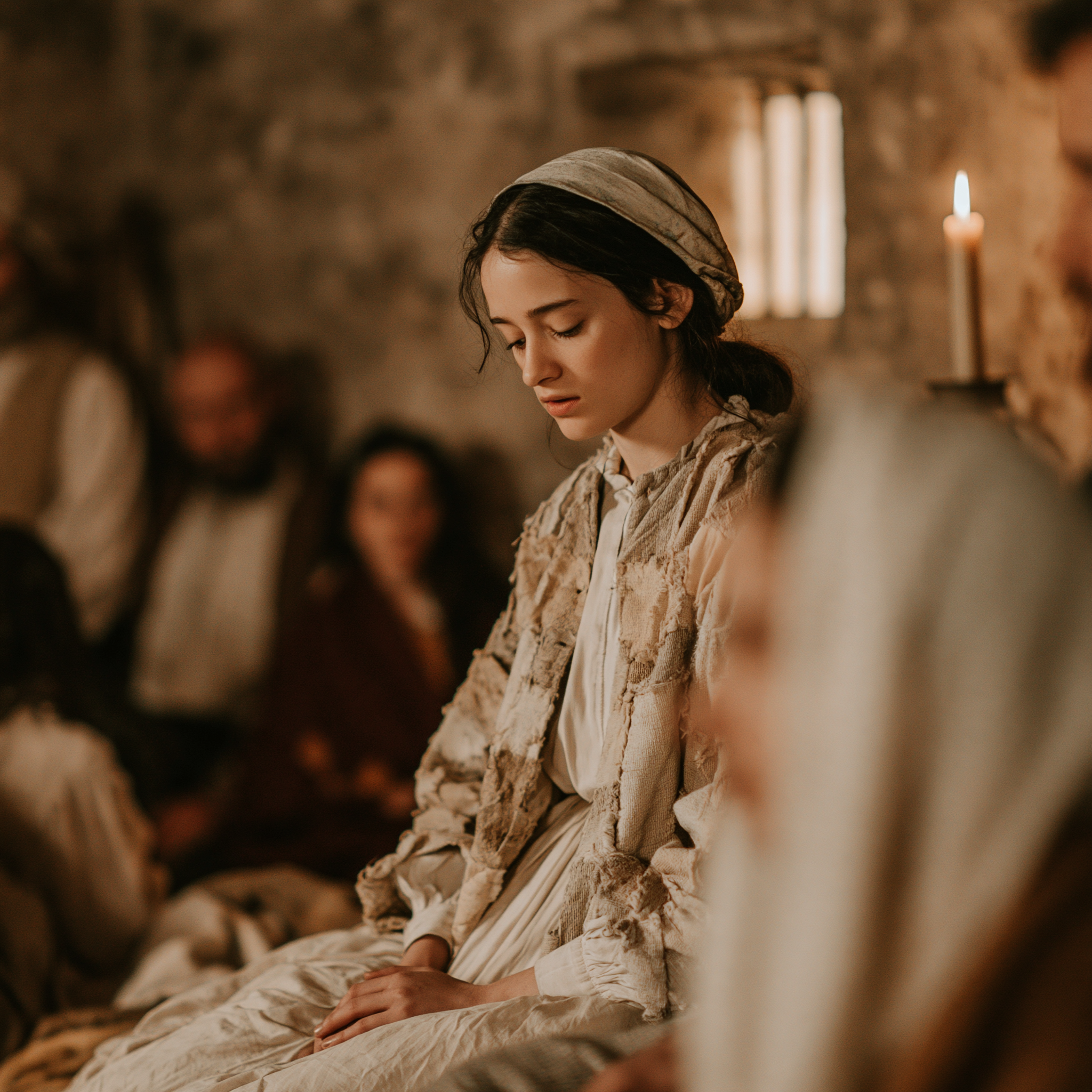
The Gospel of Luke gives us the scene first: a virgin betrothed to a man named Joseph, living in the small Galilean town of Nazareth, visited by the angel Gabriel. Hail, full of grace, the angel says. The Lord is with you.
Mary is troubled by the greeting — not by an angel appearing, which is remarkable enough, but by what the words might mean. The angel tells her she has found favor with God, that she will conceive and bear a son, that she is to name Him Jesus, and that He will be called Son of the Most High and given the throne of His ancestor David, a kingdom that will never end.
Mary's response is not immediate submission. She asks a real question: how can this be, since she has no relations with a man? The angel answers that the Holy Spirit will come upon her, that the power of the Most High will overshadow her, and that nothing is impossible with God. Only then does she answer: “Behold, I am the handmaid of the Lord. May it be done to me according to your word.”
It is worth sitting with what she actually agreed to. Not a comfortable pregnancy inside a stable marriage, but an unexplainable one, to a fiancé who had every reason under the law to quietly end the engagement. She said yes before she knew how Joseph would respond, before she knew there would be no room at the inn, before she knew a sword would one day pierce her heart. She said yes to the whole of it, sight unseen.
The Visitation and the Magnificat: Blessed Among Women
Soon after the angel leaves her, Mary travels into the hill country to visit her relative Elizabeth, who is six months pregnant with the child who will become John the Baptist. The moment Elizabeth hears Mary's greeting, the infant in her womb leaps, and Elizabeth is filled with the Holy Spirit. “Blessed are you among women,” she says, “and blessed is the fruit of your womb.”
Mary answers with a song. “My soul proclaims the greatness of the Lord,” she sings, “and my spirit rejoices in God my savior.”
The Magnificat, as the Church has called this song for centuries, is one of the longest speeches given to any woman in the New Testament, and it is not gentle or decorative. It speaks of God scattering the proud, pulling the mighty from their thrones, lifting up the lowly, filling the hungry with good things and sending the rich away empty. A frightened teenager who has just agreed to an impossible pregnancy is, in the same breath, singing about the reversal of every unjust power structure in the world.
The Nativity: The Birth of Jesus and the Presentation in the Temple
The census brings Joseph and Mary to Bethlehem, the city of David, because Joseph is of David's house. There is no room for them at the inn, and Mary gives birth in the place available to her — wrapping her son in swaddling clothes and laying Him in a manger.
Shepherds arrive that same night, telling her that an angel had appeared to them in the fields and announced the birth of a savior, and that a multitude of the heavenly host had filled the sky praising God. Luke tells us what Mary did with all of this: she kept all these things, reflecting on them in her heart. It is one of the few windows the Gospels give us into her interior life — not what she said, but what she quietly turned over and did not let go of.
Forty days later, at the Presentation in the Temple, an old man named Simeon takes the child in his arms and blesses God, and then turns to Mary with a different kind of blessing — a warning. This child, he tells her, is destined for the fall and rise of many in Israel, a sign that will be contradicted, so that the thoughts of many hearts may be revealed. And you yourself, he says, a sword will pierce your soul. She said yes in Nazareth without knowing this was part of it. Now she knows.
The Miracle at Cana: "Do Whatever He Tells You"
Decades pass between the Gospel's infancy narratives and the next scene where Mary plays a central role: a wedding at Cana, where the wine has run out. She goes to her son and simply states the problem. They have no wine. Jesus's answer sounds like a mild refusal — woman, how does this concern of yours involve me? My hour has not yet come — but Mary does not argue with Him. She turns to the servants and gives an instruction that Catholic tradition has treated ever since as the whole of her spirituality compressed into five words: do whatever he tells you.
The jars are filled, the water becomes wine, and John calls it the first of the signs that reveal Jesus's glory. Mary does not perform the miracle. She does not even ask for one directly. She notices a need, brings it to her son, and steps out of the way. The Church has read this scene for centuries as the pattern of her intercession — not standing between the believer and Christ, but pointing, always, toward Him.
The Crucifixion: Mary at the Foot of the Cross
Mary appears once more at the center of the Gospel narrative, and it is the hardest scene of all. She is standing at the foot of the cross when her son is crucified — not fleeing, not fainting, as later art sometimes imagines her, but standing, according to John's account, present to the end.
Jesus looks down at her, and at the disciple He loved standing beside her, and says: “Woman, behold your son.”
Then to the disciple: “Behold your mother.”
From that hour, John writes, the disciple took her into his own home. The Church has read that moment as more than a son's dying arrangement for His mother's care. It is the moment Mary becomes mother to every disciple who would ever follow — the birth of a new family at the foot of the cross, gathered around the body of the one who was dying to make it possible.
Simeon's sword, decades earlier, finds its mark here. Mary said yes to an angel in Nazareth, and the yes led, in the end, to this hill outside Jerusalem, and she did not walk away from it.
Pentecost and the Early Church: Mary in the Upper Room
The last time Scripture shows us Mary, she is with the apostles in Jerusalem after the Ascension, gathered with them in the upper room, devoting herself to prayer. Acts of the Apostles places her there deliberately — present for the birth of the Church at Pentecost, just as she was present for the birth of Christ at Bethlehem.
Scripture does not narrate her death. Catholic tradition holds that at the end of her life she was assumed, body and soul, into heaven — spared the corruption of the grave the way her Son had conquered it through the Resurrection. It is the last word the Church has to say about her story: that the woman who said yes to bearing God into the world was, in the end, brought fully into the life she had carried.
Catholic Marian Dogmas: Who the Church Believes Mary Is
-
In 431, the Council of Ephesus formally affirmed the title Theotokos — God-bearer — for Mary, not primarily to honor her but to protect the truth about her son: that the child she bore was, from the moment of conception, fully God and fully human, one person and not two. To call Mary the Mother of God is a statement about Christ before it is a statement about her.
-
In 1854, Pope Pius IX defined as dogma that Mary was conceived without the stain of original sin, preserved from it by a singular grace from the moment of her conception, in view of the merits of the son she would one day bear. The Church understands this not as Mary earning an exemption, but as God preparing, in advance, the vessel that would carry His Son.
-
In 1950, Pope Pius XII defined as dogma that Mary, at the end of her earthly life, was assumed body and soul into heavenly glory. The Church has held this belief in one form or another since the earliest centuries; the 1950 definition gave it the Church's fullest formal expression.
-
Catholics do not worship Mary — worship belongs to God alone. But the Church has always held that the saints, and Mary above all of them, continue to intercede for the living, the way any mother would. The Rosary, one of the most widely prayed devotions in the Church, walks through the major scenes of her life and her son's alongside her, asking for her prayers rather than her power.
She did not perform the miracle at Cana. She noticed the need, brought it to her son, and stepped out of the way. Do whatever He tells you.
The Legacy of Mary: Why the Blessed Virgin Still Matters Today
Mary's story is, on its surface, a small one — a young woman from an unremarkable town, given no political power, no formal education, no warning beyond what an angel and an old man in a temple told her. And yet the Church has spent two thousand years insisting that her yes is one of the hinge points of human history, on par with creation itself.
She kept things in her heart rather than explaining them. She noticed a need at a wedding and quietly acted on it. She stood at a cross when the men around her had fled. She waited in an upper room, praying, for a Spirit she had already once said yes to receiving. None of it required her to be extraordinary in the way the world usually measures greatness. It required her to keep saying yes, in increasingly difficult circumstances, for the whole of her life.
That is the entire shape of her sanctity: an assent given once, in a small room, in a small town, and then lived out completely, all the way to the foot of a cross and beyond it.