Saint Augustine of Hippo: The Restless Heart, Confessions, and Legacy
Feast Day: August 28
Also Known As: Doctor of Grace (Doctor Gratiae); one of the four original Doctors of the Latin Church, with Ambrose, Jerome, and Gregory the Great
Born / Died: November 13, 354, Thagaste, Roman North Africa (modern Souk Ahras, Algeria) — August 28, 430, Hippo Regius (modern Annaba, Algeria), during the Vandal siege of the city
Doctor of the Church: Recognized as one of the Church's original four great Doctors, formally confirmed in 1298 by Pope Boniface VIII
Patronage: Theologians; printers; brewers; those seeking conversion
Major Works: Confessions; City of God; On the Trinity; On Christian Doctrine
Major Shrine: The Basilica of San Pietro in Ciel d'Oro, Pavia, Italy, where his relics were transferred after a long journey from North Africa
His mother prayed for his conversion for nearly twenty years before it happened.
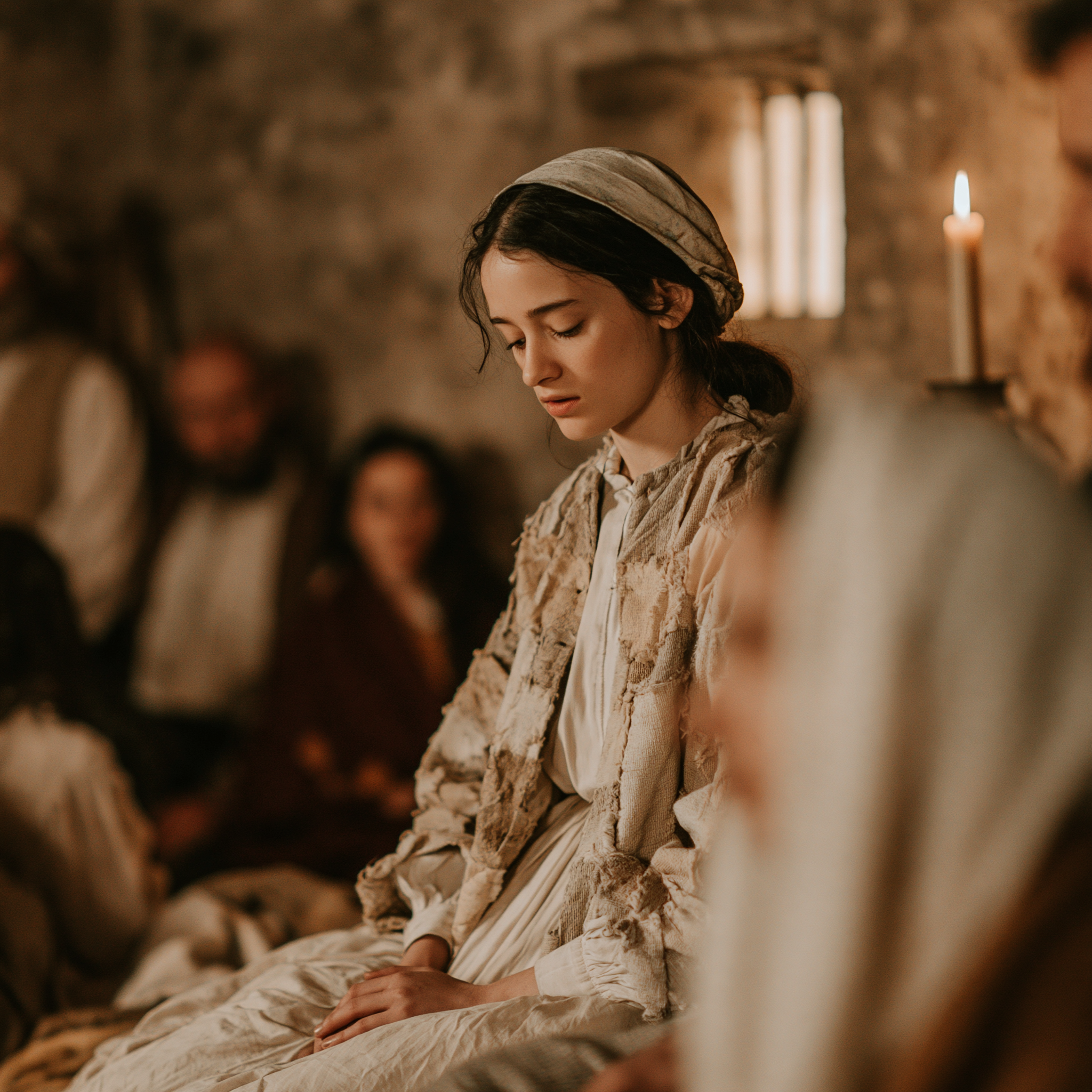
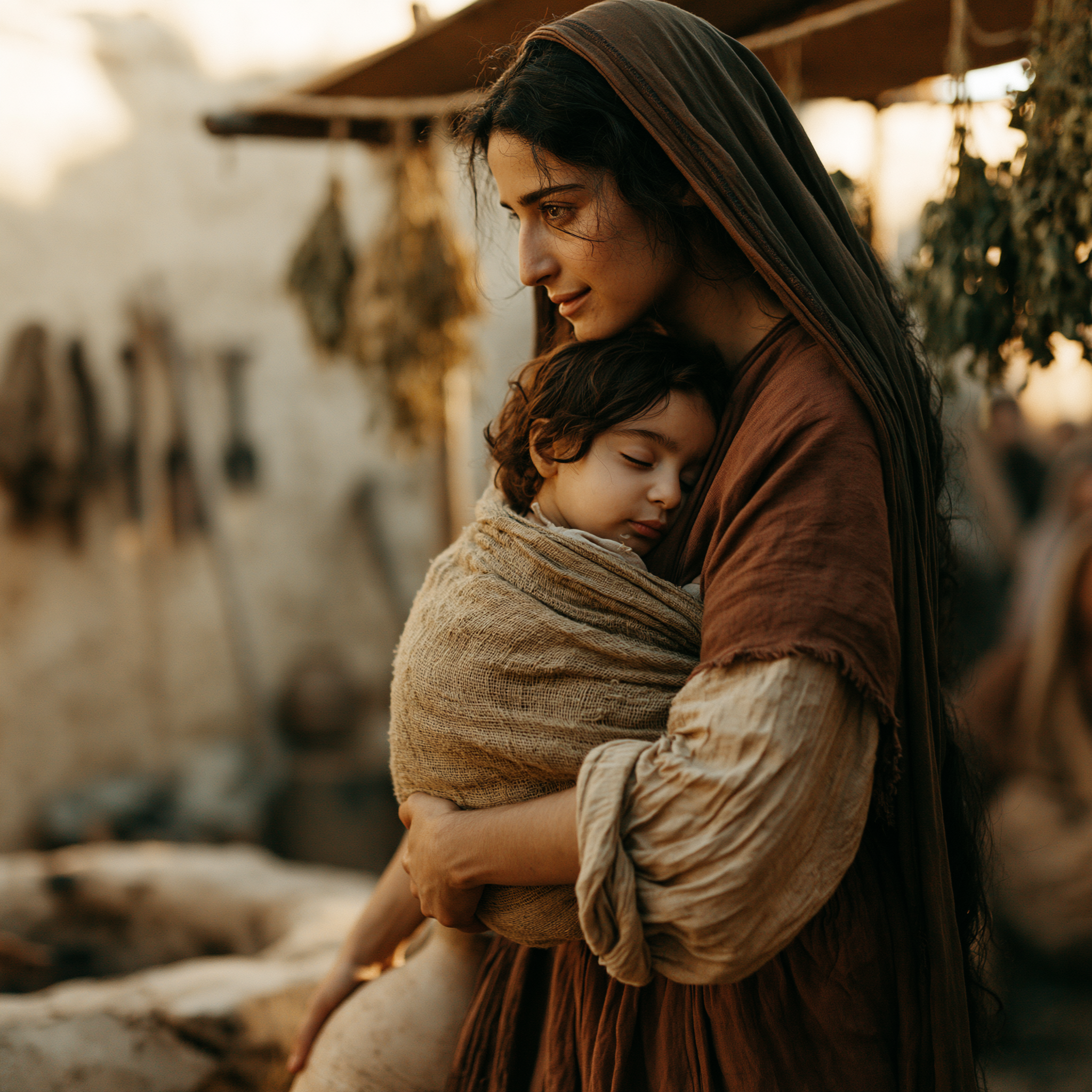
Monica wept over her son for two decades — through his years chasing a heretical philosophy that claimed to explain evil away, through a long relationship with a mistress he never married, through a brilliant academic career built on skills he privately considered a kind of respectable dishonesty. A bishop, tired of her pleading, once told her simply that a son of so many tears could not be lost. He had no idea how long it would take, or how completely the answer to her prayers would reshape Western Christian thought.
Augustine of Hippo became, after his conversion, one of the most influential theologians the Church has ever produced — the namesake, many centuries later, of this site. His account of that conversion, written as an extended prayer of confession to the God he had spent so long avoiding, remains one of the most read books in the history of Western literature.
Quick Facts: Who Was Saint Augustine of Hippo?
Before exploring his life in depth, here is a quick overview of the key dates, locations, and milestones that shaped Saint Augustine’s journey from a restless seeker to one of Christianity’s most influential theologians.
-
Augustine, a brilliant North African rhetorician who spent years in moral confusion and heretical philosophy before his conversion to Christianity
-
Bishop of Hippo and one of the four original Doctors of the Latin Church, whose theology of grace, sin, and history shaped nearly all subsequent Western Christian thought
-
Thagaste and Hippo Regius, in Roman North Africa; Carthage, Rome, and Milan during his years as a teacher of rhetoric
-
354–430
-
Because a man who spent his twenties and thirties running from faith became, after a single moment in a garden, one of the most rigorous and influential defenders of it in the Church's entire history
Early Life in Thagaste and Carthage: Searching for Wisdom
Augustine was born in Thagaste in Roman North Africa to a Christian mother, Monica, and a pagan father, Patricius, who converted only shortly before his death. He was, by every account, extraordinarily gifted — sent for advanced education in rhetoric, first locally and then in Carthage, the intellectual capital of Roman Africa, where his talent for argument and language marked him early as a young man destined for a prominent career.
It was also in Carthage that Augustine, in his own later description, fell into what he considered years of moral confusion. He entered a long-term relationship with a woman whose name he never records, and the couple had a son together, Adeodatus — Latin for gift of God — around the age of eighteen. He also joined the Manichaeans, a dualistic religious movement that offered what seemed at the time like a tidy intellectual answer to the problem of evil, and he remained committed to their teaching for roughly nine years, even as its explanations began to wear thin under his own relentless questioning. Through all of it, Monica prayed, wept, and refused to give up — famously told by a bishop, weary of her persistence, that it was not possible for a son of so many tears to be lost.
"Grant Me Chastity, But Not Yet": The Intellectual and Moral Tug-of-War
Augustine's career took him to Rome and then to Milan, where he secured a prestigious post teaching rhetoric — and where he came under the influence of Ambrose, the city's formidable bishop, whose sophisticated preaching began dismantling the intellectual objections to Christianity that Augustine had been nursing for years. What remained, by his own unusually honest account, was not doubt so much as unwillingness. He wanted the truth of Christianity to be true and did not want to give up the life he was living in order to follow it.
He captured that internal tug-of-war in a single prayer he later recorded with visible embarrassment: grant me chastity and continence, he asked God, but not yet. It is one of the most quoted lines in the entire Confessions precisely because it names so precisely a kind of half-belief nearly everyone recognizes — wanting to change, and simultaneously wanting to delay the cost of changing for just a little longer.
The Garden in Milan: "Take Up and Read" and Augustine’s Conversion
The resolution came suddenly, in a garden in Milan, during a period of acute inner turmoil that Augustine describes physically — pacing, tearing at his hair, weeping under a fig tree, torn between the old habits pulling him backward and a new life he could sense but not yet reach. In the middle of this crisis, he heard what sounded like a child's voice from a neighboring house, chanting a simple phrase over and over: take up and read, take up and read.
Unable to think of any children's game that used those words, Augustine took it as an instruction. He returned to where his friend Alypius was sitting with a copy of Paul's letters, opened it at random, and his eyes fell on a passage from Romans: not in orgies and drunkenness, not in promiscuity and licentiousness, not in rivalry and jealousy. But put on the Lord Jesus Christ, and make no provision for the desires of the flesh. He read no further. He did not need to. In his own account, the moment resolved years of hesitation almost instantly — every shadow of doubt, he wrote, was suddenly gone.
The Vision at Ostia: Shared Grace and the Death of Saint Monica
Augustine was baptized by Ambrose at Easter in 387, together with his son Adeodatus, and soon after began the journey back to North Africa with his mother. At the port town of Ostia, while waiting to sail, Augustine and Monica shared what has become one of the most tenderly recorded moments in all of Christian literature: leaning together at a window overlooking a garden, discussing what eternal life with the saints might be like, the two of them were drawn, in his account, into a shared and briefly overwhelming sense of God's presence, reaching for a moment beyond ordinary thought and language altogether.
Monica died not long afterward at Ostia, her twenty years of prayer for her son's conversion answered in full before her own death, and Augustine's account of both the mystical experience at the window and his grief afterward remains one of the most human, unguarded passages he ever wrote.
Bishop of Hippo: Defender of Grace Against Classical Heresies
Returning to Africa, Augustine intended to live a quiet monastic life of study and prayer with a small community of friends. Visiting the coastal city of Hippo Regius, he was recognized in church by the congregation, who pressed him, over his own vocal objections, into ordination as a priest in 391. Roughly five years later, he was consecrated bishop of Hippo, a position he held for the rest of his life, combining the demanding daily administrative and pastoral work of running a diocese with a theological output that would eventually run to well over a hundred books, several hundred letters, and several hundred surviving sermons.
Championing Orthodoxy: Fighting the Heresies That Divided the Early Church
Augustine's decades as bishop were defined substantially by theological combat, fought out across three major controversies that shaped the entire future direction of Western Christian doctrine. Against the Manichaean dualism he had once embraced himself, he argued for the goodness of all creation and located evil not as a rival force to God but as a privation, a turning away from the good. Against the Donatists, a North African schismatic movement that questioned whether sacraments administered by clergy who had lapsed during persecution were still valid, he defended the objective effectiveness of the sacraments regardless of the minister's personal worthiness — a position that permanently shaped Catholic sacramental theology.
His fiercest and most consequential battle was against Pelagius, a teacher who held that human beings could achieve moral perfection and merit salvation through their own effort and free will, without an essential need for God's grace. Augustine's response, developed across years of controversy, became the foundation of the Western Church's theology of grace and original sin — the conviction that human nature, wounded by the Fall, cannot save itself, and that grace is not a reward for effort but the very thing that makes any good human effort possible in the first place.
The Masterworks: Demystifying Confessions and The City of God
Augustine's two towering works came from very different moments in his life and address very different questions, yet both remain essential reading nearly sixteen centuries later. The Confessions, written in his early forties, is addressed directly to God rather than to a human reader — an extended prayer recounting his own restless search, structured less like a modern memoir than like a long act of worship built from memory. It is widely considered one of the first true autobiographies in Western literature, remarkable for the unflinching honesty with which Augustine examines his own younger failures.
The City of God came later and answered a very different crisis: the sack of Rome by the Visigoths in 410, an event that shook the Roman world and led many to blame Christianity itself for abandoning the old gods who had supposedly protected the empire for centuries. Augustine's sprawling response develops an entire theology of history, contrasting the earthly city, built on self-love and temporal power, with the City of God, built on the love of God and destined to outlast every earthly empire — including Rome itself, whose fall Augustine treats as tragic but ultimately beside the point of what actually matters.
Death During the Vandal Siege: The Final Days of the Doctor of Grace
Augustine's final months unfolded against a backdrop of collapse. The Vandals, an Arian Christian Germanic people, swept across North Africa and laid siege to Hippo itself in 430. Augustine, by then in his mid-seventies, died during the siege, before the city fell, reportedly spending his final days with the penitential psalms copied out and posted on the wall of his room where he could see them from his bed — the great theologian of grace and sin, at the very end, still praying the Church's oldest prayers for mercy.
The Catholic Perspective: Understanding Grace, the Restless Heart, and Augustine’s Broader Legacy
Long before his theology was codified into doctrine, Augustine’s insights grew out of his personal encounter with mercy. From his designation as the Doctor of Grace to his global intellectual impact, his vision continues to define the Catholic understanding of faith seeking understanding.
-
Augustine's theology of grace, forged in his controversy with Pelagius, remains foundational to Catholic teaching on sin, free will, and salvation — the conviction that human beings, left to themselves, cannot achieve the good they are capable of desiring, and that grace is not an optional supplement to human effort but the necessary source of it. The Church has honored this legacy with the title Doctor of Grace, a title that has never been seriously contested in over fifteen centuries.
-
The most famous line Augustine ever wrote appears near the very opening of the Confessions: you have made us for yourself, O Lord, and our heart is restless until it rests in you. It has become one of the most quoted sentences in the history of Christian spirituality, precisely because it names a condition Augustine spent his own turbulent twenties and thirties living out before he could write about it — a restlessness that no amount of achievement, relationship, or intellectual system could finally satisfy.
-
Augustine's reach extends well past Catholic theology alone. His writing on grace and human sinfulness became a central reference point centuries later for Reformation theologians, including Martin Luther, an Augustinian friar himself, and John Calvin, both of whom drew heavily on Augustine's arguments even as they broke from the Catholic Church that had canonized him. Few theologians in Christian history are claimed as a foundational influence by so many different, and sometimes opposed, Christian traditions at once.
Doctor of the Church: Saint Augustine’s Enduring Impact on Western Thought
Augustine's life offers something unusual among the saints: a genuinely detailed, unflinching account, in his own words, of exactly how far a brilliant mind can wander before grace catches up with it. He did not become a theologian of grace by observing other people's need for it. He became one by living for years inside his own resistance to it, cataloging that resistance with an honesty rare in any era, let alone the fourth century.
Nearly sixteen hundred years later, his questions have not gone stale. What does evil actually consist of? Why do good people keep failing to do the good they can plainly see? What does any human city ultimately answer to, when its walls eventually fall? Augustine spent a lifetime working out answers that the Church has never stopped returning to — and it is fitting, on a site that carries his name, that his restless search for truth remains exactly where every reader is invited to start.