Saint Thérèse of Lisieux: The Little Way, Story of a Soul, and Life of the Little Flower
Feast Day: October 1
Also Known As: Marie-Françoise-Thérèse Martin (birth name); the Little Flower of Jesus
Born / Died: January 2, 1873, Alençon, France — September 30, 1897, Lisieux, France, at age 24
Doctor of the Church: Declared in 1997 by Pope John Paul II — one of only four women ever given the title
Canonized: May 17, 1925, by Pope Pius XI
Patronage: Missions and missionaries (co-patron with Francis Xavier, despite never leaving her convent); florists; those suffering from tuberculosis; France (co-patroness with Joan of Arc)
Major Work: Story of a Soul (Histoire d'une âme), her spiritual autobiography, published after her death
She died at twenty-four, in a small convent almost no one outside it had heard of, having accomplished nothing the world would normally think to record.
Within thirty years, she was canonized. Within a century, she was declared a Doctor of the Church, one of only four women in history to receive that title — placed, by that honor, in the company of theologians who wrote enormous, systematic works across entire lifetimes. Thérèse of Lisieux wrote one slim spiritual memoir, largely under obedience, about a life that consisted almost entirely of small, hidden, unremarkable acts. It turned out to be enough to reshape how the modern Church talks about holiness altogether.
Quick Facts: Who Was Saint Thérèse of Lisieux?
Before diving into her full story, here is a brief overview of Saint Thérèse of Lisieux— her life, legacy, and the key details of her path to sainthood.
-
Thérèse Martin, a French Carmelite nun who entered the convent at fifteen and died at twenty-four
-
A Doctor of the Church known for the “Little Way” — a spirituality of doing small, ordinary things with total love and trust
-
Alençon and later Lisieux, France, where she spent nearly her entire short life inside a single Carmelite convent
-
1873–1897
-
Because a life almost entirely hidden from public view produced a spiritual teaching so widely read and so deeply trusted that the Church eventually ranked it among its most authoritative
Early Life of Saint Thérèse: Childhood Loss and the Martin Family
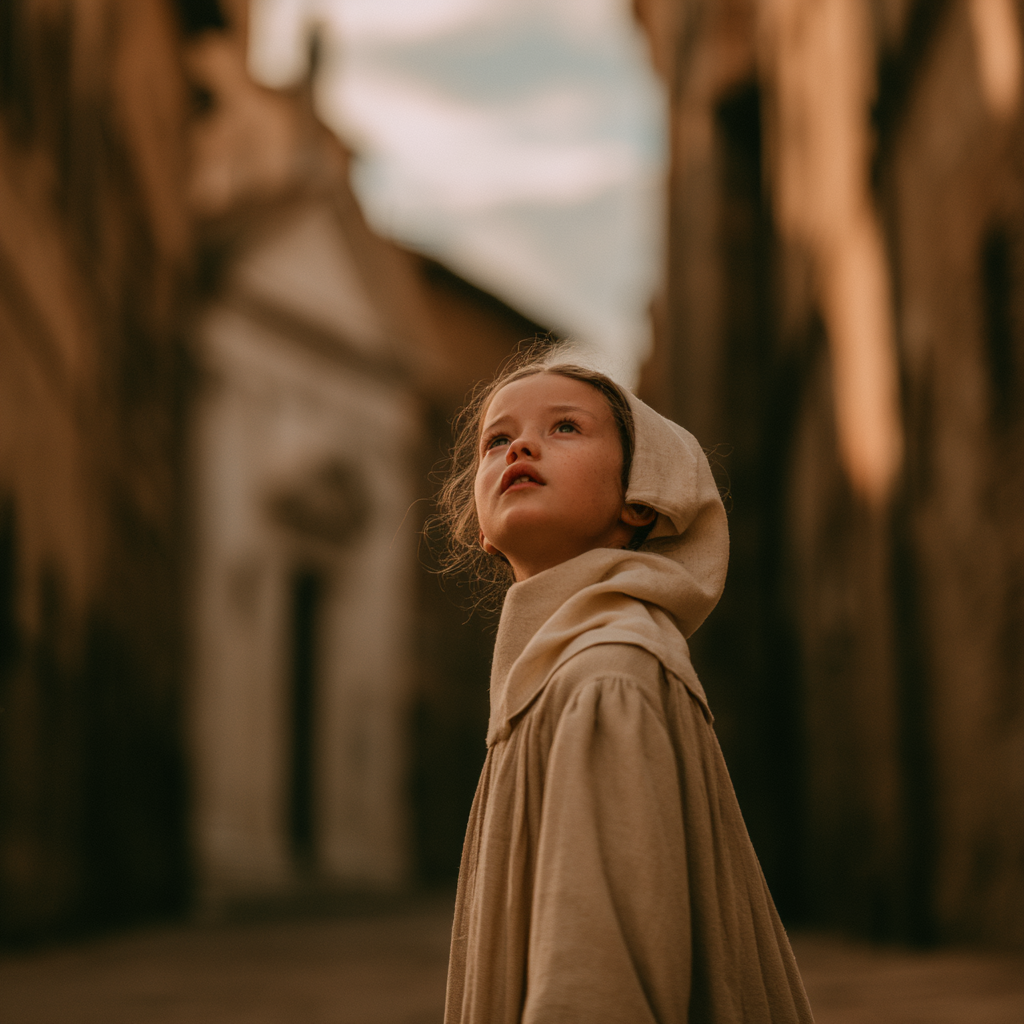
Thérèse was the youngest of nine children born to Louis and Zélie Martin, a devout French couple later canonized as saints in their own right — one of only a small number of married couples the Church has ever canonized together. Four of Thérèse's siblings died in infancy before her own birth, and her mother died of breast cancer when Thérèse was only four years old, a loss she described as marking the end of what she called the sunny first period of her childhood.
All five of the Martin daughters who survived to adulthood entered religious life — four as Carmelites, one as a Visitation nun — and Thérèse grew up in a household saturated with faith, grief, and an intensity of devotion that shaped her from a very young age. She also grew up, by her own unusually candid later account, extremely emotionally sensitive, prone to tears and to a kind of self-focused fragility that she would spend years learning to outgrow.
The Christmas Conversion of 1886: Thérèse’s Spiritual Turning Point
Thérèse dated a decisive turning point to a single moment on Christmas Eve in 1886, when she was thirteen. Returning home from Midnight Mass, she overheard her father express mild irritation at the childish tradition of leaving shoes by the fireplace for her to find gifts in — a small, ordinary remark that, in an earlier season of her life, would have wounded her into tears. Instead, she describes something breaking open in her: a sudden strength to master her own oversensitivity and to think of others rather than herself.
She called it her Christmas conversion, and dated the beginning of her adult spiritual life to that single, undramatic evening. It set the pattern for nearly everything that followed — grace arriving not through vision or ecstasy, but through an ordinary moment, quietly and completely reorienting an ordinary life.
Entering Carmel: Kneeling Before Pope Leo XIII at Age Fourteen
Thérèse wanted to enter Carmel young, well before the normal minimum age of twenty-one, and she pursued the goal with a determination that startled the adults around her. In 1887, at fourteen, she joined a pilgrimage to Rome with her father and, during a general audience, defied explicit instructions not to address Pope Leo XIII directly — kneeling before him and asking, in front of the assembled crowd, for permission to enter Carmel at fifteen.
The pope's answer was noncommittal, and Thérèse was ushered away in tears, the moment apparently a failure. Permission came anyway, not long after, through the local bishop, and Thérèse entered the Carmel of Lisieux in April 1888, three months past her fifteenth birthday — remarkably young even by the standards of an era more comfortable with early religious vocations than our own.
What Is the Little Way? Saint Thérèse’s Path to Holiness
Inside the convent, Thérèse developed the spiritual teaching that would eventually define her: what she called her Little Way, a path to holiness built not on great ascetic feats or dramatic mystical experience, but on doing the smallest ordinary actions — a chore, a kindness to an irritating fellow sister, an unspoken sacrifice — with complete love and total trust in God.
She described it explicitly as a spirituality of spiritual childhood: the confidence of a small child who does not need to accomplish great things to be loved by a parent, but simply rests in that love and lets it shape every small action. It was, in its way, a quietly radical reframing of sanctity for anyone who would never found an order, write a systematic theology, or perform a public miracle — which is to say, for nearly everyone.
Story of a Soul: The Spiritual Autobiography of Saint Thérèse of Lisieux
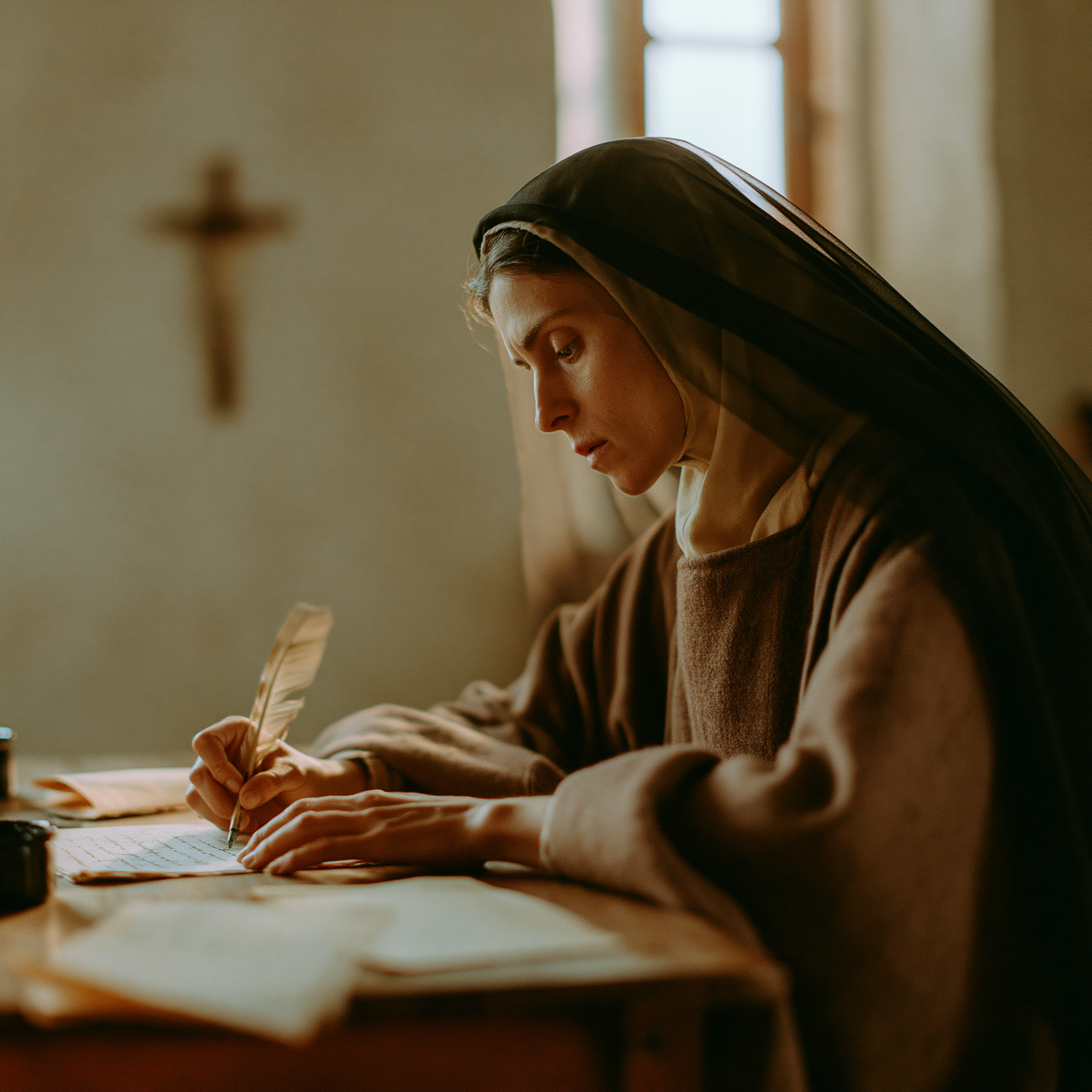
Late in her short life, Thérèse's prioress — who was also her biological sister — instructed her to write down her childhood memories and spiritual reflections, primarily as an internal community record rather than for wider publication. What resulted, compiled and edited after her death into Story of a Soul, became one of the most widely read spiritual autobiographies in the history of the Church, translated into dozens of languages and credited with drawing countless readers into a serious spiritual life through nothing more than its plain, direct account of an ordinary Carmelite's inner world.
The book's impact took the Church itself somewhat by surprise. Thérèse had died almost entirely unknown outside her own convent walls; within a generation, devotion to her had spread around the world, driven almost entirely by ordinary readers finding something in her account of small, hidden fidelity that they could not find in more traditionally heroic saints' lives.
Final Years and the Trial of Faith: Suffering, Tuberculosis, and Death
Thérèse's final eighteen months were marked by tuberculosis and, alongside the physical suffering, by what she candidly described in her own writing as a trial of faith — a period of profound spiritual darkness in which the promise of heaven itself seemed to dissolve into doubt, even as she continued, deliberately, to act and pray as though she believed it completely. It is one of the most startlingly honest passages in any saint's autobiography, and it has made her an unusually credible companion for believers who have faced their own seasons of religious doubt.
Shortly before her death, she is remembered as promising that she would spend her heaven doing good on earth, and that after her death she would let fall a shower of roses — a promise that gave rise to the still-popular devotional practice of asking for a rose as a sign of her intercession. She died on September 30, 1897, having spent her final months in considerable physical agony borne, by every account, with the same quiet, deliberate love she had spent her whole short life practicing in smaller ways.
Doctor of the Church: The Catholic Significance and Legacy of the Little Flower
In 1997, Pope John Paul II declared Saint Thérèse a Doctor of the Church—an honor reserved for those whose writings offer profound, enduring insight into the Christian life. Though she possessed no formal theological training, her "Little Way" reshaped the Church’s understanding of holiness.
-
Thérèse's declaration as a Doctor of the Church in 1997 recognized something genuinely unusual: a body of teaching built almost entirely around ordinary, everyday fidelity rather than grand ascetic achievement or systematic theological argument. Her doctorate stands as an explicit statement that this kind of small, sustained, hidden holiness is not a lesser path to sanctity but a fully sufficient one — accessible, in principle, to nearly anyone.
-
One of the more striking facts about Thérèse is her patronage over missionary work, held jointly with Francis Xavier, one of history's most physically far-traveled missionaries — despite the fact that Thérèse herself never left her convent walls after entering at fifteen. She corresponded with missionary priests, prayed intensely for their work, and understood her own hidden, cloistered life as a form of spiritual solidarity with their labor on the far side of the world. The Church's decision to honor her alongside Xavier makes a deliberate point: prayer offered in hiddenness can be as genuinely missionary as travel to the ends of the earth.
-
Thérèse's candid account of her final trial of faith has made her writing an unusually honest resource for believers wrestling with their own doubt — proof that sanctity does not require the absence of spiritual darkness, only continued fidelity within it.
Grace arrived not through vision or ecstasy, but through an ordinary moment, quietly and completely reorienting an ordinary life.
Why Saint Thérèse Still Matters: The Modern Relevance of the Little Flower
Thérèse lived twenty-four years, spent nine of them inside a single convent, performed no public miracles, founded no order, and wrote one short book largely because she was told to. Measured by nearly any conventional standard of significance, her life should have vanished into the same obscurity as thousands of other young nuns who died quietly in the nineteenth century.
Instead, her account of finding God in the smallest, most unglamorous corners of an ordinary life has reached further than almost any other modern saint's, precisely because so few people will ever found a religious order or receive a mystical vision, and nearly everyone has access to a small, unnoticed act of patience or love. She turned her own hiddenness into a teaching that hiddenness itself, offered with total love, is already enough — and the Church's decision to call her a Doctor, on the strength of that teaching alone, remains one of the more quietly radical honors it has ever given.