Saint Raphael the Archangel: Story, Patronage, and the Healing Companion in the Book of Tobit
Feast Day: September 29 (Saints Michael, Gabriel, and Raphael, Archangels)
Name Meaning: Hebrew for “God heals” or “God has healed”
Scripture: The central angelic figure of the Book of Tobit, one of the deuterocanonical books included in the Catholic Old Testament
Title: Archangel; one of seven angels traditionally understood to stand before the glory of God
Patronage: Travelers; the blind and those with eye ailments; physicians, nurses, and healers; happy marriages and engaged couples; young people leaving home
Companions: Venerated alongside Michael and Gabriel as one of the three archangels named in Scripture
For most of the story, nobody realizes they are traveling with an archangel.
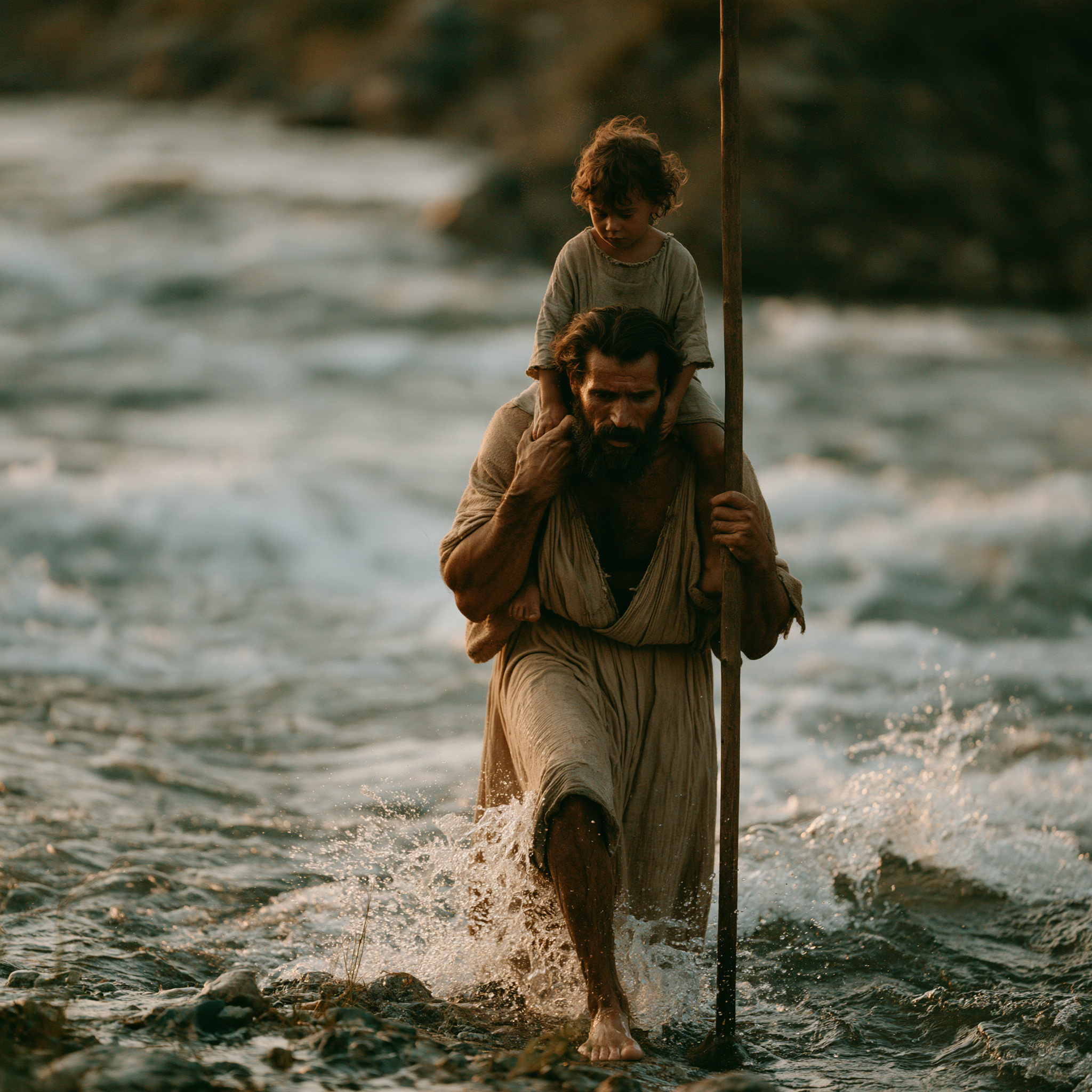
Raphael appears in the Book of Tobit disguised as an ordinary human companion, hired to guide a young man named Tobias on a long journey, and he does not reveal what he actually is until the very end of the story — after he has protected Tobias from danger, helped him find a wife, and provided the means to heal his father's blindness. It is one of the most sustained, detailed angelic narratives anywhere in Scripture, and it gives Raphael a role unlike either of the other two archangels named in the Bible: not primarily a messenger, and not primarily a warrior, but a patient, hidden companion on an ordinary road.
Saint Raphael at a Glance: Feast Day, Patronage, and Meaning
Known across Catholic tradition as the disguised traveler who guided young Tobias, Saint Raphael’s very name reveals his sacred purpose: in Hebrew, Raphael means “God heals”. Celebrated on September 29 alongside the Archangels Michael and Gabriel, he stands before the glory of God as a compassionate patron for physical, emotional, and spiritual afflictions. Whether invoked by travelers seeking safe passage, the blind praying for sight, or couples stepping toward marriage, Raphael remains Scripture’s quiet guardian—revealing how divine mercy meets us on the most ordinary roads.
-
Raphael, one of the three archangels named in Scripture, alongside Michael and Gabriel
-
The angelic guide and healer of the Book of Tobit, later venerated as patron of travelers, the sick, and happy marriages
-
The Book of Tobit is set in Nineveh and the surrounding region during the Israelite exile
-
The events of Tobit are set in the Assyrian exile, roughly the eighth to seventh centuries BC; the book itself was likely written centuries later
-
Because Raphael's story shows an archangel at work not in dramatic, visible power, but in the patient, disguised companionship of an ordinary and difficult journey
Saint Raphael in the Catholic Bible: The Book of Tobit
The Book of Tobit belongs to the deuterocanonical books of the Old Testament — texts included in the Catholic and Orthodox biblical canons but not in the Protestant Old Testament. It is worth pausing on that distinction here, because Raphael's entire scriptural story depends on it: without Tobit, there is no extended biblical narrative of Raphael at all, only his name appearing briefly elsewhere in later Jewish and Christian angelic tradition. The full, detailed account of this archangel belongs specifically to the fuller, seventy-three-book Catholic canon.
Azariah Revealed: The Journey of Tobias and the Disguised Archangel
The story begins with Tobit, a devout, blind Israelite living in exile in Nineveh, who sends his son Tobias on a journey to recover money owed to him by a relative in a distant city. Tobias needs a guide for the road, and the traveling companion he hires, a man who calls himself Azariah, is Raphael in human disguise — present and active throughout the entire journey without either Tobias or his father recognizing what he actually is.
The Tigris River: The Miraculous Fish and Ancient Healing
Early in the journey, while Tobias is washing in the Tigris River, a large fish attacks him, and Raphael instructs him to catch it and keep its heart, liver, and gall bladder, explaining that these organs have specific healing and protective properties. It is an odd, almost folkloric detail embedded in a biblical text, and it becomes essential to nearly everything that happens for the rest of the story.
Delivering Sarah: Driving Out the Demon Asmodeus
Raphael guides Tobias to the house of a relative named Raguel, whose daughter Sarah has suffered a terrible affliction: a demon named Asmodeus has killed each of her seven previous husbands on their wedding night. Raphael instructs Tobias to marry Sarah anyway, and to burn the fish's heart and liver as incense in the bridal chamber — a ritual act that drives the demon away for good. Tobias and Sarah marry and survive the night that had proven fatal to seven men before him, protected by instructions from a companion neither of them yet recognized as an angel.
The Gall of the Fish: Healing Tobit’s Blindness
Tobias returns home with Sarah, the recovered debt, and the fish's gall bladder still in hand. Following Raphael's earlier instruction, he applies the gall to his father's eyes, and Tobit's blindness — the affliction that had shaped the family's hardship from the very opening of the story — is healed. The narrative's two central wounds, a demon-afflicted marriage and a father's lost sight, are both resolved through the same disguised companion's quiet, specific instructions.
One of the Seven Archangels: Raphael’s Biblical Identity
Only at the story's close does the companion reveal what he actually is. I am Raphael, he tells Tobit and Tobias, one of the seven angels who stand ready and enter before the glory of the Lord. He explains that he had been sent by God in direct response to the prayers both Tobit and Sarah had separately offered, each unaware the same angel would answer both of them through a single family's journey — and then he ascends, disappearing from the story as suddenly and quietly as he had entered it.
Patron of Travelers and Healers: Raphael’s Catholic Significance
While Michael defends against spiritual warfare and Gabriel announces epochal divine decrees, Raphael enters Catholic devotion through the quiet rhythm of human need. As the angel who walked alongside Tobias, he became the Church’s enduring patron for all who journey, whether traversing physical roads, navigating the vulnerabilities of illness, or seeking holy marriages. In Catholic theology, Raphael’s significance lies precisely in this gentle closeness—a living testament that God’s providential care is not distant, but intimately involved in the everyday struggles, healings, and companionships of ordinary life.
-
Raphael's story draws together several concerns that might otherwise seem unrelated — physical healing, safe travel, deliverance from spiritual affliction, and a happy marriage — and shows a single angelic figure quietly at work across all of them. The Church has drawn on this range ever since to make him patron of travelers, the sick, physicians, and those seeking a good marriage, treating these not as separate concerns but as different faces of the same providence.
-
Raphael's own explanation of his mission — sent in answer to the prayers of both Tobit and Sarah, offered separately, in different places, without either knowing the other's need — has become a particularly resonant image of how the Church understands providence at work: not always visible in the moment, often arriving disguised as something ordinary, and frequently answering more than one person's need through a single, patient intervention.
-
Alongside Michael and Gabriel, Raphael completes the only three archangels named directly in Scripture, and Catholic tradition has long read the three together as a kind of complete picture of angelic ministry: Michael defends, Gabriel announces, and Raphael heals and guides — three different services offered by messengers who otherwise remain almost entirely hidden from the people they are sent to help.
Two prayers, offered separately, in different places, without either person knowing the other's need — answered by a single, patient, disguised companion.
A Silent Providence: Why Saint Raphael Still Matters Today
Raphael offers a picture of angelic help that looks almost nothing like Michael's dramatic confrontation with a dragon or Gabriel's announcement to Mary. He walks an ordinary road for weeks, disguised as an ordinary traveling companion, offering practical instructions that turn out, only in hindsight, to have been exactly what an afflicted family needed — healing for a blind father, protection for an endangered marriage, safe passage for a young man far from home.
It is a model of providence that most people are more likely to actually recognize in their own lives than a battle in the heavens: help that arrives quietly, disguised as ordinary circumstance or an ordinary person, doing its real work long before anyone realizes what has actually been happening. Raphael's name, God heals, turns out to describe not a single dramatic miracle but an entire patient, hidden journey.