Saint Vincent de Paul: The Patron of Charity, the Galleys, and a Revolution of Mercy
Feast Day: September 27
Born / Died: April 24, 1581, Pouy, France — September 27, 1660, Paris, France, at age 79
Canonized: June 16, 1737, by Pope Clement XII
Declared: Patron of all charitable works and societies by Pope Leo XIII in 1885
Founded: The Congregation of the Mission (Vincentians, or Lazarists), 1625; with Saint Louise de Marillac, the Daughters of Charity, 1633
Patronage: Charitable societies and volunteers; hospital workers; prisoners
Legacy: Inspired the Society of Saint Vincent de Paul (founded 1833 by Frédéric Ozanam), a major lay charitable organization still active worldwide
By his own later, unusually candid admission, Vincent de Paul did not become a priest for especially holy reasons.
He sought ordination young, at nineteen, with a special dispensation since he fell well short of the usual minimum age, and in his own mature reflection on those years, he did not pretend the motives had been pure. He wanted, at least in part, to escape rural poverty and improve his family's modest fortunes — a practical, ambitious calculation dressed in a cassock. It makes what he eventually became considerably more remarkable, not less: the man who would spend the second half of his life organizing charity for the poor on a scale France had never seen started out simply trying to stop being poor himself.
Quick Facts: Who Was Saint Vincent de Paul?
Before building the most extensive network of organized charity in seventeenth-century France, Saint Vincent de Paul was a practical cleric whose life was radically redirected by encounters with poverty, bondage, and rural neglect. Below is an essential overview of his life, mission, and lasting patronage.
-
Vincent de Paul, a French priest born to a peasant farming family in Gascony
-
The founder of the Congregation of the Mission and, with Saint Louise de Marillac, the Daughters of Charity — organizations that reshaped Catholic charitable practice
-
Gascony, France, and later Paris, where his charitable and missionary work was centered
-
1581–1660
-
Because a priest who admitted his own early ambitions were mixed went on to organize the most systematic, sustained charitable relief effort the Catholic Church had produced up to his time
Two Years in Chains: The Barbary Captivity and the Spirit of the Bonded
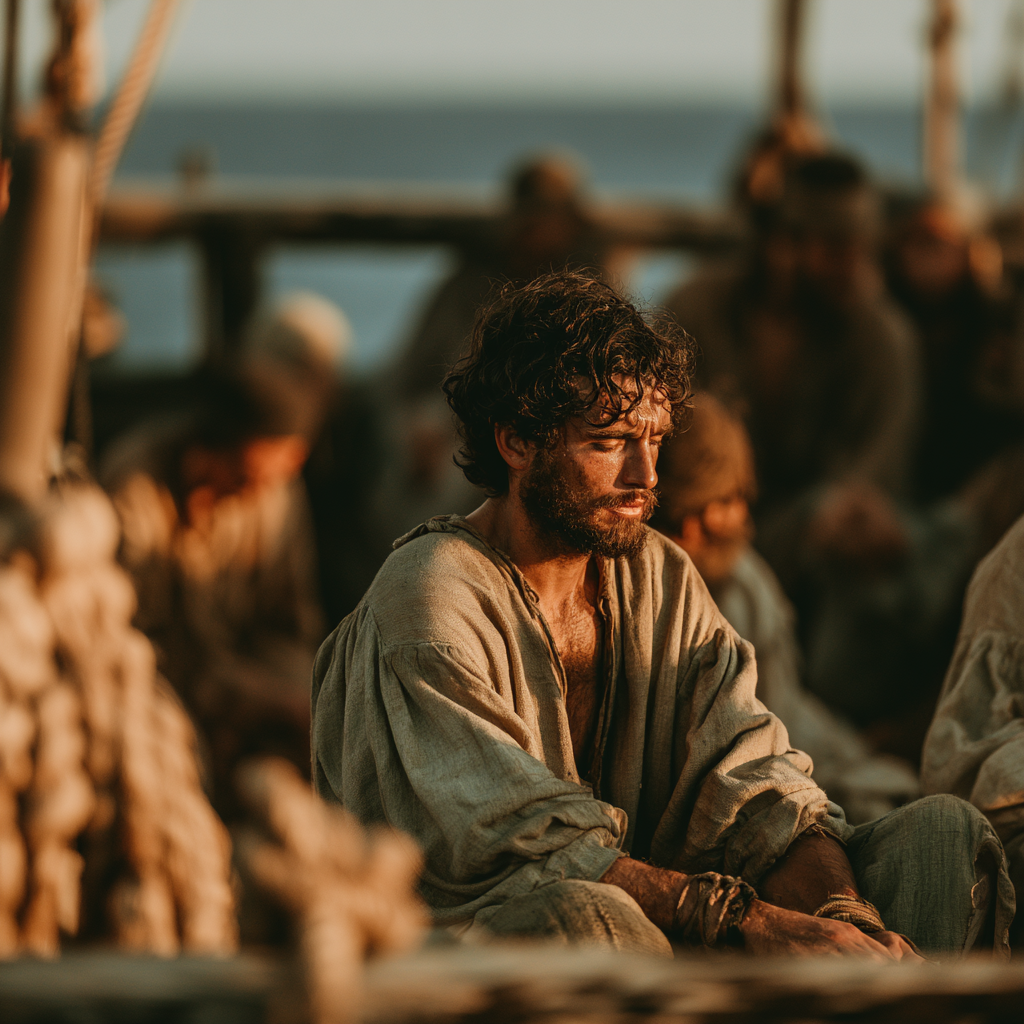
Tradition holds that in 1605, on a sea voyage along the French coast, the young Vincent was captured by Barbary pirates and sold into slavery in Tunis, where he remained a captive for roughly two years before eventually gaining his freedom. The story comes primarily from Vincent's own letters, and modern historians have debated their authenticity and the reliability of the account — it should be treated as a traditional part of his biography rather than fully settled fact.
Whatever the full truth of those two years, the account has long carried a particular resonance with the rest of Vincent's life, given how much of his later ministry would be spent advocating for people held in bondage of one kind or another — prisoners, galley slaves, and the poor trapped by circumstance rather than chains, but trapped all the same.
In the Gondi Household: Galley Slaves and the World of French Nobility
Vincent's path eventually brought him into the household of the Gondi family, one of the wealthiest and most influential in France, serving as tutor and chaplain to their children. Philippe de Gondi held the position of General of the Galleys of France, which gave Vincent direct, ongoing exposure to the brutal conditions endured by galley slaves — convicts and prisoners condemned to row French naval vessels — even as he moved daily through one of the most privileged households in the kingdom.
The contrast shaped him permanently. Vincent spent his years with the Gondi family absorbing both the extraordinary resources available to French aristocracy and the extraordinary suffering just outside its gates, on the Gondi family's own rural estates and among the prisoners under Philippe de Gondi's authority.
The Folleville Awakening: The Sermon That Sparked a Mission to the Poor
In 1617, preaching to peasants on the Gondi estate at Folleville, Vincent delivered a sermon urging a thorough, honest general confession of one's whole life — an appeal that produced an overwhelming response from a rural population starved of serious pastoral attention. Vincent later identified this sermon as the real beginning of his mission to the poor, the moment he understood how much unmet spiritual and material need existed just beyond the reach of the institutional Church as it was then organized.
That same year, in the town of Châtillon-les-Dombes, Vincent organized local laywomen to provide sustained, coordinated care for a poor family suffering from serious illness — a small, practical intervention that became the seed of something much larger: the Confraternities of Charity, later known as the Ladies of Charity, organized groups of laywomen dedicated to structured, ongoing charitable service rather than occasional almsgiving.
Founding the Vincentians and Daughters of Charity: Revolutionizing Religious Life
In 1625, Vincent founded the Congregation of the Mission, a society of priests dedicated to preaching missions among the rural poor and, in time, to training clergy — known popularly as the Vincentians, or Lazarists, after their Paris headquarters at Saint-Lazare. In 1633, working closely with Saint Louise de Marillac, he founded the Daughters of Charity, a community of women dedicated to serving the poor directly in hospitals, homes, and the streets rather than remaining behind convent walls.
The Daughters of Charity were, in their own moment, a genuinely radical innovation. Traditional religious life for women in this era meant enclosure — a cloistered convent, separated from the world. Vincent and Louise deliberately built something different: an active community, free to move through the world's worst conditions in direct service of the people living in them, because that mobility was precisely what the poor actually needed from them.
A Lifetime of Relief Work: Organizing Sustainable Charity Across France
Vincent's charitable projects expanded steadily across the following decades and touched nearly every category of suffering France produced in his era. He organized large-scale relief for regions devastated by war, coordinated care for abandoned infants and foundlings, worked to improve conditions and secure aid for galley slaves, ransomed and assisted captives, and helped establish and run hospitals across the country. What distinguished his approach from the charitable efforts around him was not generosity alone but organization — sustained structures capable of outlasting any single crisis or any single donor's attention.
The Catholic Perspective: Charity as System, Not Sentiment
In Catholic tradition, holiness is rarely confined to contemplative withdrawal; for Saint Vincent de Paul, charity was an exacting spiritual discipline demanding both deep theological vision and rigorous organization. Below is an exploration of the principles that transformed his practical relief work into an enduring model of Christian mercy.
-
Vincent's theology of charity rested on a direct identification of the poor with Christ Himself — the conviction that serving them was not a charitable extra attached to faith but a direct encounter with God, deserving the same reverence given to Christ in the Eucharist. Members of the Daughters of Charity were instructed to treat those they served with genuine respect and dignity, not condescension, precisely because of who they believed they were actually serving.
-
Vincent's most lasting practical innovation was treating charity as something to be organized rather than left to spontaneous individual generosity. The Confraternities of Charity, the Congregation of the Mission, and the Daughters of Charity were all, in their different ways, systems built to outlast any single act of kindness — structures capable of sustaining relief work across generations rather than depending on one person's momentary compassion.
-
Vincent's influence did not end with his own lifetime. In 1833, more than a century and a half after his death, a young layman named Frédéric Ozanam founded the Society of Saint Vincent de Paul, a lay charitable organization explicitly inspired by Vincent's example, which remains active in communities around the world today, continuing the same basic model of organized, sustained, dignity-centered service to the poor that Vincent pioneered.
What distinguished his approach from the charitable efforts around him was not generosity alone but organization.
Doctor of Practical Mercy: Saint Vincent de Paul’s Enduring Legacy
Vincent de Paul offers a model of sanctity built less around dramatic mystical experience than around administrative persistence — decades of the unglamorous, sustained work of building institutions capable of outlasting him. He moved between the households of the wealthy and the conditions of the enslaved and the desperately poor for most of his adult life, and instead of choosing one world or simply feeling compassion for the other, he spent his energy building durable structures that could actually address the gap between them.
Four centuries later, organizations bearing his name or directly inspired by his example continue that work in communities worldwide, a testament to an approach to charity that valued organization and sustainability as much as compassion itself. Few saints demonstrate more clearly that holiness can look like the patient, practical work of building something that keeps helping people long after the builder is gone.