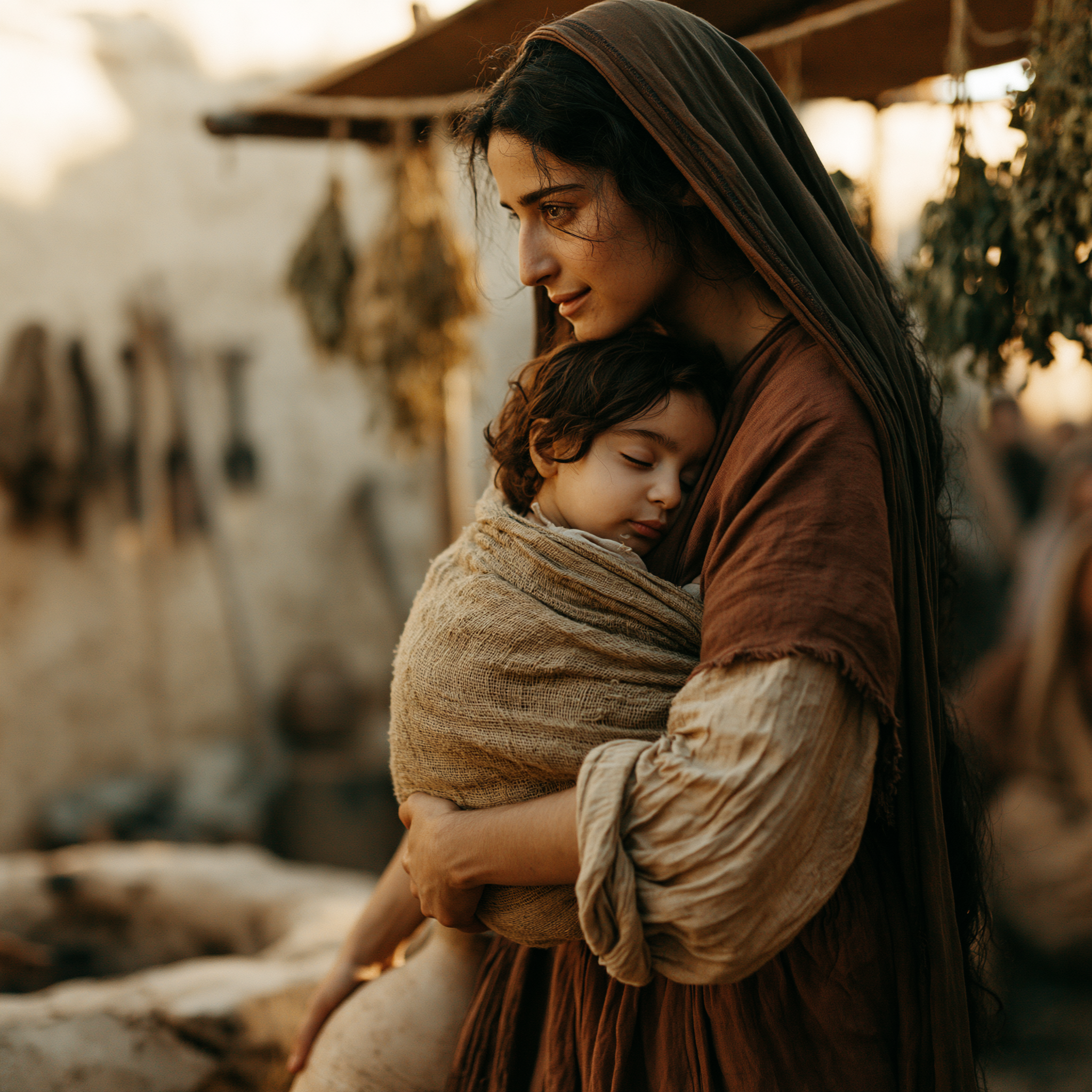
Saint Matilda of Ringelheim: The Queen Who Gave Away an Empire
Feast Day: March 14
Also Known As: Mechthild; Mathilde; Matilda of Ringelheim; Matilda of Saxony
Born: c. 895, Enger, Westphalia (Saxony) — some sources give 892 or 894
Died: March 14, 968, Quedlinburg, Saxony
Canonized: Pre-Congregation — venerated as a saint immediately after her death, before the Church's formal canonization process existed
Patronage: Widows; large families; queens; second marriages; disappointing or estranged children; those falsely accused
Major Shrine: Quedlinburg Abbey, Saxony-Anhalt, Germany
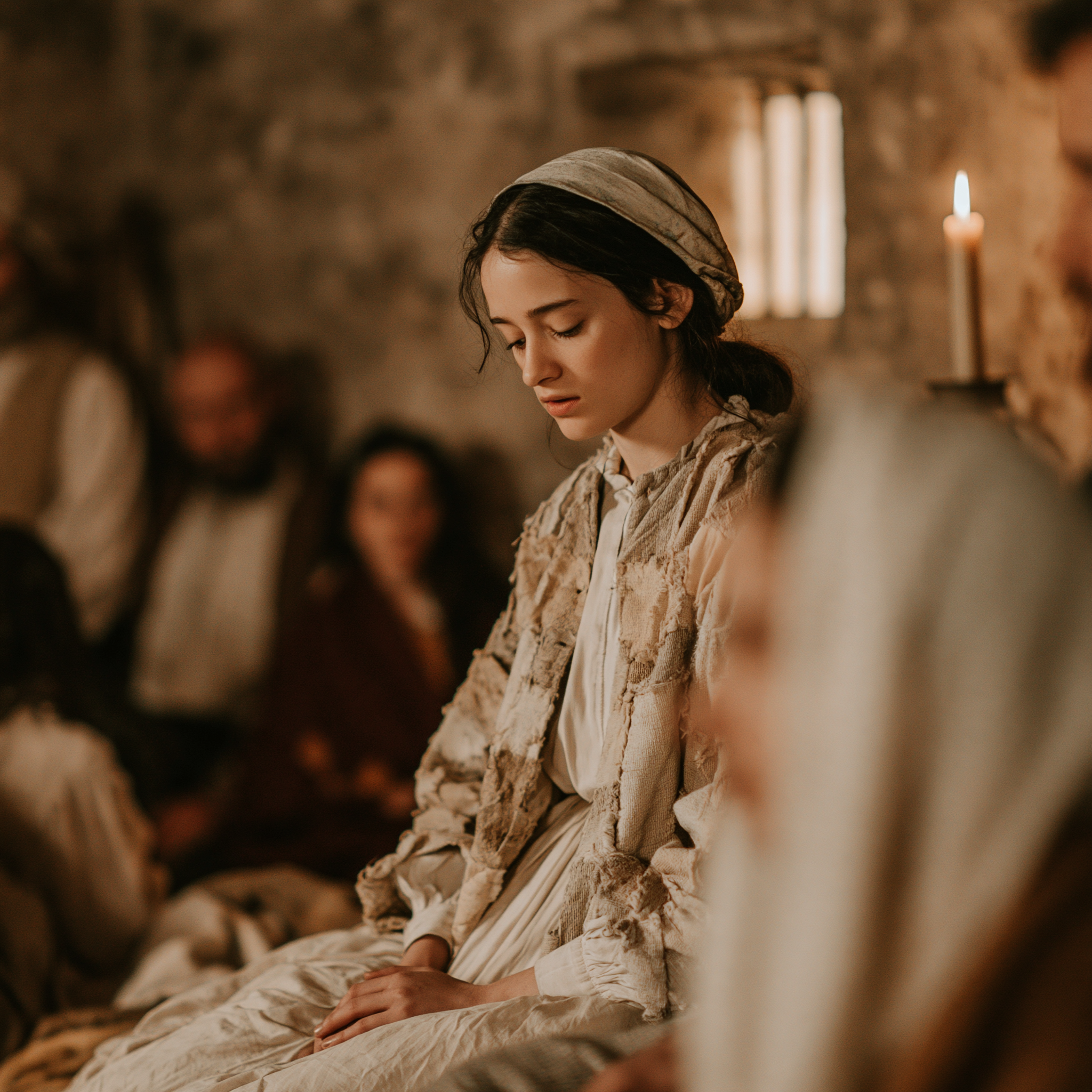
There is a scene medieval chroniclers could not stop repeating, though none of them saw it happen: the queen of Germany, in the middle of the night, slipping out of her own bed while her husband slept, walking alone through the dark to a church to pray before anyone woke and noticed she was gone.
It probably never happened exactly this way. The scene was borrowed, almost line for line, from the life of a Frankish queen who had died four hundred years earlier. But Matilda's medieval biographers reached for it anyway, because it was the only way they knew to say something true about her that a list of royal titles could never capture: here was a woman who kept slipping away from power to find something power could not give her.
She was a duchess, then a queen, then the mother of an emperor. She founded abbeys, buried a king, and gave away so much of her wealth to widows, orphans, and the poor that her own sons eventually tried to take the rest of it from her. Long before anyone had a word like philanthropist, Matilda of Ringelheim was already living out what that word would one day try to describe — and paying for it, inside her own family, the way people who give too much so often do.
Saint Matilda at a Glance: Life, Profile & Fast Facts
Saint Matilda of Ringelheim was a 10th-century Saxon queen whose life bridged royal authority and radical monastic devotion. As Queen of Germany and matriarch of the Ottonian Dynasty, her legacy was defined not by political conquest, but by the abbeys she founded, her vast works of charity, and a quiet persistence through exile and family strife.
Below is a quick overview of her life, feast day, and historical legacy.
-
Matilda of Ringelheim, Duchess of Saxony and Queen of the East Franks (Germany), wife of King Henry I “the Fowler”
-
A tenth-century queen and matriarch of the Ottonian dynasty, remembered for her almsgiving, her monastic foundations, and the family conflict her generosity provoked
-
Saxony and Westphalia, in what is now Germany; her chief foundations stood at Quedlinburg, Nordhausen, Enger, and Pöhlde
-
Born around 895 in Enger, Westphalia; died March 14, 968, at Quedlinburg
-
Because she used a crown's worth of wealth to build convents and feed the poor rather than hoard it — and very nearly lost everything for it. Feast day: March 14
Raised at Herford Abbey: The Girl Who Became Queen
Matilda was born into an old Saxon noble family in Enger, Westphalia, the daughter of Count Theodoric of Ringelheim and his wife, Reinhild. She was still a child when she was sent to the convent at Herford to be raised and educated — and the abbess there was her own grandmother, also named Matilda, who had helped found the community decades before.
A childhood spent inside a convent, under the direct instruction of an abbess who happened to be family, shaped her in a way that never wore off. She learned to read and to pray on the same schedule, in the same rooms, and by the time she left the convent at around seventeen to be married, the habits of monastic life — the fixed hours of prayer, the instinct toward almsgiving, the comfort of a church at hand — had become simply how she lived. She would spend the rest of her life building more of these rooms for other people to grow up in.
A Queen at Seventeen: Marriage to King Henry the Fowler
In 909, Matilda's father arranged her marriage to Henry of Saxony, a nobleman about twenty years her senior known as Henry “the Fowler” for his love of hawking. Henry had been married once before, to a woman named Hatheburg, but the marriage had been dissolved as uncanonical — she was a widow who had already taken vows as a nun when Henry married her. That left Henry free to marry again, and this time the Church raised no objection.
The marriage turned out to matter enormously. In 912, Henry succeeded his father as Duke of Saxony. In 919, upon the death of King Conrad I, the assembled nobles elected Henry king of the East Franks — the kingdom that would become Germany. Matilda, who had grown up praying on a convent's schedule, was now queen of one of the most powerful realms in Europe, married to the founder of a dynasty that would rule for the next century.
Five Children Who Remade Europe: The Ottonian Dynasty
Matilda and Henry had five children who survived to adulthood, and between them they reshaped the map of medieval Europe. Otto, the eldest, would be crowned Holy Roman Emperor in 962, restoring a title that had stood vacant in the West for decades. Henry became Duke of Bavaria. Bruno was ordained a priest and rose to become Archbishop of Cologne, revered enough in his own right to be venerated as a saint. Gerberga married King Louis IV of France. Hedwig was mother to Hugh Capet, who would found the royal dynasty that ruled France for the next three hundred years.
It is a strange thing to hold in mind: a woman raised inside convent walls in Westphalia became, without ever leaving Saxony herself, the grandmother of half the ruling houses of tenth-century Europe. But sons and grandsons who inherit thrones do not always inherit their mother's convictions along with them. That gap is where the hardest chapter of Matilda's life would open.
The Charity That Cost Her Everything: Royal Exile and Mercy
Henry died in 936, and Matilda, now a widow, did what she had always done: she gave. She had already spent years quietly funneling royal income toward the poor, the sick, and the imprisoned, and toward the churches and convents she was founding across Saxony. With Henry gone, she gave more, using the extensive dower lands and income Henry had settled on her at their marriage.
Her sons did not see charity. They saw a threat to the treasury. Otto, newly crowned king after a contested succession, and his brother Henry — the two of them briefly united in nothing else — accused their own mother of impoverishing the crown through what they called reckless almsgiving. Under that pressure, Matilda renounced the properties her husband had left her and withdrew to her villa at Enger in Westphalia, the place where she had been born.
It is worth sitting with what that meant. A woman who had given away royal wealth to widows and orphans and the sick was, in turn, stripped of her own inheritance by the sons that wealth had helped raise to power. The chronicles that record it do not linger on her feelings, only on the fact of the exile. But the retreat to Enger reads like grief.
It did not end there. Fortune turned against both brothers not long after — political setbacks that medieval writers were quick to read as a kind of judgment — and Otto and Henry came to their mother and asked her forgiveness. Matilda returned to the royal court, her lands restored, her position as queen mother secure again. She had not fought to reclaim any of it. She had simply waited, the way she had always waited, on her knees, in a church, in the dark.
Quedlinburg Abbey: A Holy Legacy That Outlived Empires
After Henry's death, Matilda founded a convent at Quedlinburg to stand as his memorial, and it became far more than a private chapel for royal mourning. Quedlinburg grew into one of the most important religious and political centers of the entire Ottonian dynasty — a place where kings were crowned, councils were held, and the abbesses who led it, drawn from the royal family itself, wielded real authority over Ottonian Saxony for generations.
Matilda also founded or supported convents at Nordhausen, Enger, and Pöhlde, and she was especially devoted to Nordhausen, where she spent a great deal of her later life. By the time she died at Quedlinburg on March 14, 968, she had spent more than three decades as one of the most significant religious patrons in Europe, and she was buried there beside the husband whose memory had prompted the abbey's founding in the first place. Her own granddaughter, also named Matilda, would later serve as abbess of Quedlinburg for thirty years — the family's devotion to the place outlasting even the queen who built it.
The Catholic Perspective: Wealth, Motherhood, and Sanctity
The life of Saint Matilda offers a striking lens through which to view the Catholic understanding of grace operating within royal power, maternal grief, and radical generosity. Her sanctity was forged not in the isolation of a cloister, but amidst the raw realities of court politics, betrayal, and statecraft.
Below, we explore the theological and spiritual themes that define her witness—and what her life reveals about wealth, family suffering, and Christian mercy.
-
The Church has long distinguished between charity as an occasional act and charity as a way of life. Matilda belongs to the second category. Medieval chroniclers did not remember her for a single dramatic act of generosity but for a lifelong pattern of it, sustained even when it cost her the approval of her own sons. That pattern is what the Church means when it calls almsgiving a virtue rather than a transaction — something practiced until it becomes identity.
-
Matilda's life offers a specifically royal witness: a person with genuine authority who used it to build convents and feed the poor rather than to accumulate. The Church has long held up rulers who governed this way — using power in service of the vulnerable rather than in service of themselves — as a distinct form of sanctity, harder to achieve than the humility of someone who has little to give away in the first place.
-
Matilda's conflict with Otto and Henry is not a footnote to her sanctity; it is part of it. She was not persecuted by strangers or a hostile empire. She was accused, and materially punished, by her own children. Her response — withdrawal without bitterness, and eventual reconciliation without demanding restitution — has made her a quiet patron for anyone estranged from family over matters of conscience or generosity.
She was not fought over by strangers or a hostile empire. She was accused by her own sons — and she forgave them before they finished asking.
-
John’s account of the Passion is the account the Church reads on Good Friday. Jesus in John is not a victim. He is a king who chooses. He steps forward in the garden. He controls the interrogation with Pilate. He speaks from the cross with authority. He hands over His spirit at the moment of His own choosing. The Catechism calls this the Paschal Mystery — the suffering, death, resurrection, and glorification of Jesus — and says it is the center of the Good News (CCC 571–573).
-
The final scene on the beach — feed my lambs, tend my sheep, feed my sheep — has been understood by the Church as the moment of Peter’s restoration and commission. The Petrine ministry, the pastoral charge of the Bishop of Rome, is grounded in this conversation on a lakeshore over a charcoal fire at dawn. Three denials. Three questions. Three commands. The Church is built on a foundation of failure redeemed.
Why Saint Matilda Still Matters
Ten centuries later, Matilda's story still asks an uncomfortable question: what would it cost you to give as much as she gave? Not what would it cost in comfort, but in family peace, in the goodwill of the people closest to you, in being thought reckless by your own children.
She founded abbeys that outlived empires. She raised sons who reshaped the map of Europe and a daughter whose own son founded a royal dynasty. And when the wealth she had spent on the poor turned her own family against her, she did not fight to keep the rest. She waited. She was restored. And when Quedlinburg still stood centuries later as a center of Ottonian religious life, it stood because a widowed queen had once decided that a memorial to her husband should also be a house of prayer and mercy for everyone else.
That is the entire shape of her sanctity: not a single miracle, not a martyrdom, but a life spent quietly refusing to keep what she had been given.