Saint Francis of Assisi: The Life, Legacy, and Story of the Man Who Rebuilt God's House
Feast Day: October 4 (October 3 is separately commemorated as the Transitus, his passing into eternal life)
Also Known As: Giovanni di Pietro di Bernardone (birth name); il Poverello, “the little poor man”
Born / Died: c. 1181–1182, Assisi, Italy — October 3, 1226, the Porziuncola, near Assisi
Canonized: July 16, 1228, by Pope Gregory IX — less than two years after his death
Founded: The Order of Friars Minor (Franciscans); with Saint Clare of Assisi, the Order of Poor Clares; and a Third Order for laypeople living in the world
Patronage: Animals; ecology and the environment (declared Patron of Ecology in 1979); merchants; Italy (co-patron with Catherine of Siena)
Major Shrine: The Basilica of Saint Francis, Assisi, Italy
The voice came from a crucifix in a ruined chapel, and it did not ask for very much. “Go and repair my house, which as you can see is falling into ruins.”
Francis of Assisi, a wealthy cloth merchant's son who had spent his twenties chasing glory and parties in roughly equal measure, took the instruction literally. He started hauling stones. It would take him years to understand that the house in question was not a chapel of stone at all, and that the rebuilding project God actually had in mind for him was going to require Francis to first tear down almost everything he had built his own life on.
What followed was one of the most complete reversals in the history of the saints — a rich man's son who stripped naked in a public square to renounce his inheritance, who chose poverty so thoroughly that he called it his bride, and who ended his life so closely identified with the suffering of Christ that his own body, tradition holds, began to bear the wounds.
At a Glance: Key Facts About Saint Francis of Assisi
Long before he was remembered as the gentle friend of birds and wolves, Giovanni di Pietro di Bernardone was a wealthy young partygoer dreaming of knightly glory in Assisi. To understand the radical courtly lover of "Lady Poverty," it helps to start with the foundational facts that shaped his transformation. Here is Saint Francis of Assisi at a glance.
-
Francis of Assisi, born Giovanni di Pietro di Bernardone, the son of a wealthy Italian cloth merchant
-
The founder of the Franciscan order and one of the most beloved saints in Christian history, known for radical poverty and a deep love of creation
-
Assisi, in the Umbria region of Italy, and the surrounding countryside where he preached and founded his early communities
-
c. 1181–1226
-
Because a man who had everything gave it all away, and in doing so became one of the clearest pictures the Church has of what it looks like to imitate Christ without reservation
The Merchant’s Son: Giovanni di Pietro di Bernardone and Early Life in Assisi
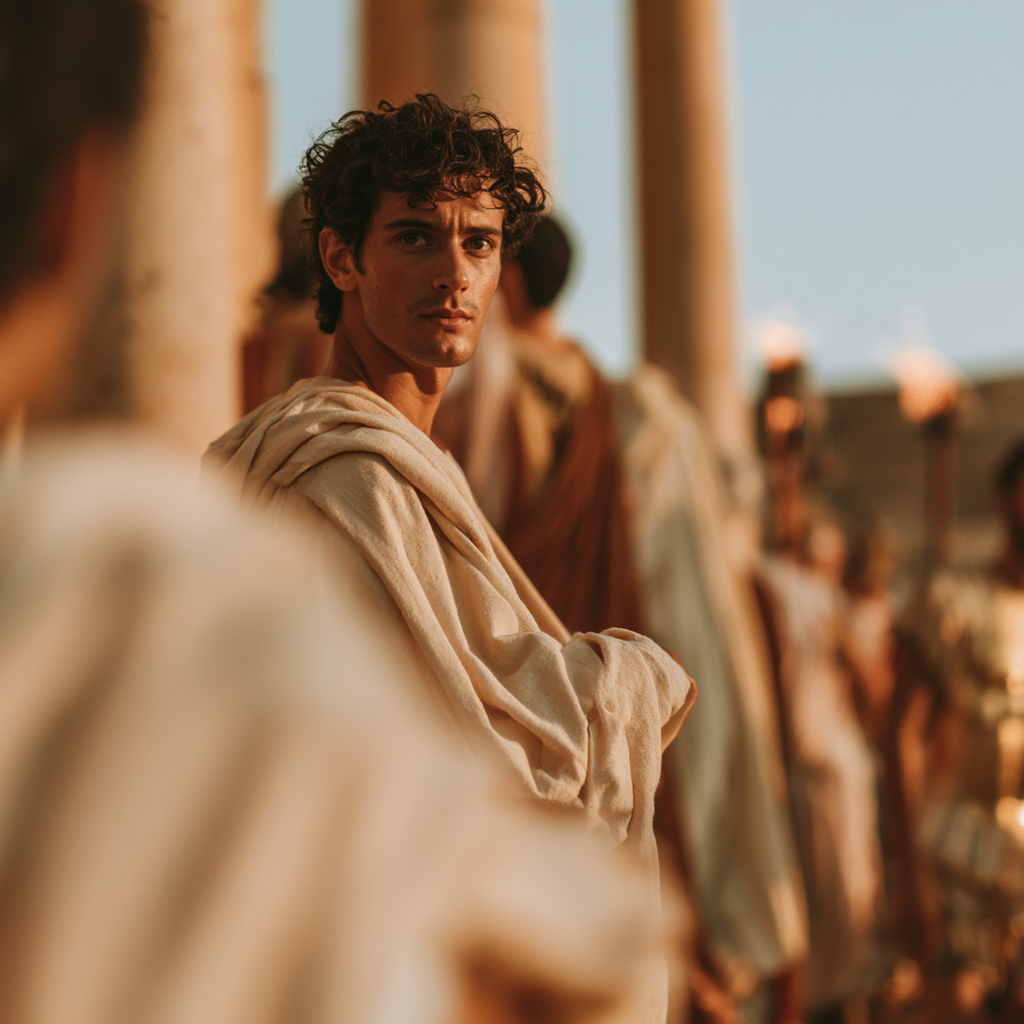
Francis grew up with money and knew what to do with it. His father, Pietro di Bernardone, was a prosperous cloth merchant, and Francis spent his youth on fine clothes, parties, and dreams of knightly glory — by his own later account, and by the account of nearly everyone who wrote about him afterward, an unremarkable rich young man with unremarkable ambitions.
Those ambitions led him into a war between Assisi and the neighboring city of Perugia, where he was captured and held prisoner for roughly a year before being ransomed home. The imprisonment left him seriously ill, and the illness left him different — quieter, more prone to long stretches of prayer, less interested in the parties he had once organized. When he tried to return to his old plans for military glory not long after, joining a campaign in southern Italy, a vision at Spoleto turned him back before he had gone more than a day's ride: a voice asking him who could do more for him, the Lord or the servant, and telling him to go home.
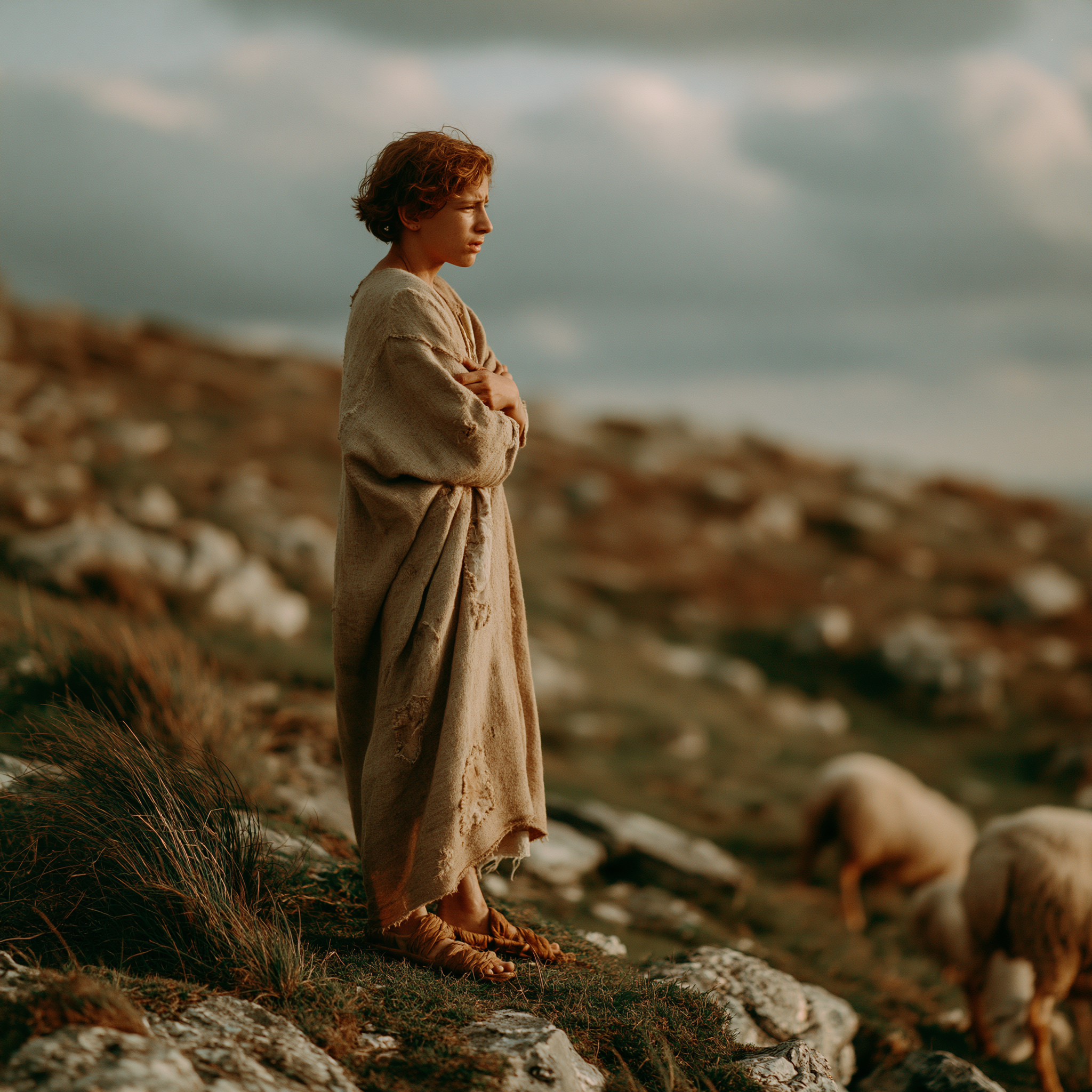
He spent the following months increasingly withdrawn from his old circle, drawn instead to prayer, to the ruined chapels scattered around Assisi, and to the lepers his society pushed to its margins. One encounter in particular — embracing a leper he had previously found repellent — became, in his own later telling, the moment bitterness turned to sweetness. He was learning to see differently, well before he understood what that new sight would eventually cost him.
Go and Repair My House: The San Damiano Crucifix and Divine Calling
The turning point came while Francis was praying before an old Byzantine-style crucifix in the small, decaying chapel of San Damiano, just outside Assisi's walls. Tradition holds that the figure on the cross spoke to him directly: “Francis, Francis, go and repair my house, which as you can see is falling into ruins.”
Francis understood this as a literal instruction and set about physically rebuilding San Damiano and other abandoned chapels around the city, funding the work in part by selling bolts of his father's cloth without permission — a decision that put him on a collision course with the family he had not yet fully left behind. Only much later would the Franciscan movement come to understand the vision more broadly: that the house falling into ruins was the whole Church, and that Francis's repair work would take a much larger and stranger form than stacking stones.
Naked Before His Father: Renouncing Wealth and Inherited Status
Pietro di Bernardone was furious — about the money, about the erratic behavior, about a son who seemed determined to dismantle everything the family had built. He brought Francis before the Bishop of Assisi to formally renounce him and demand the return of what he had taken.
Francis's response became one of the most striking scenes in the history of the saints. In front of the bishop and a gathered crowd, he took off his clothes entirely and handed them back to his father, declaring that from that moment he recognized no father but his Father in heaven. The bishop, the accounts tell us, covered him with his own cloak. Francis walked away from the public square with nothing — no inheritance, no family name to fall back on, no possessions beyond what had just been thrown over his shoulders.
Lady Poverty and the Friars Minor: Founding the Franciscan Order
From that renunciation grew a way of life Francis would spend the rest of his years refining and defending: total poverty, embraced not as a burden but, in his own vivid language, as a bride — Lady Poverty, courted and married with the same intensity other men gave to actual wooing. Followers gathered around him quickly, drawn by the radical simplicity of what he was offering: no property, no security, dependence on begging and manual labor, and a life spent preaching repentance and peace in the towns of central Italy.
Around 1209, Francis brought a simple rule of life to Pope Innocent III and received verbal approval to found what became the Order of Friars Minor. The movement grew astonishingly fast. Within his own lifetime, thousands of men had joined, drawn to a way of following Christ that asked for everything and offered, in exchange, a freedom that owning nothing seemed strangely to provide. Alongside Clare of Assisi, a noblewoman who had heard him preach and asked to follow the same path, he helped establish the Order of Poor Clares for women, and later a Third Order for laypeople who wished to live the Franciscan spirit while remaining in ordinary married and working life.
Brother Sun, Sister Moon: The Canticle of the Creatures and Love for Creation
Francis's love of the natural world became, over centuries, as central to his popular image as his poverty — an association that reaches its clearest expression in the Canticle of the Creatures, composed largely in the final year of his life as his health was failing. It praises God through creation itself: Brother Sun, Sister Moon, Brother Wind, Sister Water, Brother Fire, and Sister Mother Earth, who sustains and governs us. Written in early Italian vernacular rather than Latin, it stands among the earliest works of Italian literature, and its final verses, added shortly before his death, extend the praise even to Sister Bodily Death.
Later generations added still more color to this side of Francis's legacy — stories, gathered generations after his death in a collection called the Fioretti, or Little Flowers of Saint Francis, of him preaching to attentive birds along the roadside, and taming a wolf that had been terrorizing the town of Gubbio by speaking to it as he might speak to a person. These stories are legend rather than eyewitness history, but they endure because they capture something the Canticle already states directly: Francis experienced creation not as a backdrop to faith but as kin, brother and sister to be addressed and praised alongside every other creature.
The Wounds of Christ: Mount La Verna and the Stigmata of Saint Francis
In 1224, two years before his death, Francis withdrew to Mount La Verna for an extended period of fasting and prayer. It was there, tradition holds, that he received the stigmata — wounds corresponding to the crucifixion appearing on his hands, feet, and side. Contemporaries who saw him afterward described him concealing the marks as best he could for the remainder of his life, and it stands as the first widely documented case of stigmata in Christian history.
Whatever one makes of the physical details, the theological logic of the event fits the entire arc of Francis's life. He had spent two decades trying to strip away everything that separated him from Christ's poverty and Christ's suffering. Tradition holds that in the end, the identification became visible in his own flesh.
Sister Bodily Death: The Transitus and Death at the Porziuncola
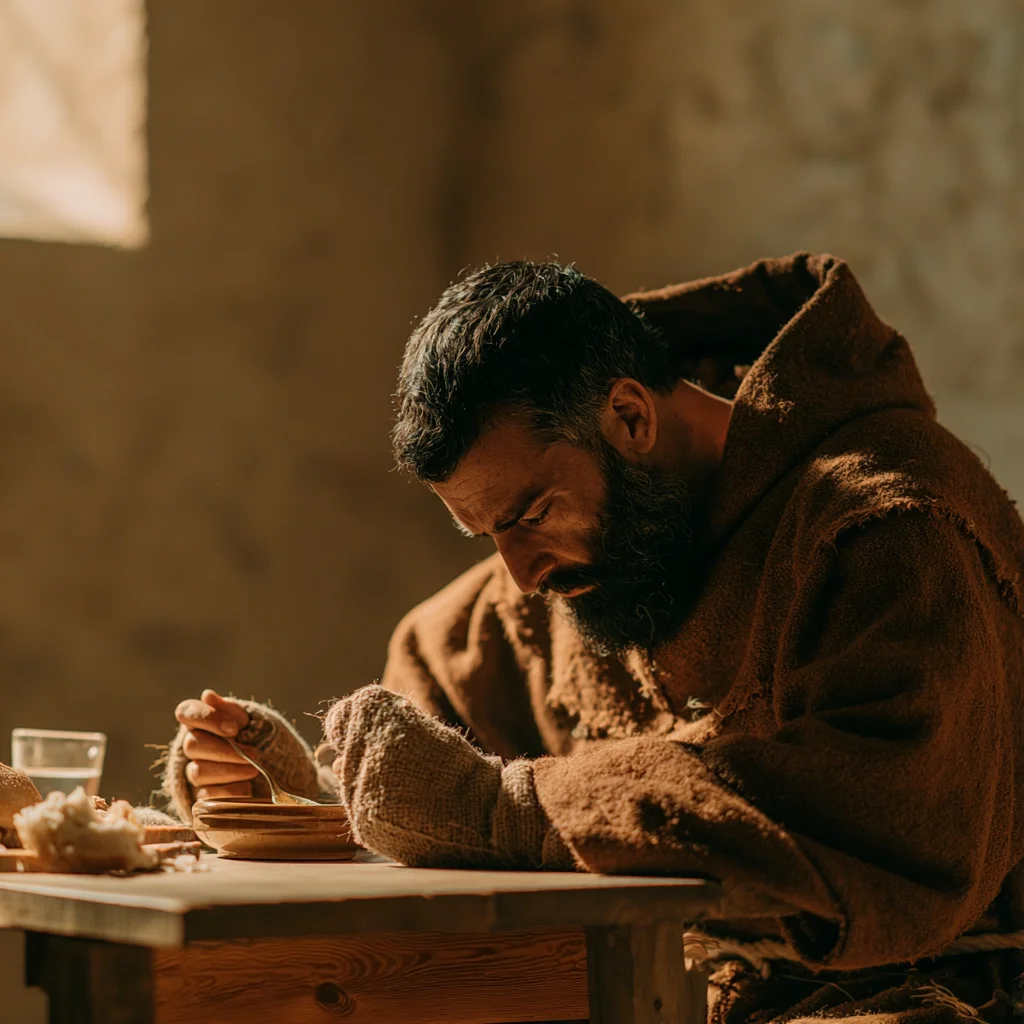
Francis died on October 3, 1226, at the Porziuncola, the small chapel near Assisi that had become the spiritual heart of his movement. Nearly blind by then, and worn down by the asceticism of his final years, he asked to be laid on the bare ground to die, in a final, literal act of the poverty he had chosen at the start — refusing even a deathbed's ordinary comfort. He was not yet forty-five.
Less than two years later, in 1228, Pope Gregory IX — who had known Francis personally during his years as Cardinal Ugolino — canonized him, and construction began almost immediately on the basilica in Assisi that still holds his tomb.
The Catholic Perspective: Saint Francis as Patron of Ecology, Poverty, and Peacemaking
To view Saint Francis through the lens of Catholic tradition is to witness how one man’s radical embrace of the Gospel ignited a spiritual revolution. He did not seek to reform the Church through political maneuvering or theological dispute, but by living Christ’s poverty so authentically that a world grown lukewarm was forced to remember its first love. Here is how Catholic tradition understands the little poor man of Assisi.
-
Franciscan poverty was never primarily about economics. Francis understood total dispossession as the most direct available imitation of a God who, in Christ, emptied Himself and had nowhere to lay His head. Owning nothing was not deprivation in his own account of it; it was freedom — freedom from the anxieties of protecting property, and freedom to depend entirely on providence, the way he believed Christ Himself had lived.
-
Pope John Paul II formally declared Francis the Patron of Ecology in 1979, giving official Church recognition to a connection popular devotion had assumed for centuries. Pope Francis, choosing his papal name explicitly in Francis of Assisi's honor, drew the title of his 2015 environmental encyclical, Laudato Si', directly from the opening words of the Canticle of the Creatures — praised be, in the Umbrian dialect Francis wrote in eight centuries earlier.
-
The prayer most commonly associated with Francis in modern popular devotion — Lord, make me an instrument of your peace — is not actually his. It first appeared anonymously in a French spiritual magazine in 1912 and was only attached to his name afterward. It captures something genuinely Franciscan in spirit, which likely explains why the attribution stuck so firmly, but accuracy matters here: it belongs in any conversation about devotion inspired by Francis, not in a list of his own writings.
He asked to be laid on the bare ground to die — a final, literal act of the poverty he had chosen at the very start.
Why Saint Francis Still Matters
Francis remains one of the most universally recognized saints in Christian history, claimed with real affection even by many who claim no particular religious faith at all — the man who loved animals, who chose simplicity, who found God in sunlight and water and fire rather than only in cathedrals. All of that is true, and none of it is the whole picture.
The fuller Francis renounced a genuine fortune in a public square, built a movement that reshaped religious life across Europe within his own lifetime, and carried, in the final years of his life, wounds that tradition says mirrored Christ's own. He did not arrive at his love of creation by avoiding the harder demands of the Gospel. He arrived at it after stripping away everything else first — and what remained, once the wealth and status and old ambitions were gone, was a man who could finally see the whole of creation clearly enough to call it brother and sister.