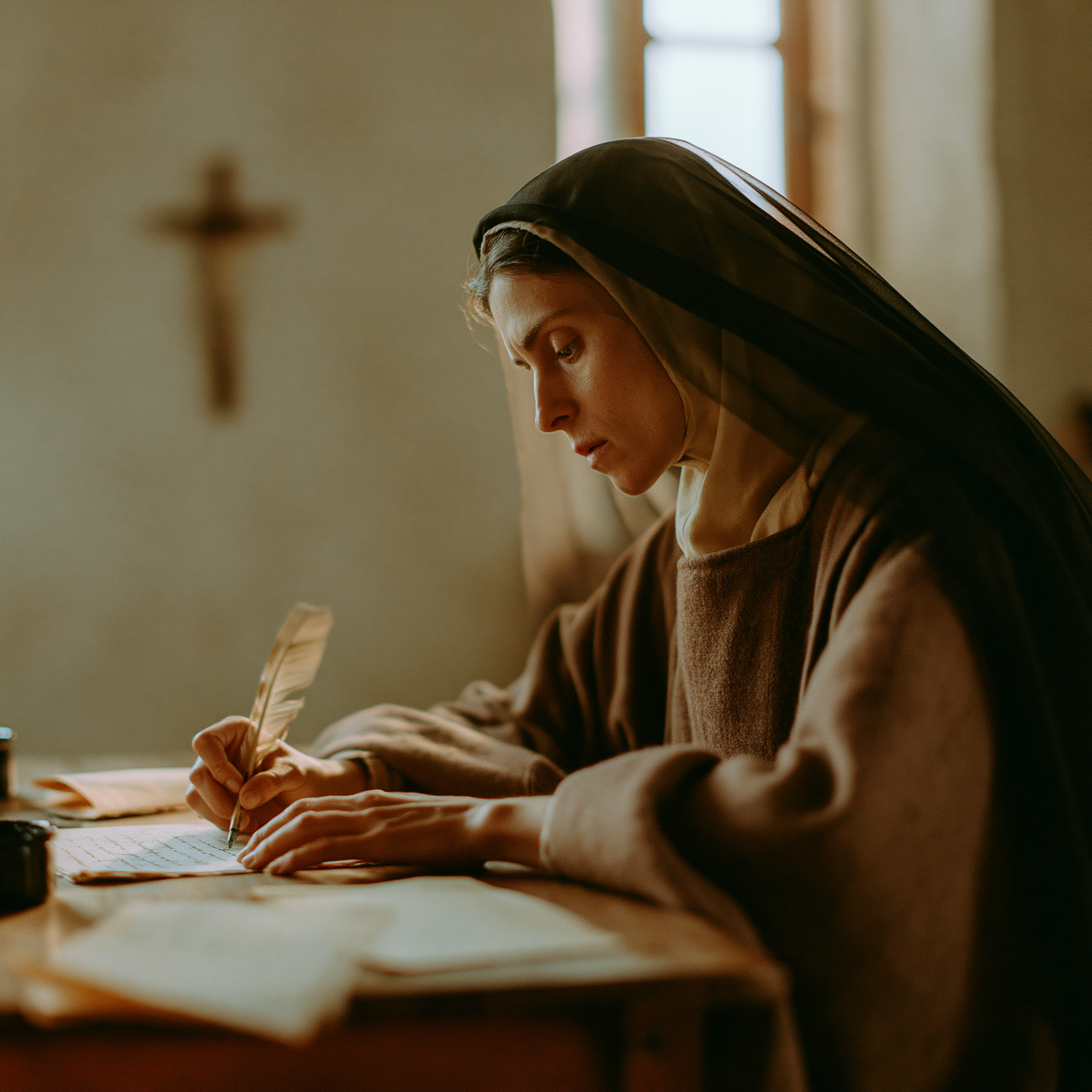
Saint Joan of Arc: The Maid of Orléans, The Visions, and the Voices That Crowned a King
Feast Day: May 30
Born / Died: c. January 6, 1412, Domrémy, France — May 30, 1431, Rouen, France, at age 19
Beatified: April 18, 1909, by Pope Pius X
Canonized: May 16, 1920, by Pope Benedict XV
Rehabilitated: A Church-authorized retrial in 1456 declared her original 1431 conviction null and void, formally clearing her name
Patronage: France (co-patroness); soldiers; prisoners; those ridiculed for their piety
Historical Context: The Hundred Years' War between France and England, at a moment when much of northern France was under English or Burgundian control
A teenage peasant girl walked into the court of an uncrowned king and told him she had come to see him crowned.
Joan of Arc was around seventeen years old, from a farming village most of the French nobility had never heard of, with no military training and no formal education, and she was entirely serious. Within a year, French forces under her banner had broken a siege the English seemed certain to win, and the Dauphin Charles — whose own claim to the throne had been contested and precarious for years — was crowned king in the cathedral at Reims with Joan standing beside him. Two years after that, the same French crown she had helped secure did nothing to save her from being burned alive by the English as a heretic.
Saint Joan of Arc at a Glance: Feast Day, Patronage, and Key Facts
Few figures in history compressed as much drama, conviction, and tragedy into nineteen years as Saint Joan of Arc. Below is a quick-reference guide to the essential facts, milestones, and patronages of the peasant visionary who turned the tide of the Hundred Years' War.
-
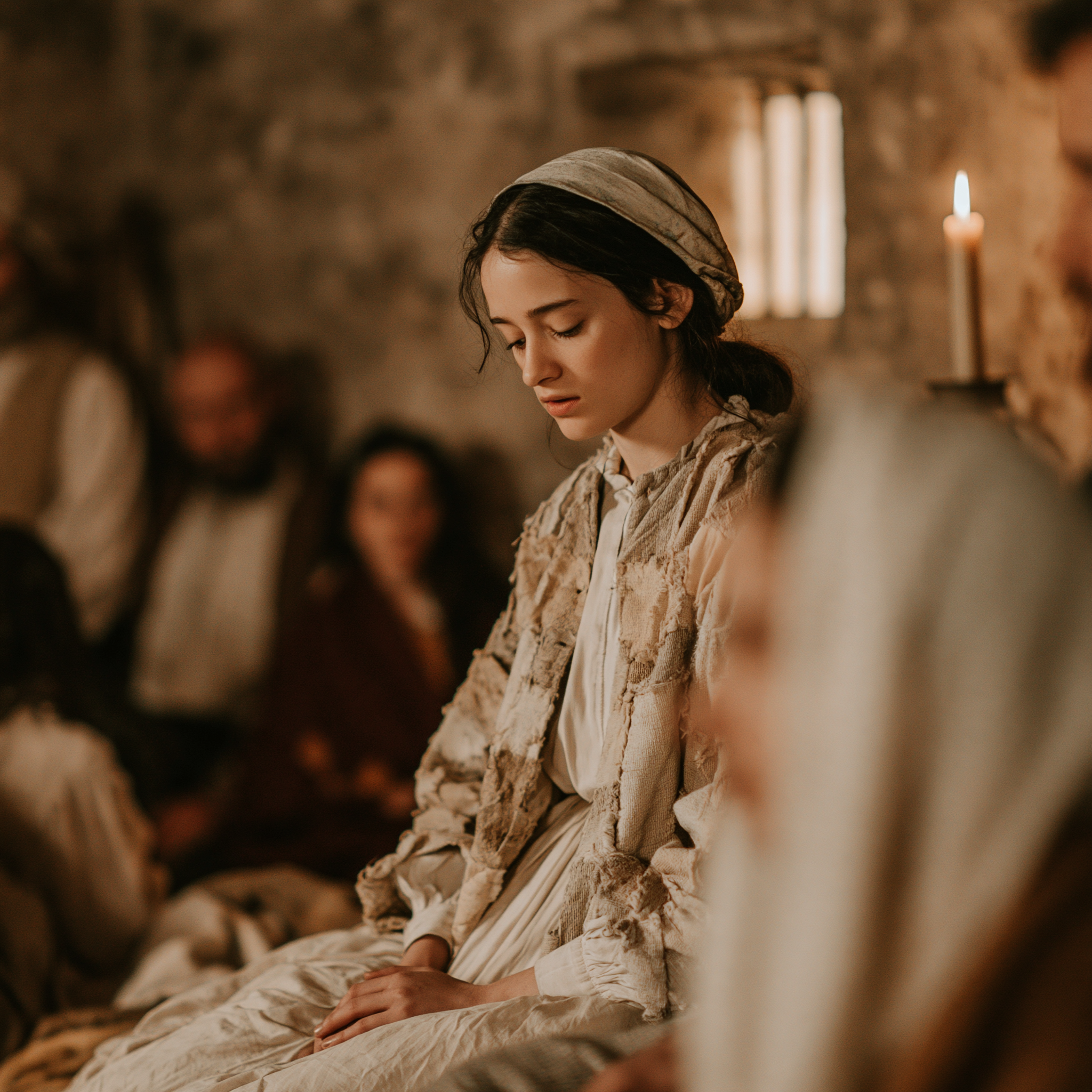
Joan of Arc, a peasant girl from Domrémy in eastern France
-
A visionary and military leader who helped secure the coronation of King Charles VII during the Hundred Years' War, later tried and executed, then formally rehabilitated by the Church
-
Domrémy, her birthplace; Orléans and Reims, the sites of her greatest successes; Rouen, where she was tried and executed
-
1412–1431
-
Because a nineteen-year-old girl, following what she insisted were divine instructions, changed the outcome of a war and was killed for it by the very political and religious authorities threatened by her success
The Heavenly Voices: Visions of Saint Michael, Saint Catherine, and Saint Margaret
Joan described her visions beginning around the age of twelve or thirteen, in the fields around her family's farm in Domrémy — voices and presences she identified as Saint Michael the Archangel, Saint Catherine of Alexandria, and Saint Margaret of Antioch. Over the following years, by her own later account, the instructions grew increasingly specific and urgent: she was to help secure the coronation of the Dauphin Charles, the uncrowned heir to the French throne, and to drive English forces out of French territory, beginning with the besieged city of Orléans.
The Journey to Chinon: Meeting the Dauphin Charles VII
Convincing anyone in a position of authority to take these instructions seriously required a persistence remarkable for a peasant girl with no standing whatsoever. Joan repeatedly petitioned Robert de Baudricourt, the local garrison commander, before finally securing an armed escort to travel to the royal court at Chinon to meet Charles directly.
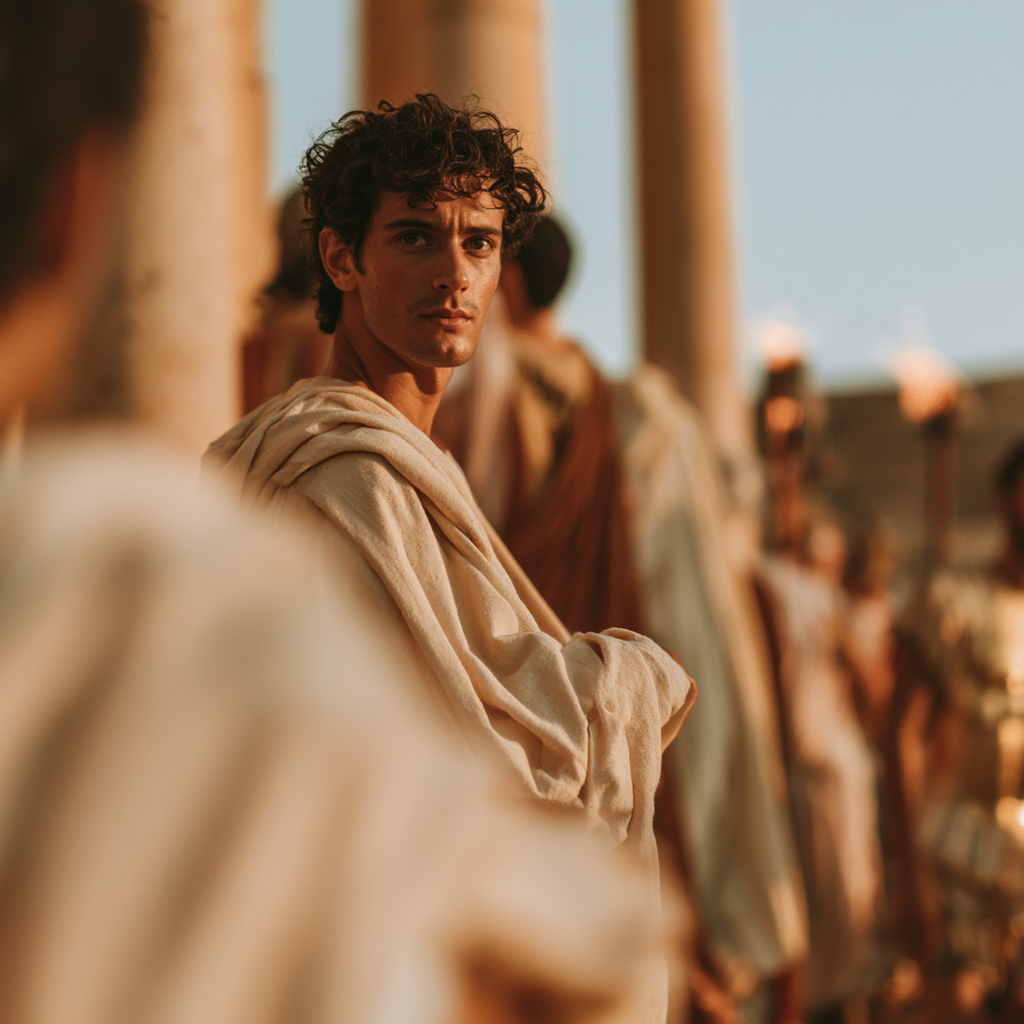
Tradition holds that Charles tested her upon her arrival, disguising himself among his courtiers and placing another man in his usual position to see whether Joan could identify him despite the deception — and that she found him immediately. She is also said to have offered Charles some private confirmation of her legitimacy, a specific sign known only to him, though historians have never definitively established what that sign actually was. Whatever precisely convinced him, Charles took her seriously enough to allow the process that followed.
The Theological Trial at Poitiers: Testing Joan’s Orthodoxy
Before granting Joan any military role, Charles's court subjected her to a serious, extended theological examination at Poitiers, where clergy and scholars spent roughly three weeks questioning her about her visions, her orthodoxy, and the legitimacy of what she claimed to be experiencing. It stands as a clear example of the kind of careful ecclesiastical discernment the Church has always insisted on applying to reported mystical experience — exactly the caution that would later be conspicuously absent from the very different examination that condemned her.
The Siege of Orléans and the Loire Campaign: A Decisive Turning Point
Cleared by the Poitiers examiners, Joan was given troops and led the relief of the Siege of Orléans in May 1429, a French victory so unexpected and so decisive that it reversed the entire momentum of a war England had appeared to be winning. She was wounded by an arrow during the fighting and continued to lead regardless, and the victory made her, almost overnight, one of the most famous figures in France.
A string of further military successes followed in what became known as the Loire Campaign, culminating in a decisive French victory at the Battle of Patay — momentum Joan had insisted, from the beginning, was only the first part of her actual mission.
The Coronation at Reims: Fulfilling the Divine Mission
Joan pressed Charles to complete what she considered the true purpose of everything that had happened so far: a coronation at Reims, the traditional site of French coronations, even though the city lay deep in contested territory. Charles VII was crowned King of France there on July 17, 1429, with Joan standing at his side in a position of honor — the culmination of the mission she had described from her very first vision.
Military efforts after the coronation produced more mixed results, including a failed assault on Paris that September, during which Joan was wounded again. The momentum that had carried her from Domrémy to Reims in little more than a year began, from that point forward, to slow.
Betrayal at Compiègne: Captured and Sold to the English
In May 1430, Joan was captured by Burgundian forces, French allies of the English, at the siege of Compiègne. The Burgundians sold her to the English, who had every political motivation to see her discredited — not merely as a captured enemy combatant, but as the visionary whose claimed divine mandate had helped crown the king they were fighting.
The 1431 Trial at Rouen: Heresy Charges and Political Intrigue
The English placed Joan on trial before an ecclesiastical court in Rouen, headed by Pierre Cauchon, the Bishop of Beauvais, a cleric aligned with English and Burgundian interests. The trial ran for months, conducted with what later review found to be serious procedural irregularities — denial of adequate legal counsel, biased judges, and sustained, coercive interrogation — and it was substantially motivated by the political value of discrediting the very coronation Joan had helped secure.
The charges centered on heresy, including her practice of wearing men's clothing and her insistence that she received instruction directly from God without ecclesiastical mediation. At one especially famous moment, her interrogators asked whether she believed she was in a state of grace — a deliberate theological trap, since a confident yes could be read as presumption and a no as an admission of guilt. Joan's reported answer stunned the court: if she was not in God's grace, she said, may God put her there; and if she was, may God so keep her. It answered the trap without falling into either half of it.
Martyrdom at the Stake: Joan of Arc’s Final Stand in Rouen
Convicted despite the shrewdness of her defense, Joan was burned at the stake in the marketplace of Rouen on May 30, 1431. She was nineteen years old, not quite three years removed from her first meeting with Charles at Chinon, and barely two years past the coronation she had insisted, from the very beginning, was the entire point of everything she was doing.
Rehabilitation, Beatification, and Canonization: Cleared by Rome
The story did not end at the stake. In 1456, at the urging of Charles VII — who had obvious reason to want the taint removed from the coronation Joan had helped secure — and of Joan's own mother, Isabelle Romée, a papally authorized retrial reexamined the original proceedings. It found the 1431 trial corrupt and its verdict null and void, formally rehabilitating Joan's name and reputation less than three decades after her death. Nearly five centuries later, the Church went further still, beatifying her in 1909 and canonizing her in 1920.
The Catholic Perspective: Discernment, Corrupted Justice, and Restored Truth
Joan of Arc’s condemnation and ultimate canonization present one of the most striking paradoxes in Catholic history: an innocent visionary martyred under the authority of a compromised ecclesiastical court, only to be fully vindicated and raised to the altars by the universal Church. Below is an examination of what her life reveals about authentic spiritual discernment, the weaponization of Church authority, and the enduring power of conscience.
-
Joan's story offers an unusually direct contrast between legitimate ecclesiastical discernment and its corruption for political ends. The Poitiers examination, conducted by clergy with no political stake in the outcome, took weeks of careful theological questioning before reaching a conclusion. The Rouen trial, conducted by a court substantially compromised by English and Burgundian political interest, produced the opposite verdict through a process later review found deeply flawed. The Church's own subsequent nullification of that verdict stands as an acknowledgment of exactly this distinction.
-
Like Catherine of Siena before her, Joan exercised an extraordinary degree of influence over the highest levels of political and military authority without holding any formal office or ecclesiastical standing — a teenage girl whose claimed visions were taken seriously enough, after serious examination, to reshape the outcome of a war.
-
Joan's patronage over those ridiculed for their piety and those held captive carries an obvious weight given her own story: a young woman whose sincere religious conviction was first tested with genuine seriousness by the Church, and then weaponized against her by a court more interested in political outcomes than truth. Her eventual rehabilitation, both by the Church and by history, has made her a lasting figure of hope for anyone convicted or condemned by a process more concerned with power than justice.
If she was not in God's grace, she said, may God put her there; and if she was, may God so keep her.
The Enduring Legacy: Why Saint Joan of Arc Still Matters Today
Joan's life compresses an enormous amount of history into an extraordinarily short span — from an obscure farming village to the coronation of a king to a heretic's death at the stake, all before her twentieth birthday. Few saints demonstrate more starkly how quickly public acclaim can turn into political liability, or how thoroughly a corrupted process can distort a genuine conviction into a capital charge.
What has kept her story alive for nearly six centuries is not only the drama of it, but its eventual correction — the Church's own formal acknowledgment, first in 1456 and again in her twentieth-century canonization, that the girl burned as a heretic in 1431 had, in fact, told the truth about what she believed she had been asked to do. Few figures in the Church's history offer a clearer picture of both how badly institutional power can fail an innocent person, and how fully, if imperfectly and only after significant time, that same institution can eventually admit it.